Danh mục: Tin tức
Bài viết gần đây
-
Gia Công Bot Auto Trading | Case PyBot PyNhiQuaiBot 2026
Tháng 7 29, 2026 -
Bot Auto Trading XAUUSD MT5 | PyBot PyNhiQuaiBot Hedging Grid
Tháng 7 29, 2026
| Chiến lược Multi-Timeframe (M15 + H1) trong Bot Auto Trading
Được viết bởi thanhdt vào ngày 17/11/2025 lúc 17:22 | 345 lượt xem

Chiến lược Multi-Timeframe (M15 + H1) trong Bot Auto Trading: Hướng dẫn Python
Multi-Timeframe Analysis là một trong những phương pháp trading hiệu quả nhất, đặc biệt khi kết hợp M15 (15 phút) và H1 (1 giờ). Chiến lược này cho phép bạn xác định xu hướng chính trên khung thời gian lớn (H1) và tìm điểm vào lệnh tối ưu trên khung thời gian nhỏ (M15). Trong bài viết này, chúng ta sẽ tìm hiểu cách triển khai chiến lược Multi-Timeframe M15 + H1 hiệu quả bằng Python.
1. Hiểu về Multi-Timeframe Analysis
Tại sao sử dụng Multi-Timeframe?
- Xác định xu hướng chính: Khung thời gian lớn (H1) cho biết xu hướng tổng thể
- Tìm điểm vào tối ưu: Khung thời gian nhỏ (M15) cho điểm vào lệnh chính xác
- Giảm false signals: Chỉ trade theo hướng xu hướng chính
- Tăng win rate: Kết hợp cả hai khung thời gian tăng độ chính xác
Quy tắc Multi-Timeframe cơ bản:
- Trend trên H1: Xác định xu hướng chính (uptrend/downtrend)
- Entry trên M15: Tìm điểm vào lệnh theo hướng xu hướng H1
- Confirmation: Cả hai khung thời gian phải đồng thuận
Tỷ lệ khung thời gian:
- H1 : M15 = 4 : 1 (1 giờ = 4 nến 15 phút)
- Đây là tỷ lệ lý tưởng để phân tích multi-timeframe
import pandas as pd
import numpy as np
import ccxt
import pandas_ta as ta
from datetime import datetime

def get_multiple_timeframes(exchange, symbol, timeframes=['15m', '1h'], limit=100):
    """
    Lấy dữ liệu từ nhiều khung thời gian

    Parameters:
    -----------
    exchange : ccxt.Exchange
        Exchange object
    symbol : str
        Trading pair
    timeframes : list
        Danh sách khung thời gian
    limit : int
        Số nến cần lấy

    Returns:
    --------
    dict: Dictionary chứa DataFrame cho mỗi timeframe
    """
    data = {}

    for tf in timeframes:
        ohlcv = exchange.fetch_ohlcv(symbol, tf, limit=limit)
        df = pd.DataFrame(ohlcv, columns=['timestamp', 'open', 'high', 'low', 'close', 'volume'])
        df['timestamp'] = pd.to_datetime(df['timestamp'], unit='ms')
        df.set_index('timestamp', inplace=True)
        df.columns = [col.capitalize() for col in df.columns]
        data[tf] = df

    return data

def determine_trend(df, method='ema'):
    """
    Xác định xu hướng trên khung thời gian

    Parameters:
    -----------
    df : pd.DataFrame
        Dữ liệu OHLCV
    method : str
        Phương pháp xác định trend ('ema', 'sma', 'price_action')

    Returns:
    --------
    str: 'uptrend', 'downtrend', hoặc 'sideways'
    """
    if method == 'ema':
        # Sử dụng EMA
        ema_fast = df['Close'].ewm(span=20, adjust=False).mean()
        ema_slow = df['Close'].ewm(span=50, adjust=False).mean()

        current_fast = ema_fast.iloc[-1]
        current_slow = ema_slow.iloc[-1]
        prev_fast = ema_fast.iloc[-2]
        prev_slow = ema_slow.iloc[-2]

        # Uptrend: EMA fast trên EMA slow và đang tăng
        if current_fast > current_slow and current_fast > prev_fast:
            return 'uptrend'
        # Downtrend: EMA fast dưới EMA slow và đang giảm
        elif current_fast < current_slow and current_fast < prev_fast:
            return 'downtrend'
        else:
            return 'sideways'

    elif method == 'sma':
        # Sử dụng SMA
        sma_fast = df['Close'].rolling(window=20).mean()
        sma_slow = df['Close'].rolling(window=50).mean()

        if sma_fast.iloc[-1] > sma_slow.iloc[-1]:
            return 'uptrend'
        elif sma_fast.iloc[-1] < sma_slow.iloc[-1]:
            return 'downtrend'
        else:
            return 'sideways'

    elif method == 'price_action':
        # Sử dụng price action (higher highs, lower lows)
        recent_highs = df['High'].tail(20)
        recent_lows = df['Low'].tail(20)

        # Uptrend: Higher highs và higher lows
        if (recent_highs.iloc[-1] > recent_highs.iloc[-10] and
            recent_lows.iloc[-1] > recent_lows.iloc[-10]):
            return 'uptrend'
        # Downtrend: Lower highs và lower lows
        elif (recent_highs.iloc[-1] < recent_highs.iloc[-10] and
              recent_lows.iloc[-1] < recent_lows.iloc[-10]):
            return 'downtrend'
        else:
            return 'sideways'
2. Các chiến lược Multi-Timeframe M15 + H1 hiệu quả
2.1. Chiến lược Trend Following (M15 + H1)
Đặc điểm:
- Xác định trend trên H1
- Tìm entry trên M15 theo hướng trend H1
- Đơn giản, dễ triển khai
Quy tắc:
- Mua: H1 uptrend + M15 pullback về support
- Bán: H1 downtrend + M15 pullback về resistance
class TrendFollowingMTFStrategy:
    """Chiến lược Trend Following Multi-Timeframe"""

    def __init__(self, h1_ema_fast=20, h1_ema_slow=50,
                 m15_ema_fast=20, m15_ema_slow=50):
        """
        Parameters:
        -----------
        h1_ema_fast : int
            Period EMA nhanh cho H1
        h1_ema_slow : int
            Period EMA chậm cho H1
        m15_ema_fast : int
            Period EMA nhanh cho M15
        m15_ema_slow : int
            Period EMA chậm cho M15
        """
        self.h1_ema_fast = h1_ema_fast
        self.h1_ema_slow = h1_ema_slow
        self.m15_ema_fast = m15_ema_fast
        self.m15_ema_slow = m15_ema_slow

    def analyze_h1_trend(self, df_h1):
        """Phân tích xu hướng trên H1"""
        ema_fast = df_h1['Close'].ewm(span=self.h1_ema_fast, adjust=False).mean()
        ema_slow = df_h1['Close'].ewm(span=self.h1_ema_slow, adjust=False).mean()

        current_fast = ema_fast.iloc[-1]
        current_slow = ema_slow.iloc[-1]
        prev_fast = ema_fast.iloc[-2]

        if current_fast > current_slow and current_fast > prev_fast:
            return 'uptrend'
        elif current_fast < current_slow and current_fast < prev_fast:
            return 'downtrend'
        else:
            return 'sideways'

    def find_m15_entry(self, df_m15, h1_trend):
        """
        Tìm điểm vào lệnh trên M15

        Parameters:
        -----------
        df_m15 : pd.DataFrame
            Dữ liệu M15
        h1_trend : str
            Xu hướng trên H1

        Returns:
        --------
        int: 1 = Mua, -1 = Bán, 0 = Giữ
        """
        ema_fast = df_m15['Close'].ewm(span=self.m15_ema_fast, adjust=False).mean()
        ema_slow = df_m15['Close'].ewm(span=self.m15_ema_slow, adjust=False).mean()

        current_price = df_m15['Close'].iloc[-1]
        current_fast = ema_fast.iloc[-1]
        current_slow = ema_slow.iloc[-1]
        prev_fast = ema_fast.iloc[-2]

        # Chỉ trade theo hướng trend H1
        if h1_trend == 'uptrend':
            # Tìm pullback về support (EMA slow) và bounce
            if (current_price > current_slow and  # Giá trên EMA slow
                prev_fast <= ema_slow.iloc[-2] and  # EMA fast vừa cắt lên EMA slow
                current_fast > current_slow):  # EMA fast trên EMA slow
                return 1  # Tín hiệu mua

        elif h1_trend == 'downtrend':
            # Tìm pullback về resistance (EMA slow) và rejection
            if (current_price < current_slow and  # Giá dưới EMA slow
                prev_fast >= ema_slow.iloc[-2] and  # EMA fast vừa cắt xuống EMA slow
                current_fast < current_slow):  # EMA fast dưới EMA slow
                return -1  # Tín hiệu bán

        return 0

    def generate_signals(self, exchange, symbol):
        """
        Tạo tín hiệu giao dịch

        Returns:
        --------
        dict: Chứa trend H1, signal M15, và các thông tin khác
        """
        # Lấy dữ liệu từ cả hai khung thời gian
        data = get_multiple_timeframes(exchange, symbol, ['15m', '1h'])
        df_h1 = data['1h']
        df_m15 = data['15m']

        # Phân tích trend trên H1
        h1_trend = self.analyze_h1_trend(df_h1)

        # Tìm entry trên M15
        m15_signal = self.find_m15_entry(df_m15, h1_trend)

        return {
            'h1_trend': h1_trend,
            'm15_signal': m15_signal,
            'h1_price': df_h1['Close'].iloc[-1],
            'm15_price': df_m15['Close'].iloc[-1],
            'timestamp': datetime.now()
        }
2.2. Chiến lược RSI Multi-Timeframe (Hiệu quả cao)
Đặc điểm:
- RSI trên H1 xác định xu hướng
- RSI trên M15 tìm điểm vào
- Kết hợp oversold/overbought trên cả hai khung
Quy tắc:
- Mua: RSI(H1) > 50 (uptrend) + RSI(M15) < 40 (oversold recovery)
- Bán: RSI(H1) < 50 (downtrend) + RSI(M15) > 60 (overbought rejection)
class RSIMultiTimeframeStrategy:
    """Chiến lược RSI Multi-Timeframe"""

    def __init__(self, rsi_period=14, h1_oversold=40, h1_overbought=60,
                 m15_oversold=30, m15_overbought=70):
        """
        Parameters:
        -----------
        rsi_period : int
            Period cho RSI
        h1_oversold : float
            Ngưỡng oversold cho H1
        h1_overbought : float
            Ngưỡng overbought cho H1
        m15_oversold : float
            Ngưỡng oversold cho M15
        m15_overbought : float
            Ngưỡng overbought cho M15
        """
        self.rsi_period = rsi_period
        self.h1_oversold = h1_oversold
        self.h1_overbought = h1_overbought
        self.m15_oversold = m15_oversold
        self.m15_overbought = m15_overbought

    def calculate_rsi(self, prices):
        """Tính RSI"""
        delta = prices.diff()
        gain = (delta.where(delta > 0, 0)).rolling(window=self.rsi_period).mean()
        loss = (-delta.where(delta < 0, 0)).rolling(window=self.rsi_period).mean()
        rs = gain / loss
        rsi = 100 - (100 / (1 + rs))
        return rsi

    def analyze_h1_rsi(self, df_h1):
        """Phân tích RSI trên H1"""
        rsi = self.calculate_rsi(df_h1['Close'])
        current_rsi = rsi.iloc[-1]

        if current_rsi > 50:
            return 'bullish'  # Uptrend
        elif current_rsi < 50:
            return 'bearish'  # Downtrend
        else:
            return 'neutral'

    def find_m15_rsi_entry(self, df_m15, h1_bias):
        """
        Tìm entry dựa trên RSI M15

        Parameters:
        -----------
        h1_bias : str
            'bullish', 'bearish', hoặc 'neutral'
        """
        rsi = self.calculate_rsi(df_m15['Close'])
        current_rsi = rsi.iloc[-1]
        prev_rsi = rsi.iloc[-2]

        # Chỉ trade theo hướng H1
        if h1_bias == 'bullish':
            # Tìm oversold recovery trên M15
            if (current_rsi < self.m15_overbought and  # Không quá overbought
                current_rsi > self.m15_oversold and  # Đang recovery từ oversold
                current_rsi > prev_rsi):  # RSI đang tăng
                return 1  # Tín hiệu mua

        elif h1_bias == 'bearish':
            # Tìm overbought rejection trên M15
            if (current_rsi > self.m15_oversold and  # Không quá oversold
                current_rsi < self.m15_overbought and  # Đang rejection từ overbought
                current_rsi < prev_rsi):  # RSI đang giảm
                return -1  # Tín hiệu bán

        return 0

    def generate_signals(self, exchange, symbol):
        """Tạo tín hiệu giao dịch"""
        data = get_multiple_timeframes(exchange, symbol, ['15m', '1h'])
        df_h1 = data['1h']
        df_m15 = data['15m']

        # Phân tích RSI trên H1
        h1_bias = self.analyze_h1_rsi(df_h1)

        # Tìm entry trên M15
        m15_signal = self.find_m15_rsi_entry(df_m15, h1_bias)

        # Tính RSI cho cả hai khung
        rsi_h1 = self.calculate_rsi(df_h1['Close']).iloc[-1]
        rsi_m15 = self.calculate_rsi(df_m15['Close']).iloc[-1]

        return {
            'h1_bias': h1_bias,
            'h1_rsi': rsi_h1,
            'm15_signal': m15_signal,
            'm15_rsi': rsi_m15,
            'h1_price': df_h1['Close'].iloc[-1],
            'm15_price': df_m15['Close'].iloc[-1],
            'timestamp': datetime.now()
        }
2.3. Chiến lược MACD Multi-Timeframe (Nâng cao – Rất hiệu quả)
Đặc điểm:
- MACD trên H1 xác định xu hướng chính
- MACD trên M15 tìm điểm vào
- Kết hợp MACD crossover và histogram
Quy tắc:
- Mua: MACD(H1) bullish + MACD(M15) cắt lên Signal
- Bán: MACD(H1) bearish + MACD(M15) cắt xuống Signal
class MACDMultiTimeframeStrategy:
    """Chiến lược MACD Multi-Timeframe"""

    def __init__(self, macd_fast=12, macd_slow=26, macd_signal=9):
        """
        Parameters:
        -----------
        macd_fast : int
            Period EMA nhanh cho MACD
        macd_slow : int
            Period EMA chậm cho MACD
        macd_signal : int
            Period Signal line cho MACD
        """
        self.macd_fast = macd_fast
        self.macd_slow = macd_slow
        self.macd_signal = macd_signal

    def calculate_macd(self, prices):
        """Tính MACD"""
        macd = ta.macd(prices, fast=self.macd_fast,
                       slow=self.macd_slow, signal=self.macd_signal)

        if macd is None:
            return None

        return pd.DataFrame({
            'MACD': macd.iloc[:, 0],
            'Signal': macd.iloc[:, 1],
            'Histogram': macd.iloc[:, 2]
        })

    def analyze_h1_macd(self, df_h1):
        """Phân tích MACD trên H1"""
        macd_data = self.calculate_macd(df_h1['Close'])

        if macd_data is None:
            return 'neutral'

        current_macd = macd_data['MACD'].iloc[-1]
        current_signal = macd_data['Signal'].iloc[-1]
        current_histogram = macd_data['Histogram'].iloc[-1]

        # Bullish: MACD trên Signal và histogram dương
        if current_macd > current_signal and current_histogram > 0:
            return 'bullish'
        # Bearish: MACD dưới Signal và histogram âm
        elif current_macd < current_signal and current_histogram < 0:
            return 'bearish'
        else:
            return 'neutral'

    def find_m15_macd_entry(self, df_m15, h1_bias):
        """Tìm entry dựa trên MACD M15"""
        macd_data = self.calculate_macd(df_m15['Close'])

        if macd_data is None:
            return 0

        current_macd = macd_data['MACD'].iloc[-1]
        current_signal = macd_data['Signal'].iloc[-1]
        prev_macd = macd_data['MACD'].iloc[-2]
        prev_signal = macd_data['Signal'].iloc[-2]

        # Chỉ trade theo hướng H1
        if h1_bias == 'bullish':
            # MACD cắt lên Signal
            if (current_macd > current_signal and
                prev_macd <= prev_signal):
                return 1  # Tín hiệu mua

        elif h1_bias == 'bearish':
            # MACD cắt xuống Signal
            if (current_macd < current_signal and
                prev_macd >= prev_signal):
                return -1  # Tín hiệu bán

        return 0

    def generate_signals(self, exchange, symbol):
        """Tạo tín hiệu giao dịch"""
        data = get_multiple_timeframes(exchange, symbol, ['15m', '1h'])
        df_h1 = data['1h']
        df_m15 = data['15m']

        # Phân tích MACD trên H1
        h1_bias = self.analyze_h1_macd(df_h1)

        # Tìm entry trên M15
        m15_signal = self.find_m15_macd_entry(df_m15, h1_bias)

        return {
            'h1_bias': h1_bias,
            'm15_signal': m15_signal,
            'h1_price': df_h1['Close'].iloc[-1],
            'm15_price': df_m15['Close'].iloc[-1],
            'timestamp': datetime.now()
        }
2.4. Chiến lược Support/Resistance Multi-Timeframe (Rất hiệu quả)
Đặc điểm:
- Xác định S/R trên H1
- Tìm entry khi giá chạm S/R trên M15
- Kết hợp với các chỉ báo khác
Quy tắc:
- Mua: Giá chạm support trên H1 + Bounce trên M15
- Bán: Giá chạm resistance trên H1 + Rejection trên M15
class SupportResistanceMTFStrategy:
    """Chiến lược Support/Resistance Multi-Timeframe"""

    def __init__(self, lookback=50, tolerance=0.001):
        """
        Parameters:
        -----------
        lookback : int
            Số nến để xác định S/R
        tolerance : float
            Tolerance % để xác định chạm S/R
        """
        self.lookback = lookback
        self.tolerance = tolerance

    def identify_support_resistance(self, df):
        """Xác định support và resistance"""
        recent_data = df.tail(self.lookback)

        # Tìm các đỉnh và đáy
        from scipy.signal import find_peaks

        highs = recent_data['High'].values
        lows = recent_data['Low'].values

        # Tìm đỉnh (resistance)
        peaks, _ = find_peaks(highs, distance=5)
        if len(peaks) > 0:
            resistance = recent_data['High'].iloc[peaks].max()
        else:
            resistance = recent_data['High'].max()

        # Tìm đáy (support)
        troughs, _ = find_peaks(-lows, distance=5)
        if len(troughs) > 0:
            support = recent_data['Low'].iloc[troughs].min()
        else:
            support = recent_data['Low'].min()

        return support, resistance

    def check_price_near_sr(self, price, support, resistance):
        """Kiểm tra giá có gần S/R không"""
        # Kiểm tra gần support
        if abs(price - support) / support < self.tolerance:
            return 'near_support'
        # Kiểm tra gần resistance
        elif abs(price - resistance) / resistance < self.tolerance:
            return 'near_resistance'
        else:
            return 'none'

    def find_m15_bounce_rejection(self, df_m15, sr_level, sr_type):
        """
        Tìm bounce (support) hoặc rejection (resistance) trên M15

        Parameters:
        -----------
        sr_type : str
            'near_support' hoặc 'near_resistance'
        """
        current_candle = df_m15.iloc[-1]
        prev_candle = df_m15.iloc[-2]

        if sr_type == 'near_support':
            # Bounce: Giá chạm support và đóng cửa trên
            if (current_candle['Low'] <= sr_level * (1 + self.tolerance) and
                current_candle['Close'] > sr_level and
                current_candle['Close'] > prev_candle['Close']):
                return 1  # Tín hiệu mua

        elif sr_type == 'near_resistance':
            # Rejection: Giá chạm resistance và đóng cửa dưới
            if (current_candle['High'] >= sr_level * (1 - self.tolerance) and
                current_candle['Close'] < sr_level and
                current_candle['Close'] < prev_candle['Close']):
                return -1  # Tín hiệu bán

        return 0

    def generate_signals(self, exchange, symbol):
        """Tạo tín hiệu giao dịch"""
        data = get_multiple_timeframes(exchange, symbol, ['15m', '1h'])
        df_h1 = data['1h']
        df_m15 = data['15m']

        # Xác định S/R trên H1
        support, resistance = self.identify_support_resistance(df_h1)

        # Kiểm tra giá M15 có gần S/R không
        m15_price = df_m15['Close'].iloc[-1]
        sr_position = self.check_price_near_sr(m15_price, support, resistance)

        # Tìm bounce/rejection trên M15
        if sr_position == 'near_support':
            signal = self.find_m15_bounce_rejection(df_m15, support, 'near_support')
        elif sr_position == 'near_resistance':
            signal = self.find_m15_bounce_rejection(df_m15, resistance, 'near_resistance')
        else:
            signal = 0

        return {
            'h1_support': support,
            'h1_resistance': resistance,
            'm15_signal': signal,
            'sr_position': sr_position,
            'h1_price': df_h1['Close'].iloc[-1],
            'm15_price': m15_price,
            'timestamp': datetime.now()
        }
3. Bot Auto Trading Multi-Timeframe hoàn chỉnh
3.1. Bot với Quản lý Rủi ro và Multi-Timeframe Analysis
import ccxt
import pandas as pd
import numpy as np
import time
from datetime import datetime
from typing import Dict, Optional

class MultiTimeframeTradingBot:
    """Bot auto trading sử dụng Multi-Timeframe Analysis"""

    def __init__(self, exchange_name: str, api_key: str, api_secret: str,
                 strategy_type: str = 'trend_following'):
        """
        Khởi tạo bot

        Parameters:
        -----------
        exchange_name : str
            Tên sàn (binance, coinbase, etc.)
        api_key : str
            API key
        api_secret : str
            API secret
        strategy_type : str
            Loại chiến lược ('trend_following', 'rsi', 'macd', 'sr')
        """
        # Kết nối exchange
        exchange_class = getattr(ccxt, exchange_name)
        self.exchange = exchange_class({
            'apiKey': api_key,
            'secret': api_secret,
            'enableRateLimit': True,
        })

        # Chọn chiến lược
        self.strategy = self._init_strategy(strategy_type)

        # Quản lý vị thế
        self.position = None
        self.entry_price = None
        self.stop_loss = None
        self.take_profit = None
        self.h1_trend = None

        # Cài đặt rủi ro
        self.max_position_size = 0.1  # 10% vốn
        self.stop_loss_pct = 0.02  # 2%
        self.take_profit_pct = 0.04  # 4%
        self.risk_reward_ratio = 2.0

    def _init_strategy(self, strategy_type: str):
        """Khởi tạo chiến lược"""
        if strategy_type == 'trend_following':
            return TrendFollowingMTFStrategy()
        elif strategy_type == 'rsi':
            return RSIMultiTimeframeStrategy()
        elif strategy_type == 'macd':
            return MACDMultiTimeframeStrategy()
        elif strategy_type == 'sr':
            return SupportResistanceMTFStrategy()
        else:
            raise ValueError(f"Unknown strategy type: {strategy_type}")

    def calculate_position_size(self, balance: float, price: float, stop_loss: float) -> float:
        """Tính toán kích thước vị thế dựa trên rủi ro"""
        risk_amount = balance * 0.01  # Risk 1% mỗi lệnh
        risk_per_unit = abs(price - stop_loss)

        if risk_per_unit == 0:
            return 0

        position_size = risk_amount / risk_per_unit
        return position_size

    def calculate_stop_loss_take_profit(self, entry_price: float, side: str):
        """Tính stop loss và take profit"""
        if side == 'long':
            stop_loss = entry_price * (1 - self.stop_loss_pct)
            risk = entry_price - stop_loss
            take_profit = entry_price + (risk * self.risk_reward_ratio)
        else:  # short
            stop_loss = entry_price * (1 + self.stop_loss_pct)
            risk = stop_loss - entry_price
            take_profit = entry_price - (risk * self.risk_reward_ratio)

        return stop_loss, take_profit

    def place_order(self, symbol: str, side: str, amount: float,
                   order_type: str = 'market'):
        """Đặt lệnh giao dịch"""
        try:
            if side == 'buy':
                order = self.exchange.create_market_buy_order(symbol, amount)
            else:
                order = self.exchange.create_market_sell_order(symbol, amount)

            print(f"[{datetime.now()}] {side.upper()} {amount} {symbol} @ {order['price']}")
            return order
        except Exception as e:
            print(f"Error placing order: {e}")
            return None

    def check_stop_loss_take_profit(self, current_price: float):
        """Kiểm tra stop loss và take profit"""
        if self.position is None:
            return

        if self.position == 'long':
            if current_price <= self.stop_loss:
                print(f"[{datetime.now()}] Stop Loss triggered @ {current_price}")
                self.close_position(current_price)
                return

            if current_price >= self.take_profit:
                print(f"[{datetime.now()}] Take Profit triggered @ {current_price}")
                self.close_position(current_price)
                return

    def check_h1_trend_change(self, new_h1_trend):
        """Kiểm tra xem H1 trend có thay đổi không"""
        if self.position and self.h1_trend:
            # Nếu trend đảo chiều, đóng vị thế
            if self.position == 'long' and new_h1_trend == 'downtrend':
                print(f"[{datetime.now()}] H1 Trend changed to downtrend, closing long position")
                return True
            elif self.position == 'short' and new_h1_trend == 'uptrend':
                print(f"[{datetime.now()}] H1 Trend changed to uptrend, closing short position")
                return True

        return False

    def open_position(self, symbol: str, side: str, price: float, amount: float, h1_trend: str):
        """Mở vị thế"""
        order = self.place_order(symbol, side, amount)
        if order:
            self.position = side
            self.entry_price = price
            self.h1_trend = h1_trend

            # Đặt stop loss và take profit
            self.stop_loss, self.take_profit = self.calculate_stop_loss_take_profit(
                price, side
            )

            print(f"[{datetime.now()}] Position opened: {side} @ {price}")
            print(f"H1 Trend: {h1_trend}")
            print(f"Stop Loss: {self.stop_loss}, Take Profit: {self.take_profit}")

    def close_position(self, price: float):
        """Đóng vị thế"""
        if self.position:
            if self.position == 'long':
                pnl_pct = ((price - self.entry_price) / self.entry_price) * 100
            else:  # short
                pnl_pct = ((self.entry_price - price) / self.entry_price) * 100

            print(f"[{datetime.now()}] Position closed. P&L: {pnl_pct:.2f}%")

            self.position = None
            self.entry_price = None
            self.stop_loss = None
            self.take_profit = None
            self.h1_trend = None

    def run(self, symbol: str, check_interval: int = 300):
        """
        Chạy bot

        Parameters:
        -----------
        symbol : str
            Trading pair
        check_interval : int
            Thời gian chờ giữa các lần kiểm tra (giây)
        """
        print(f"[{datetime.now()}] Bot started for {symbol}")
        print(f"Strategy: {type(self.strategy).__name__}")

        while True:
            try:
                # Lấy giá hiện tại (M15)
                data_m15 = get_multiple_timeframes(self.exchange, symbol, ['15m'], limit=1)
                current_price = data_m15['15m']['Close'].iloc[-1]

                # Kiểm tra stop loss và take profit
                if self.position:
                    self.check_stop_loss_take_profit(current_price)
                    if self.position is None:
                        time.sleep(check_interval)
                        continue

                # Tạo tín hiệu từ strategy
                signals = self.strategy.generate_signals(self.exchange, symbol)

                # Kiểm tra H1 trend change
                h1_trend = signals.get('h1_trend') or signals.get('h1_bias')
                if h1_trend:
                    if self.check_h1_trend_change(h1_trend):
                        self.close_position(current_price)
                        time.sleep(check_interval)
                        continue

                # Lấy tín hiệu M15
                m15_signal = signals.get('m15_signal', 0)

                # Xử lý tín hiệu
                if m15_signal == 1 and self.position != 'long':
                    # Tín hiệu mua
                    if h1_trend in ['uptrend', 'bullish']:  # Chỉ mua khi H1 uptrend
                        balance = self.exchange.fetch_balance()
                        available_balance = balance['USDT']['free'] if 'USDT' in balance else balance['total']['USDT']

                        stop_loss, _ = self.calculate_stop_loss_take_profit(current_price, 'long')
                        amount = self.calculate_position_size(
                            available_balance, current_price, stop_loss
                        )

                        if amount > 0:
                            self.open_position(symbol, 'long', current_price, amount, h1_trend)

                elif m15_signal == -1 and self.position == 'long':
                    # Tín hiệu bán
                    self.close_position(current_price)

                # Log thông tin
                print(f"[{datetime.now()}] H1 Trend: {h1_trend}, M15 Signal: {m15_signal}, Price: {current_price}")

                time.sleep(check_interval)

            except KeyboardInterrupt:
                print(f"[{datetime.now()}] Bot stopped by user")
                break
            except Exception as e:
                print(f"[{datetime.now()}] Error: {e}")
                time.sleep(check_interval)
4. Backtesting Chiến lược Multi-Timeframe
4.1. Hàm Backtest
def backtest_multitimeframe_strategy(df_h1, df_m15, strategy, initial_capital=10000):
    """
    Backtest chiến lược Multi-Timeframe

    Parameters:
    -----------
    df_h1 : pd.DataFrame
        Dữ liệu H1
    df_m15 : pd.DataFrame
        Dữ liệu M15
    strategy : Strategy object
        Đối tượng chiến lược
    initial_capital : float
        Vốn ban đầu

    Returns:
    --------
    dict: Kết quả backtest
    """
    # Đồng bộ dữ liệu M15 với H1
    # Mỗi nến H1 = 4 nến M15

    capital = initial_capital
    position = 0
    entry_price = 0
    trades = []
    stop_loss_pct = 0.02
    take_profit_pct = 0.04

    # Lặp qua từng nến H1
    for h1_idx in range(50, len(df_h1)):
        h1_candle = df_h1.iloc[h1_idx]
        h1_timestamp = h1_candle.name

        # Tìm các nến M15 tương ứng với nến H1 này
        m15_start_idx = h1_idx * 4
        m15_end_idx = min(m15_start_idx + 4, len(df_m15))

        if m15_end_idx <= m15_start_idx:
            continue

        window_h1 = df_h1.iloc[:h1_idx+1]
        window_m15 = df_m15.iloc[:m15_end_idx]

        # Phân tích H1 trend
        if isinstance(strategy, TrendFollowingMTFStrategy):
            h1_trend = strategy.analyze_h1_trend(window_h1)
            m15_signal = strategy.find_m15_entry(window_m15, h1_trend)
        elif isinstance(strategy, RSIMultiTimeframeStrategy):
            h1_bias = strategy.analyze_h1_rsi(window_h1)
            m15_signal = strategy.find_m15_rsi_entry(window_m15, h1_bias)
        else:
            continue

        # Xử lý tín hiệu
        current_price = window_m15['Close'].iloc[-1]

        # Kiểm tra stop loss và take profit
        if position > 0:
            if current_price <= entry_price * (1 - stop_loss_pct):
                capital = position * current_price
                pnl = ((current_price - entry_price) / entry_price) * 100
                trades[-1]['exit_price'] = current_price
                trades[-1]['pnl'] = pnl
                trades[-1]['exit_reason'] = 'stop_loss'
                position = 0
            elif current_price >= entry_price * (1 + take_profit_pct):
                capital = position * current_price
                pnl = ((current_price - entry_price) / entry_price) * 100
                trades[-1]['exit_price'] = current_price
                trades[-1]['pnl'] = pnl
                trades[-1]['exit_reason'] = 'take_profit'
                position = 0

        # Xử lý entry signal
        if m15_signal == 1 and position == 0:
            if h1_trend == 'uptrend' or h1_bias == 'bullish':
                position = capital / current_price
                entry_price = current_price
                trades.append({
                    'type': 'buy',
                    'date': h1_timestamp,
                    'entry_price': current_price,
                    'h1_trend': h1_trend if 'h1_trend' in locals() else h1_bias,
                    'capital': capital
                })

        elif m15_signal == -1 and position > 0:
            capital = position * current_price
            pnl = ((current_price - entry_price) / entry_price) * 100
            trades[-1]['exit_price'] = current_price
            trades[-1]['pnl'] = pnl
            trades[-1]['exit_reason'] = 'signal'
            position = 0

    # Đóng vị thế cuối cùng
    if position > 0:
        final_price = df_m15['Close'].iloc[-1]
        capital = position * final_price
        if trades:
            pnl = ((final_price - entry_price) / entry_price) * 100
            trades[-1]['exit_price'] = final_price
            trades[-1]['pnl'] = pnl
            trades[-1]['exit_reason'] = 'end_of_data'

    # Tính toán metrics
    completed_trades = [t for t in trades if 'pnl' in t]
    total_return = ((capital - initial_capital) / initial_capital) * 100
    winning_trades = [t for t in completed_trades if t.get('pnl', 0) > 0]
    losing_trades = [t for t in completed_trades if t.get('pnl', 0) < 0]

    win_rate = len(winning_trades) / len(completed_trades) * 100 if completed_trades else 0
    avg_win = np.mean([t['pnl'] for t in winning_trades]) if winning_trades else 0
    avg_loss = np.mean([t['pnl'] for t in losing_trades]) if losing_trades else 0

    return {
        'initial_capital': initial_capital,
        'final_capital': capital,
        'total_return': total_return,
        'total_trades': len(completed_trades),
        'winning_trades': len(winning_trades),
        'losing_trades': len(losing_trades),
        'win_rate': win_rate,
        'avg_win': avg_win,
        'avg_loss': avg_loss,
        'profit_factor': abs(avg_win / avg_loss) if avg_loss != 0 else 0,
        'trades': trades
    }

# Ví dụ sử dụng
import yfinance as yf

# Lấy dữ liệu H1 và M15
# Lưu ý: yfinance không hỗ trợ M15 trực tiếp, cần sử dụng API khác hoặc resample
data_h1 = yf.download('BTC-USD', period='6mo', interval='1h')
df_h1 = pd.DataFrame(data_h1)
df_h1.columns = [col.lower() for col in df_h1.columns]

# Resample từ 1h xuống 15m (giả lập)
data_m15 = yf.download('BTC-USD', period='6mo', interval='5m')
df_m15 = pd.DataFrame(data_m15)
df_m15.columns = [col.lower() for col in df_m15.columns]
# Resample 5m thành 15m
df_m15 = df_m15.resample('15T').agg({
    'open': 'first',
    'high': 'max',
    'low': 'min',
    'close': 'last',
    'volume': 'sum'
}).dropna()

# Chạy backtest
strategy = TrendFollowingMTFStrategy()
results = backtest_multitimeframe_strategy(df_h1, df_m15, strategy, initial_capital=10000)

print(f"Total Return: {results['total_return']:.2f}%")
print(f"Win Rate: {results['win_rate']:.2f}%")
print(f"Total Trades: {results['total_trades']}")
print(f"Profit Factor: {results['profit_factor']:.2f}")
5. Tối ưu hóa tham số Multi-Timeframe Strategy
5.1. Tìm tham số tối ưu
from itertools import product

def optimize_multitimeframe_parameters(df_h1, df_m15, strategy_class, param_ranges):
    """
    Tối ưu hóa tham số Multi-Timeframe Strategy
    """
    best_params = None
    best_score = -float('inf')
    best_results = None

    param_names = list(param_ranges.keys())
    param_values = list(param_ranges.values())

    for params in product(*param_values):
        param_dict = dict(zip(param_names, params))

        try:
            strategy = strategy_class(**param_dict)
            results = backtest_multitimeframe_strategy(df_h1, df_m15, strategy)

            # Đánh giá: kết hợp return, win rate và profit factor
            score = (
                results['total_return'] * 0.4 +
                results['win_rate'] * 0.3 +
                results['profit_factor'] * 10 * 0.3
            )

            if score > best_score:
                best_score = score
                best_params = param_dict
                best_results = results
        except:
            continue

    return {
        'best_params': best_params,
        'best_score': best_score,
        'results': best_results
    }

# Ví dụ tối ưu hóa
param_ranges = {
    'h1_ema_fast': [15, 20, 25],
    'h1_ema_slow': [45, 50, 55],
    'm15_ema_fast': [15, 20, 25],
    'm15_ema_slow': [45, 50, 55]
}

optimization_results = optimize_multitimeframe_parameters(
    df_h1, df_m15, TrendFollowingMTFStrategy, param_ranges
)
print("Best Parameters:", optimization_results['best_params'])
print("Best Score:", optimization_results['best_score'])
6. Quản lý rủi ro với Multi-Timeframe
6.1. Dynamic Stop Loss dựa trên H1 volatility
class MultiTimeframeRiskManager:
    """Quản lý rủi ro cho chiến lược Multi-Timeframe"""

    def __init__(self, max_risk_per_trade=0.01, atr_period=14):
        self.max_risk_per_trade = max_risk_per_trade
        self.atr_period = atr_period

    def calculate_stop_loss_from_h1(self, df_h1, entry_price, side='long'):
        """
        Tính stop loss dựa trên ATR của H1

        Stop loss rộng hơn khi H1 volatility cao
        """
        atr = calculate_atr(df_h1, self.atr_period)
        current_atr = atr.iloc[-1]

        if side == 'long':
            # Stop loss = Entry - (ATR * 2)
            stop_loss = entry_price - (current_atr * 2)
        else:  # short
            stop_loss = entry_price + (current_atr * 2)

        return stop_loss

    def calculate_position_size(self, account_balance, entry_price, stop_loss):
        """Tính toán kích thước vị thế"""
        risk_amount = account_balance * self.max_risk_per_trade
        risk_per_unit = abs(entry_price - stop_loss)

        if risk_per_unit == 0:
            return 0

        position_size = risk_amount / risk_per_unit
        return position_size
7. Kết luận: Chiến lược Multi-Timeframe nào hiệu quả nhất?
Đánh giá các chiến lược:
- Trend Following (M15 + H1)
- ✅ Đơn giản, dễ triển khai
- ✅ Phù hợp với thị trường có xu hướng
- ⭐ Hiệu quả: 4/5
- RSI Multi-Timeframe
- ✅ Tín hiệu rõ ràng, dễ theo dõi
- ✅ Kết hợp oversold/overbought hiệu quả
- ⭐ Hiệu quả: 4.5/5
- MACD Multi-Timeframe
- ✅ Tín hiệu mạnh, độ chính xác cao
- ✅ Kết hợp momentum và trend
- ⭐ Hiệu quả: 4.5/5
- Support/Resistance Multi-Timeframe
- ✅ Tín hiệu đáng tin cậy nhất
- ✅ Phù hợp với range và trend market
- ⭐ Hiệu quả: 5/5
Khuyến nghị:
- Cho người mới bắt đầu: Trend Following Multi-Timeframe
- Cho trader có kinh nghiệm: RSI hoặc MACD Multi-Timeframe
- Cho swing trading: Support/Resistance Multi-Timeframe
Lưu ý quan trọng:
- Luôn xác nhận H1 trend: Chỉ trade theo hướng xu hướng H1
- Entry trên M15: Sử dụng M15 để tìm điểm vào tối ưu
- Quản lý rủi ro: Đặt stop loss dựa trên H1 volatility
- Backtest kỹ lưỡng: Kiểm tra chiến lược trên nhiều thị trường
- Theo dõi trend change: Đóng vị thế khi H1 trend đảo chiều
- Tránh over-trading: Chỉ trade khi cả hai khung thời gian đồng thuận
8. Tài liệu tham khảo
- Multi-Timeframe Analysis – Investopedia
- Technical Analysis of the Financial Markets – John J. Murphy
- Python for Finance – Yves Hilpisch
- CCXT Documentation
Lưu ý: Trading có rủi ro. Multi-Timeframe Analysis giúp tăng độ chính xác nhưng không đảm bảo lợi nhuận. Hãy luôn backtest kỹ lưỡng và bắt đầu với số vốn nhỏ. Bài viết này chỉ mang tính chất giáo dục, không phải lời khuyên đầu tư.
Bài viết gần đây
-
Gia Công Bot Auto Trading | Case PyBot PyNhiQuaiBot 2026
Tháng 7 29, 2026 -
Bot Auto Trading XAUUSD MT5 | PyBot PyNhiQuaiBot Hedging Grid
Tháng 7 29, 2026
| Xây dựng Bot Auto Trading với dữ liệu YFinance
Được viết bởi thanhdt vào ngày 17/11/2025 lúc 16:52 | 297 lượt xem

Xây dựng Bot Auto Trading với dữ liệu YFinance bằng Python
YFinance (Yahoo Finance) là một thư viện Python mạnh mẽ cho phép lấy dữ liệu thị trường chứng khoán miễn phí từ Yahoo Finance. Trong bài viết này, chúng ta sẽ học cách sử dụng yfinance để xây dựng một bot giao dịch tự động hoàn chỉnh.
YFinance là gì?
YFinance là một thư viện Python không chính thức để tải dữ liệu từ Yahoo Finance. Nó cung cấp:
- Dữ liệu giá real-time và lịch sử: Cổ phiếu, ETF, chỉ số, tiền điện tử
- Dữ liệu tài chính: Báo cáo tài chính, phân tích kỹ thuật
- Dữ liệu thị trường: Volume, market cap, P/E ratio
- Hoàn toàn miễn phí: Không cần API key
Cài đặt YFinance
pip install yfinance pandas numpy matplotlibHoặc với conda:
conda install -c conda-forge yfinanceLấy dữ liệu cơ bản với YFinance
1. Lấy dữ liệu giá cổ phiếu
import yfinance as yf
import pandas as pd
from datetime import datetime, timedelta

# Lấy dữ liệu cho một cổ phiếu
ticker = yf.Ticker("AAPL")  # Apple Inc.

# Lấy dữ liệu lịch sử
data = ticker.history(period="1y")  # 1 năm
print(data.head())

# Hoặc chỉ định khoảng thời gian cụ thể
start_date = datetime.now() - timedelta(days=365)
end_date = datetime.now()
data = ticker.history(start=start_date, end=end_date)

# Lấy dữ liệu với interval khác nhau
data_1d = ticker.history(period="1mo", interval="1d")  # 1 tháng, mỗi ngày
data_1h = ticker.history(period="5d", interval="1h")  # 5 ngày, mỗi giờ
data_1m = ticker.history(period="1d", interval="1m")  # 1 ngày, mỗi phút
2. Lấy thông tin công ty
# Lấy thông tin chi tiết về công ty
info = ticker.info
print(f"Tên công ty: {info['longName']}")
print(f"Ngành: {info['sector']}")
print(f"Market Cap: {info['marketCap']}")
print(f"P/E Ratio: {info.get('trailingPE', 'N/A')}")
print(f"Dividend Yield: {info.get('dividendYield', 'N/A')}")

# Lấy dữ liệu tài chính
financials = ticker.financials
quarterly_financials = ticker.quarterly_financials
balance_sheet = ticker.balance_sheet
cashflow = ticker.cashflow
3. Lấy dữ liệu nhiều cổ phiếu cùng lúc
# Lấy dữ liệu cho nhiều cổ phiếu
tickers = ["AAPL", "GOOGL", "MSFT", "AMZN"]
data = yf.download(tickers, period="1y", interval="1d")

# Dữ liệu sẽ có cấu trúc MultiIndex
print(data.head())
Xây dựng Bot Auto Trading với YFinance
1. Bot cơ bản với Moving Average
import yfinance as yf
import pandas as pd
import numpy as np
from datetime import datetime
import time

class YFinanceTradingBot:
    """Bot giao dịch sử dụng dữ liệu từ YFinance"""

    def __init__(self, symbol, initial_capital=10000):
        """
        Khởi tạo bot

        Args:
            symbol: Mã cổ phiếu (ví dụ: "AAPL", "TSLA")
            initial_capital: Vốn ban đầu
        """
        self.symbol = symbol
        self.ticker = yf.Ticker(symbol)
        self.capital = initial_capital
        self.shares = 0
        self.positions = []  # Lưu lịch sử giao dịch

    def get_current_price(self):
        """Lấy giá hiện tại"""
        try:
            data = self.ticker.history(period="1d", interval="1m")
            if not data.empty:
                return data['Close'].iloc[-1]
            else:
                # Fallback: lấy giá đóng cửa gần nhất
                data = self.ticker.history(period="1d", interval="1d")
                return data['Close'].iloc[-1]
        except Exception as e:
            print(f"Error getting price: {e}")
            return None

    def get_historical_data(self, period="1mo", interval="1d"):
        """Lấy dữ liệu lịch sử"""
        try:
            data = self.ticker.history(period=period, interval=interval)
            return data
        except Exception as e:
            print(f"Error getting historical data: {e}")
            return pd.DataFrame()

    def calculate_indicators(self, data):
        """Tính toán các chỉ báo kỹ thuật"""
        df = data.copy()

        # Simple Moving Average (SMA)
        df['SMA_20'] = df['Close'].rolling(window=20).mean()
        df['SMA_50'] = df['Close'].rolling(window=50).mean()

        # Exponential Moving Average (EMA)
        df['EMA_12'] = df['Close'].ewm(span=12, adjust=False).mean()
        df['EMA_26'] = df['Close'].ewm(span=26, adjust=False).mean()

        # MACD
        df['MACD'] = df['EMA_12'] - df['EMA_26']
        df['MACD_Signal'] = df['MACD'].ewm(span=9, adjust=False).mean()
        df['MACD_Hist'] = df['MACD'] - df['MACD_Signal']

        # RSI
        delta = df['Close'].diff()
        gain = (delta.where(delta > 0, 0)).rolling(window=14).mean()
        loss = (-delta.where(delta < 0, 0)).rolling(window=14).mean()
        rs = gain / loss
        df['RSI'] = 100 - (100 / (1 + rs))

        # Bollinger Bands
        df['BB_Middle'] = df['Close'].rolling(window=20).mean()
        df['BB_Std'] = df['Close'].rolling(window=20).std()
        df['BB_Upper'] = df['BB_Middle'] + (df['BB_Std'] * 2)
        df['BB_Lower'] = df['BB_Middle'] - (df['BB_Std'] * 2)

        return df

    def generate_signals(self, df):
        """
        Tạo tín hiệu giao dịch dựa trên Moving Average Crossover

        Returns:
            'buy': Tín hiệu mua
            'sell': Tín hiệu bán
            'hold': Giữ nguyên
        """
        if len(df) < 2:
            return 'hold'

        latest = df.iloc[-1]
        prev = df.iloc[-2]

        # Tín hiệu mua: SMA ngắn cắt lên SMA dài
        buy_signal = (
            latest['SMA_20'] > latest['SMA_50'] and
            prev['SMA_20'] <= prev['SMA_50'] and
            latest['RSI'] < 70  # Không quá overbought
        )

        # Tín hiệu bán: SMA ngắn cắt xuống SMA dài
        sell_signal = (
            latest['SMA_20'] < latest['SMA_50'] and
            prev['SMA_20'] >= prev['SMA_50'] and
            latest['RSI'] > 30  # Không quá oversold
        )

        if buy_signal:
            return 'buy'
        elif sell_signal:
            return 'sell'
        else:
            return 'hold'

    def execute_buy(self, price, amount=None):
        """Thực hiện lệnh mua"""
        if amount is None:
            # Mua với toàn bộ số tiền có
            amount = self.capital
        else:
            amount = min(amount, self.capital)

        shares_to_buy = amount / price
        cost = shares_to_buy * price

        if cost <= self.capital:
            self.shares += shares_to_buy
            self.capital -= cost

            trade = {
                'timestamp': datetime.now(),
                'action': 'BUY',
                'price': price,
                'shares': shares_to_buy,
                'cost': cost,
                'capital_remaining': self.capital
            }
            self.positions.append(trade)

            print(f"[BUY] {datetime.now().strftime('%Y-%m-%d %H:%M:%S')} - "
                  f"Price: ${price:.2f}, Shares: {shares_to_buy:.4f}, "
                  f"Cost: ${cost:.2f}, Capital: ${self.capital:.2f}")
            return True
        else:
            print(f"Insufficient capital. Need ${cost:.2f}, have ${self.capital:.2f}")
            return False

    def execute_sell(self, price, shares=None):
        """Thực hiện lệnh bán"""
        if shares is None:
            shares = self.shares
        else:
            shares = min(shares, self.shares)

        if shares > 0:
            revenue = shares * price
            self.shares -= shares
            self.capital += revenue

            trade = {
                'timestamp': datetime.now(),
                'action': 'SELL',
                'price': price,
                'shares': shares,
                'revenue': revenue,
                'capital_remaining': self.capital
            }
            self.positions.append(trade)

            print(f"[SELL] {datetime.now().strftime('%Y-%m-%d %H:%M:%S')} - "
                  f"Price: ${price:.2f}, Shares: {shares:.4f}, "
                  f"Revenue: ${revenue:.2f}, Capital: ${self.capital:.2f}")
            return True
        else:
            print("No shares to sell")
            return False

    def get_portfolio_value(self, current_price):
        """Tính giá trị danh mục hiện tại"""
        return self.capital + (self.shares * current_price)

    def run(self, check_interval=300):
        """
        Chạy bot giao dịch

        Args:
            check_interval: Khoảng thời gian kiểm tra (giây), mặc định 5 phút
        """
        print(f"Starting trading bot for {self.symbol}")
        print(f"Initial capital: ${self.capital:.2f}")

        while True:
            try:
                # Lấy dữ liệu mới nhất
                data = self.get_historical_data(period="3mo", interval="1d")

                if data.empty:
                    print("No data available, waiting...")
                    time.sleep(check_interval)
                    continue

                # Tính toán chỉ báo
                df = self.calculate_indicators(data)

                # Tạo tín hiệu
                signal = self.generate_signals(df)

                # Lấy giá hiện tại
                current_price = self.get_current_price()

                if current_price is None:
                    print("Could not get current price, waiting...")
                    time.sleep(check_interval)
                    continue

                # Thực hiện giao dịch
                if signal == 'buy' and self.capital > 0:
                    self.execute_buy(current_price)
                elif signal == 'sell' and self.shares > 0:
                    self.execute_sell(current_price)

                # Hiển thị trạng thái
                portfolio_value = self.get_portfolio_value(current_price)
                print(f"[STATUS] {datetime.now().strftime('%Y-%m-%d %H:%M:%S')} - "
                      f"Price: ${current_price:.2f}, Signal: {signal.upper()}, "
                      f"Shares: {self.shares:.4f}, "
                      f"Portfolio Value: ${portfolio_value:.2f}")

                # Chờ trước khi kiểm tra lại
                time.sleep(check_interval)

            except KeyboardInterrupt:
                print("\nStopping bot...")
                break
            except Exception as e:
                print(f"Error in main loop: {e}")
                time.sleep(check_interval)

# Sử dụng bot
if __name__ == "__main__":
    bot = YFinanceTradingBot("AAPL", initial_capital=10000)
    # bot.run(check_interval=300)  # Kiểm tra mỗi 5 phút
2. Bot với chiến lược MACD
class MACDTradingBot(YFinanceTradingBot):
    """Bot giao dịch sử dụng chiến lược MACD"""

    def generate_signals(self, df):
        """Tạo tín hiệu dựa trên MACD"""
        if len(df) < 2:
            return 'hold'

        latest = df.iloc[-1]
        prev = df.iloc[-2]

        # Tín hiệu mua: MACD cắt lên Signal line
        buy_signal = (
            latest['MACD'] > latest['MACD_Signal'] and
            prev['MACD'] <= prev['MACD_Signal'] and
            latest['MACD_Hist'] > 0
        )

        # Tín hiệu bán: MACD cắt xuống Signal line
        sell_signal = (
            latest['MACD'] < latest['MACD_Signal'] and
            prev['MACD'] >= prev['MACD_Signal'] and
            latest['MACD_Hist'] < 0
        )

        if buy_signal:
            return 'buy'
        elif sell_signal:
            return 'sell'
        else:
            return 'hold'
3. Bot với chiến lược RSI + Bollinger Bands
class RSIBollingerBot(YFinanceTradingBot):
    """Bot giao dịch kết hợp RSI và Bollinger Bands"""

    def generate_signals(self, df):
        """Tạo tín hiệu dựa trên RSI và Bollinger Bands"""
        if len(df) < 2:
            return 'hold'

        latest = df.iloc[-1]

        # Tín hiệu mua: Giá chạm dưới BB Lower và RSI < 30
        buy_signal = (
            latest['Close'] < latest['BB_Lower'] and
            latest['RSI'] < 30
        )

        # Tín hiệu bán: Giá chạm trên BB Upper và RSI > 70
        sell_signal = (
            latest['Close'] > latest['BB_Upper'] and
            latest['RSI'] > 70
        )

        if buy_signal:
            return 'buy'
        elif sell_signal:
            return 'sell'
        else:
            return 'hold'
Backtesting với YFinance
Backtesting là quá trình kiểm tra chiến lược trên dữ liệu lịch sử để đánh giá hiệu quả.
class Backtester:
    """Lớp backtesting cho chiến lược giao dịch"""

    def __init__(self, symbol, initial_capital=10000):
        self.symbol = symbol
        self.initial_capital = initial_capital
        self.ticker = yf.Ticker(symbol)

    def backtest_strategy(self, strategy_func, start_date, end_date, interval="1d"):
        """
        Backtest một chiến lược

        Args:
            strategy_func: Hàm tạo tín hiệu giao dịch
            start_date: Ngày bắt đầu
            end_date: Ngày kết thúc
            interval: Khoảng thời gian (1d, 1h, etc.)
        """
        # Lấy dữ liệu lịch sử
        data = self.ticker.history(start=start_date, end=end_date, interval=interval)

        if data.empty:
            print("No data available for backtesting")
            return None

        # Tính toán chỉ báo
        bot = YFinanceTradingBot(self.symbol, self.initial_capital)
        df = bot.calculate_indicators(data)

        # Khởi tạo biến
        capital = self.initial_capital
        shares = 0
        trades = []
        equity_curve = []

        # Chạy backtest
        for i in range(1, len(df)):
            current_data = df.iloc[:i+1]
            signal = strategy_func(current_data)
            current_price = df.iloc[i]['Close']

            # Thực hiện giao dịch
            if signal == 'buy' and capital > 0:
                shares_to_buy = capital / current_price
                cost = shares_to_buy * current_price
                if cost <= capital:
                    shares += shares_to_buy
                    capital -= cost
                    trades.append({
                        'date': df.index[i],
                        'action': 'BUY',
                        'price': current_price,
                        'shares': shares_to_buy
                    })

            elif signal == 'sell' and shares > 0:
                revenue = shares * current_price
                capital += revenue
                trades.append({
                    'date': df.index[i],
                    'action': 'SELL',
                    'price': current_price,
                    'shares': shares
                })
                shares = 0

            # Tính giá trị danh mục
            portfolio_value = capital + (shares * current_price)
            equity_curve.append({
                'date': df.index[i],
                'value': portfolio_value
            })

        # Tính toán kết quả
        final_value = capital + (shares * df.iloc[-1]['Close'])
        total_return = ((final_value - self.initial_capital) / self.initial_capital) * 100

        results = {
            'initial_capital': self.initial_capital,
            'final_value': final_value,
            'total_return': total_return,
            'total_trades': len(trades),
            'trades': trades,
            'equity_curve': pd.DataFrame(equity_curve)
        }

        return results

    def print_results(self, results):
        """In kết quả backtesting"""
        print("\n" + "="*50)
        print("BACKTESTING RESULTS")
        print("="*50)
        print(f"Symbol: {self.symbol}")
        print(f"Initial Capital: ${results['initial_capital']:,.2f}")
        print(f"Final Value: ${results['final_value']:,.2f}")
        print(f"Total Return: {results['total_return']:.2f}%")
        print(f"Total Trades: {results['total_trades']}")
        print("="*50)

# Sử dụng backtester
def moving_average_strategy(df):
    """Chiến lược Moving Average"""
    if len(df) < 2:
        return 'hold'

    latest = df.iloc[-1]
    prev = df.iloc[-2]

    buy_signal = (
        latest['SMA_20'] > latest['SMA_50'] and
        prev['SMA_20'] <= prev['SMA_50']
    )

    sell_signal = (
        latest['SMA_20'] < latest['SMA_50'] and
        prev['SMA_20'] >= prev['SMA_50']
    )

    if buy_signal:
        return 'buy'
    elif sell_signal:
        return 'sell'
    else:
        return 'hold'

# Chạy backtest
backtester = Backtester("AAPL", initial_capital=10000)
results = backtester.backtest_strategy(
    strategy_func=moving_average_strategy,
    start_date="2023-01-01",
    end_date="2024-01-01",
    interval="1d"
)

if results:
    backtester.print_results(results)
Visualizing Results
import matplotlib.pyplot as plt

def plot_backtest_results(results, data):
    """Vẽ biểu đồ kết quả backtesting"""
    fig, axes = plt.subplots(2, 1, figsize=(14, 10))

    # Biểu đồ giá và tín hiệu
    ax1 = axes[0]
    ax1.plot(data.index, data['Close'], label='Price', linewidth=2)

    # Đánh dấu các điểm mua/bán
    buy_trades = [t for t in results['trades'] if t['action'] == 'BUY']
    sell_trades = [t for t in results['trades'] if t['action'] == 'SELL']

    if buy_trades:
        buy_dates = [t['date'] for t in buy_trades]
        buy_prices = [t['price'] for t in buy_trades]
        ax1.scatter(buy_dates, buy_prices, color='green', marker='^',
                   s=100, label='Buy', zorder=5)

    if sell_trades:
        sell_dates = [t['date'] for t in sell_trades]
        sell_prices = [t['price'] for t in sell_trades]
        ax1.scatter(sell_dates, sell_prices, color='red', marker='v',
                   s=100, label='Sell', zorder=5)

    ax1.set_title(f'Price Chart with Trading Signals')
    ax1.set_xlabel('Date')
    ax1.set_ylabel('Price ($)')
    ax1.legend()
    ax1.grid(True, alpha=0.3)

    # Biểu đồ equity curve
    ax2 = axes[1]
    equity_df = results['equity_curve']
    ax2.plot(equity_df['date'], equity_df['value'], label='Portfolio Value',
            linewidth=2, color='blue')
    ax2.axhline(y=results['initial_capital'], color='red',
               linestyle='--', label='Initial Capital')
    ax2.set_title('Equity Curve')
    ax2.set_xlabel('Date')
    ax2.set_ylabel('Portfolio Value ($)')
    ax2.legend()
    ax2.grid(True, alpha=0.3)

    plt.tight_layout()
    plt.show()

# Vẽ kết quả
if results:
    data = backtester.ticker.history(start="2023-01-01", end="2024-01-01")
    plot_backtest_results(results, data)
Giao dịch nhiều cổ phiếu cùng lúc
class MultiStockBot:
    """Bot giao dịch nhiều cổ phiếu cùng lúc"""

    def __init__(self, symbols, initial_capital=10000):
        """
        Args:
            symbols: Danh sách mã cổ phiếu (ví dụ: ["AAPL", "GOOGL", "MSFT"])
            initial_capital: Vốn ban đầu
        """
        self.symbols = symbols
        self.initial_capital = initial_capital
        self.capital_per_stock = initial_capital / len(symbols)
        self.bots = {}

        # Tạo bot cho mỗi cổ phiếu
        for symbol in symbols:
            self.bots[symbol] = YFinanceTradingBot(
                symbol,
                initial_capital=self.capital_per_stock
            )

    def run_all(self, check_interval=300):
        """Chạy tất cả các bot"""
        import threading

        threads = []
        for symbol, bot in self.bots.items():
            thread = threading.Thread(
                target=bot.run,
                args=(check_interval,),
                daemon=True
            )
            thread.start()
            threads.append(thread)

        # Chờ tất cả threads
        for thread in threads:
            thread.join()

    def get_total_portfolio_value(self):
        """Tính tổng giá trị danh mục"""
        total = 0
        for symbol, bot in self.bots.items():
            current_price = bot.get_current_price()
            if current_price:
                total += bot.get_portfolio_value(current_price)
        return total

# Sử dụng
multi_bot = MultiStockBot(["AAPL", "GOOGL", "MSFT"], initial_capital=30000)
# multi_bot.run_all(check_interval=300)
Lưu ý quan trọng
1. Giới hạn của YFinance
- Dữ liệu có độ trễ: YFinance không phải real-time, có độ trễ vài phút
- Rate limiting: Yahoo Finance có thể giới hạn số lượng request
- Không phù hợp cho day trading: Chỉ phù hợp cho swing trading hoặc long-term
2. Paper Trading trước
Luôn test bot trên paper trading (giao dịch giả) trước khi dùng tiền thật:
class PaperTradingBot(YFinanceTradingBot):
    """Bot paper trading - không dùng tiền thật"""

    def execute_buy(self, price, amount=None):
        """Ghi nhận lệnh mua nhưng không thực sự mua"""
        # Chỉ log, không thực sự mua
        print(f"[PAPER BUY] Would buy at ${price:.2f}")
        return super().execute_buy(price, amount)

    def execute_sell(self, price, shares=None):
        """Ghi nhận lệnh bán nhưng không thực sự bán"""
        print(f"[PAPER SELL] Would sell at ${price:.2f}")
        return super().execute_sell(price, shares)
3. Quản lý rủi ro
- Diversification: Đa dạng hóa danh mục
- Position sizing: Không đầu tư quá nhiều vào một cổ phiếu
- Stop loss: Luôn đặt stop loss để giới hạn thua lỗ
Kết luận
YFinance là công cụ tuyệt vời để bắt đầu với bot trading vì:
- Miễn phí: Không cần API key
- Dễ sử dụng: API đơn giản, trực quan
- Dữ liệu phong phú: Nhiều loại dữ liệu tài chính
- Phù hợp cho học tập: Lý tưởng để học và thực hành
Tuy nhiên, cần nhớ rằng:
- YFinance không phù hợp cho day trading real-time
- Luôn backtest kỹ trước khi giao dịch thật
- Bắt đầu với paper trading
- Quản lý rủi ro cẩn thận
Bài tập thực hành
- Tạo bot đơn giản: Xây dựng bot với chiến lược Moving Average
- Backtesting: Test chiến lược trên dữ liệu 1 năm
- So sánh chiến lược: So sánh hiệu quả của MACD, RSI, và Moving Average
- Multi-stock bot: Xây dựng bot giao dịch nhiều cổ phiếu
- Visualization: Vẽ biểu đồ kết quả backtesting
Tác giả: Hướng Nghiệp Lập Trình
Ngày đăng: 16/03/2025
Chuyên mục: Lập trình Bot Auto Trading, Python Nâng cao
Bài viết gần đây
-
Gia Công Bot Auto Trading | Case PyBot PyNhiQuaiBot 2026
Tháng 7 29, 2026 -
Bot Auto Trading XAUUSD MT5 | PyBot PyNhiQuaiBot Hedging Grid
Tháng 7 29, 2026
| Chiến Lược Phân Tích Định Lượng Trong Bot Auto Trading
Được viết bởi thanhdt vào ngày 17/11/2025 lúc 16:07 | 255 lượt xem

📊 Chiến Lược Phân Tích Định Lượng Trong Bot Auto Trading: Thế Nào Là Hiệu Quả?
Trong thế giới giao dịch tự động, việc xây dựng một chiến lược phân tích định lượng hiệu quả là yếu tố quyết định thành công của bot trading. Bài viết này sẽ hướng dẫn bạn cách đánh giá, tối ưu hóa và triển khai các chiến lược định lượng trong bot auto trading.
1️⃣ Hiểu Về Phân Tích Định Lượng Trong Auto Trading
1.1 Phân Tích Định Lượng Là Gì?
Phân tích định lượng (Quantitative Analysis) trong giao dịch là việc sử dụng các mô hình toán học, thống kê và thuật toán để:
- Phân tích dữ liệu thị trường
- Dự đoán xu hướng giá
- Tự động hóa quyết định giao dịch
- Quản lý rủi ro một cách khoa học
1.2 Tại Sao Phân Tích Định Lượng Quan Trọng?
✅ Loại bỏ cảm xúc: Bot trading hoạt động dựa trên dữ liệu, không bị ảnh hưởng bởi tâm lý
✅ Tốc độ xử lý: Phân tích hàng nghìn cơ hội giao dịch trong vài giây
✅ Nhất quán: Thực thi chiến lược một cách nhất quán 24/7
✅ Backtesting: Kiểm tra hiệu suất trên dữ liệu lịch sử trước khi giao dịch thực tế
2️⃣ Các Chiến Lược Phân Tích Định Lượng Phổ Biến
2.1 Chiến Lược Dựa Trên Chỉ Báo Kỹ Thuật
Moving Average Crossover (MA Crossover)
import pandas as pd
import numpy as np

def ma_crossover_strategy(data, short_window=50, long_window=200):
    """
    Chiến lược giao dịch dựa trên đường trung bình động
    """
    # Tính toán MA ngắn hạn và dài hạn
    data['MA_Short'] = data['Close'].rolling(window=short_window).mean()
    data['MA_Long'] = data['Close'].rolling(window=long_window).mean()

    # Tín hiệu mua: MA ngắn cắt lên MA dài
    data['Signal'] = 0
    data['Signal'][short_window:] = np.where(
        data['MA_Short'][short_window:] > data['MA_Long'][short_window:], 1, 0
    )

    # Tín hiệu giao dịch
    data['Position'] = data['Signal'].diff()

    return data
Ưu điểm:
- Đơn giản, dễ triển khai
- Hiệu quả trong thị trường có xu hướng rõ ràng
- Ít tín hiệu nhiễu
Nhược điểm:
- Trễ tín hiệu (lagging indicator)
- Kém hiệu quả trong thị trường sideways
RSI (Relative Strength Index) Strategy
def rsi_strategy(data, period=14, oversold=30, overbought=70):
    """
    Chiến lược dựa trên RSI
    """
    delta = data['Close'].diff()
    gain = (delta.where(delta > 0, 0)).rolling(window=period).mean()
    loss = (-delta.where(delta < 0, 0)).rolling(window=period).mean()

    rs = gain / loss
    data['RSI'] = 100 - (100 / (1 + rs))

    # Tín hiệu mua khi RSI < oversold
    # Tín hiệu bán khi RSI > overbought
    data['Signal'] = 0
    data.loc[data['RSI'] < oversold, 'Signal'] = 1
    data.loc[data['RSI'] > overbought, 'Signal'] = -1

    return data
2.2 Chiến Lược Dựa Trên Mean Reversion
Mean Reversion dựa trên giả định rằng giá sẽ quay về mức trung bình sau khi biến động mạnh.
def mean_reversion_strategy(data, lookback=20, entry_threshold=2, exit_threshold=0.5):
    """
    Chiến lược Mean Reversion sử dụng Bollinger Bands
    """
    # Tính toán Bollinger Bands
    data['MA'] = data['Close'].rolling(window=lookback).mean()
    data['STD'] = data['Close'].rolling(window=lookback).std()
    data['Upper'] = data['MA'] + (data['STD'] * entry_threshold)
    data['Lower'] = data['MA'] - (data['STD'] * entry_threshold)

    # Tín hiệu: Mua khi giá chạm Lower Band, bán khi chạm Upper Band
    data['Signal'] = 0
    data.loc[data['Close'] < data['Lower'], 'Signal'] = 1
    data.loc[data['Close'] > data['Upper'], 'Signal'] = -1

    return data
2.3 Chiến Lược Dựa Trên Machine Learning
LSTM Neural Network cho Dự Đoán Giá
from tensorflow.keras.models import Sequential
from tensorflow.keras.layers import LSTM, Dense, Dropout
from sklearn.preprocessing import MinMaxScaler

def build_lstm_model(sequence_length=60):
    """
    Xây dựng mô hình LSTM để dự đoán giá
    """
    model = Sequential([
        LSTM(50, return_sequences=True, input_shape=(sequence_length, 1)),
        Dropout(0.2),
        LSTM(50, return_sequences=True),
        Dropout(0.2),
        LSTM(50),
        Dropout(0.2),
        Dense(1)
    ])

    model.compile(optimizer='adam', loss='mean_squared_error')
    return model

def prepare_lstm_data(data, sequence_length=60):
    """
    Chuẩn bị dữ liệu cho LSTM
    """
    scaler = MinMaxScaler()
    scaled_data = scaler.fit_transform(data[['Close']].values)

    X, y = [], []
    for i in range(sequence_length, len(scaled_data)):
        X.append(scaled_data[i-sequence_length:i, 0])
        y.append(scaled_data[i, 0])

    return np.array(X), np.array(y), scaler
2.4 Chiến Lược Pairs Trading
Pairs Trading tận dụng mối tương quan giữa hai tài sản:
def pairs_trading_strategy(asset1, asset2, lookback=20, entry_threshold=2, exit_threshold=0.5):
    """
    Chiến lược Pairs Trading
    """
    # Tính toán spread
    spread = asset1['Close'] - asset2['Close']
    spread_mean = spread.rolling(window=lookback).mean()
    spread_std = spread.rolling(window=lookback).std()

    # Z-score
    z_score = (spread - spread_mean) / spread_std

    # Tín hiệu giao dịch
    signals = pd.DataFrame(index=asset1.index)
    signals['Z_Score'] = z_score
    signals['Signal'] = 0

    # Mua spread khi z-score < -entry_threshold
    # Bán spread khi z-score > entry_threshold
    signals.loc[z_score < -entry_threshold, 'Signal'] = 1
    signals.loc[z_score > entry_threshold, 'Signal'] = -1
    signals.loc[abs(z_score) < exit_threshold, 'Signal'] = 0

    return signals
3️⃣ Đánh Giá Hiệu Quả Của Chiến Lược
3.1 Các Chỉ Số Hiệu Suất Quan Trọng
Sharpe Ratio
def calculate_sharpe_ratio(returns, risk_free_rate=0.02):
    """
    Tính toán Sharpe Ratio
    Sharpe Ratio = (Lợi nhuận trung bình - Lãi suất phi rủi ro) / Độ lệch chuẩn
    """
    excess_returns = returns - (risk_free_rate / 252)  # 252 ngày giao dịch/năm
    sharpe_ratio = np.sqrt(252) * excess_returns.mean() / returns.std()
    return sharpe_ratio
Sharpe Ratio > 1: Chiến lược tốt
Sharpe Ratio > 2: Chiến lược rất tốt
Sharpe Ratio > 3: Chiến lược xuất sắc
Maximum Drawdown (MDD)
def calculate_max_drawdown(equity_curve):
    """
    Tính toán Maximum Drawdown
    """
    peak = equity_curve.expanding().max()
    drawdown = (equity_curve - peak) / peak
    max_drawdown = drawdown.min()
    return max_drawdown
MDD < -20%: Rủi ro cao
MDD < -10%: Rủi ro trung bình
MDD < -5%: Rủi ro thấp
Win Rate và Profit Factor
def calculate_performance_metrics(trades):
    """
    Tính toán các chỉ số hiệu suất
    """
    winning_trades = trades[trades['PnL'] > 0]
    losing_trades = trades[trades['PnL'] < 0]

    win_rate = len(winning_trades) / len(trades) * 100
    avg_win = winning_trades['PnL'].mean()
    avg_loss = abs(losing_trades['PnL'].mean())

    profit_factor = (win_rate / 100 * avg_win) / ((1 - win_rate / 100) * avg_loss)

    return {
        'Win Rate': win_rate,
        'Profit Factor': profit_factor,
        'Average Win': avg_win,
        'Average Loss': avg_loss
    }
3.2 Backtesting Framework
def backtest_strategy(data, strategy_func, initial_capital=10000):
    """
    Framework backtesting cơ bản
    """
    # Áp dụng chiến lược
    signals = strategy_func(data)

    # Tính toán vị thế và lợi nhuận
    positions = signals['Signal'].fillna(0)
    data['Position'] = positions

    # Tính toán lợi nhuận
    data['Returns'] = data['Close'].pct_change()
    data['Strategy_Returns'] = data['Position'].shift(1) * data['Returns']

    # Tính toán equity curve
    data['Equity'] = (1 + data['Strategy_Returns']).cumprod() * initial_capital

    # Tính toán các chỉ số
    total_return = (data['Equity'].iloc[-1] / initial_capital - 1) * 100
    sharpe = calculate_sharpe_ratio(data['Strategy_Returns'].dropna())
    mdd = calculate_max_drawdown(data['Equity'])

    return {
        'Total Return': total_return,
        'Sharpe Ratio': sharpe,
        'Max Drawdown': mdd,
        'Equity Curve': data['Equity']
    }
4️⃣ Tối Ưu Hóa Chiến Lược
4.1 Grid Search cho Tham Số Tối Ưu
from itertools import product

def optimize_strategy_parameters(data, strategy_func, param_grid):
    """
    Tối ưu hóa tham số bằng Grid Search
    """
    best_sharpe = -np.inf
    best_params = None
    results = []

    # Tạo tất cả các tổ hợp tham số
    param_combinations = list(product(*param_grid.values()))

    for params in param_combinations:
        param_dict = dict(zip(param_grid.keys(), params))

        # Backtest với tham số này
        result = backtest_strategy(data, lambda x: strategy_func(x, **param_dict))

        results.append({
            'params': param_dict,
            'sharpe': result['Sharpe Ratio'],
            'return': result['Total Return'],
            'mdd': result['Max Drawdown']
        })

        # Cập nhật tham số tốt nhất
        if result['Sharpe Ratio'] > best_sharpe:
            best_sharpe = result['Sharpe Ratio']
            best_params = param_dict

    return best_params, results
4.2 Walk-Forward Analysis
def walk_forward_analysis(data, strategy_func, train_period=252, test_period=63):
    """
    Walk-Forward Analysis để tránh overfitting
    """
    results = []
    total_periods = len(data) // (train_period + test_period)

    for i in range(total_periods):
        train_start = i * (train_period + test_period)
        train_end = train_start + train_period
        test_start = train_end
        test_end = test_start + test_period

        # Dữ liệu training
        train_data = data.iloc[train_start:train_end]

        # Tối ưu trên dữ liệu training
        best_params = optimize_strategy_parameters(train_data, strategy_func, param_grid)

        # Test trên dữ liệu test
        test_data = data.iloc[test_start:test_end]
        test_result = backtest_strategy(test_data, lambda x: strategy_func(x, **best_params))

        results.append(test_result)

    return results
5️⃣ Quản Lý Rủi Ro Trong Bot Trading
5.1 Position Sizing
def kelly_criterion(win_rate, avg_win, avg_loss):
    """
    Kelly Criterion để tính toán kích thước vị thế tối ưu
    """
    win_loss_ratio = avg_win / avg_loss
    kelly_percent = (win_rate * win_loss_ratio - (1 - win_rate)) / win_loss_ratio
    return max(0, min(kelly_percent, 0.25))  # Giới hạn tối đa 25%

def fixed_fractional_position_sizing(equity, risk_per_trade=0.02):
    """
    Fixed Fractional Position Sizing
    """
    risk_amount = equity * risk_per_trade
    return risk_amount
5.2 Stop Loss và Take Profit
def apply_risk_management(data, signals, stop_loss_pct=0.02, take_profit_pct=0.04):
    """
    Áp dụng Stop Loss và Take Profit
    """
    positions = []
    current_position = None

    for i in range(len(data)):
        price = data['Close'].iloc[i]
        signal = signals['Signal'].iloc[i]

        if current_position is None and signal != 0:
            # Mở vị thế mới
            current_position = {
                'entry_price': price,
                'entry_index': i,
                'direction': signal,
                'stop_loss': price * (1 - stop_loss_pct) if signal > 0 else price * (1 + stop_loss_pct),
                'take_profit': price * (1 + take_profit_pct) if signal > 0 else price * (1 - take_profit_pct)
            }
        elif current_position is not None:
            # Kiểm tra Stop Loss và Take Profit
            if current_position['direction'] > 0:  # Long position
                if price <= current_position['stop_loss']:
                    # Stop Loss hit
                    positions.append({
                        'entry': current_position['entry_index'],
                        'exit': i,
                        'pnl': (price - current_position['entry_price']) / current_position['entry_price']
                    })
                    current_position = None
                elif price >= current_position['take_profit']:
                    # Take Profit hit
                    positions.append({
                        'entry': current_position['entry_index'],
                        'exit': i,
                        'pnl': (price - current_position['entry_price']) / current_position['entry_price']
                    })
                    current_position = None
            else:  # Short position
                if price >= current_position['stop_loss']:
                    positions.append({
                        'entry': current_position['entry_index'],
                        'exit': i,
                        'pnl': (current_position['entry_price'] - price) / current_position['entry_price']
                    })
                    current_position = None
                elif price <= current_position['take_profit']:
                    positions.append({
                        'entry': current_position['entry_index'],
                        'exit': i,
                        'pnl': (current_position['entry_price'] - price) / current_position['entry_price']
                    })
                    current_position = None

    return pd.DataFrame(positions)
6️⃣ Thực Hành: Xây Dựng Bot Trading Hoàn Chỉnh
6.1 Cấu Trúc Bot Trading
class TradingBot:
    def __init__(self, strategy, risk_manager, initial_capital=10000):
        self.strategy = strategy
        self.risk_manager = risk_manager
        self.capital = initial_capital
        self.positions = []
        self.equity_curve = [initial_capital]

    def run(self, data):
        """
        Chạy bot trading trên dữ liệu
        """
        signals = self.strategy.generate_signals(data)

        for i in range(len(data)):
            signal = signals.iloc[i]
            current_price = data['Close'].iloc[i]

            # Quản lý vị thế hiện tại
            self.manage_positions(current_price, i)

            # Mở vị thế mới nếu có tín hiệu
            if signal['Signal'] != 0:
                position_size = self.risk_manager.calculate_position_size(
                    self.capital,
                    current_price,
                    signal['Signal']
                )

                if position_size > 0:
                    self.open_position(
                        entry_price=current_price,
                        size=position_size,
                        direction=signal['Signal'],
                        timestamp=i
                    )

            # Cập nhật equity curve
            self.update_equity()

    def manage_positions(self, current_price, timestamp):
        """
        Quản lý các vị thế đang mở
        """
        for position in self.positions[:]:
            if position['direction'] > 0:  # Long
                pnl_pct = (current_price - position['entry_price']) / position['entry_price']
            else:  # Short
                pnl_pct = (position['entry_price'] - current_price) / position['entry_price']

            # Kiểm tra Stop Loss
            if pnl_pct <= -self.risk_manager.stop_loss_pct:
                self.close_position(position, current_price, timestamp, 'Stop Loss')

            # Kiểm tra Take Profit
            elif pnl_pct >= self.risk_manager.take_profit_pct:
                self.close_position(position, current_price, timestamp, 'Take Profit')

    def open_position(self, entry_price, size, direction, timestamp):
        """
        Mở vị thế mới
        """
        position = {
            'entry_price': entry_price,
            'size': size,
            'direction': direction,
            'entry_time': timestamp,
            'stop_loss': entry_price * (1 - self.risk_manager.stop_loss_pct) if direction > 0
                        else entry_price * (1 + self.risk_manager.stop_loss_pct),
            'take_profit': entry_price * (1 + self.risk_manager.take_profit_pct) if direction > 0
                          else entry_price * (1 - self.risk_manager.take_profit_pct)
        }
        self.positions.append(position)
        self.capital -= size * entry_price  # Trừ vốn

    def close_position(self, position, exit_price, timestamp, reason):
        """
        Đóng vị thế
        """
        if position['direction'] > 0:
            pnl = (exit_price - position['entry_price']) * position['size']
        else:
            pnl = (position['entry_price'] - exit_price) * position['size']

        self.capital += position['size'] * exit_price + pnl
        self.positions.remove(position)

    def update_equity(self):
        """
        Cập nhật equity curve
        """
        current_equity = self.capital
        for position in self.positions:
            # Tính toán unrealized PnL (giả định giá hiện tại)
            current_equity += position['size'] * position['entry_price']

        self.equity_curve.append(current_equity)
7️⃣ Đánh Giá: Chiến Lược Nào Hiệu Quả?
7.1 Tiêu Chí Đánh Giá Chiến Lược Hiệu Quả
✅ Sharpe Ratio > 1.5: Lợi nhuận điều chỉnh theo rủi ro tốt
✅ Maximum Drawdown < -15%: Rủi ro có thể chấp nhận được
✅ Win Rate > 45%: Tỷ lệ thắng hợp lý
✅ Profit Factor > 1.5: Lợi nhuận trung bình lớn hơn thua lỗ trung bình
✅ Consistency: Hiệu suất ổn định qua nhiều thị trường và thời kỳ khác nhau
7.2 So Sánh Các Chiến Lược
| Chiến Lược | Sharpe Ratio | Max DD | Win Rate | Phù Hợp Với |
|---|---|---|---|---|
| MA Crossover | 0.8-1.5 | -10% đến -20% | 40-50% | Thị trường có xu hướng |
| RSI Strategy | 0.5-1.2 | -15% đến -25% | 45-55% | Thị trường biến động |
| Mean Reversion | 1.0-2.0 | -5% đến -15% | 50-60% | Thị trường sideways |
| ML-Based | 1.5-3.0 | -10% đến -20% | 45-55% | Dữ liệu đủ lớn |
| Pairs Trading | 1.2-2.5 | -8% đến -15% | 55-65% | Cặp tài sản tương quan |
7.3 Best Practices
- Đa dạng hóa chiến lược: Kết hợp nhiều chiến lược để giảm rủi ro
- Backtesting nghiêm ngặt: Test trên nhiều thị trường và thời kỳ khác nhau
- Quản lý rủi ro chặt chẽ: Luôn sử dụng Stop Loss và Position Sizing
- Theo dõi và điều chỉnh: Giám sát hiệu suất và cập nhật chiến lược định kỳ
- Tránh overfitting: Sử dụng Walk-Forward Analysis và Out-of-Sample Testing
8️⃣ Kết Luận
Xây dựng một chiến lược phân tích định lượng hiệu quả trong bot auto trading đòi hỏi:
- Hiểu biết sâu về các kỹ thuật phân tích định lượng
- Backtesting kỹ lưỡng để đánh giá hiệu suất
- Quản lý rủi ro chặt chẽ với Stop Loss và Position Sizing
- Tối ưu hóa tham số nhưng tránh overfitting
- Giám sát liên tục và điều chỉnh chiến lược
💡 Lưu ý quan trọng: Không có chiến lược nào hoàn hảo cho mọi thị trường. Chiến lược hiệu quả là chiến lược phù hợp với:
- Đặc điểm thị trường bạn giao dịch
- Khả năng chấp nhận rủi ro của bạn
- Nguồn lực và thời gian bạn có
🎓 Học Sâu Hơn Về Phân Tích Định Lượng
Muốn master Phân Tích Định Lượng, Bot Trading, và các chiến lược giao dịch tự động chuyên nghiệp? Tham gia các khóa học tại Hướng Nghiệp Dữ Liệu:
📚 Khóa Học Liên Quan:
- ✅ AI & Giao Dịch Định Lượng – Học cách ứng dụng AI và Machine Learning vào giao dịch
- ✅ Lập Trình Bot Trading – Xây dựng bot trading từ cơ bản đến nâng cao
- ✅ Phân Tích Dữ Liệu & Machine Learning – Phân tích dữ liệu tài chính với Python
📝 Bài viết này được biên soạn bởi đội ngũ Hướng Nghiệp Dữ Liệu. Để cập nhật thêm về phân tích định lượng, bot trading và các chiến lược giao dịch tự động, hãy theo dõi blog của chúng tôi.
Bài viết gần đây
-
Gia Công Bot Auto Trading | Case PyBot PyNhiQuaiBot 2026
Tháng 7 29, 2026 -
Bot Auto Trading XAUUSD MT5 | PyBot PyNhiQuaiBot Hedging Grid
Tháng 7 29, 2026
| Chiến Lược Momentum Bot Auto Trading
Được viết bởi thanhdt vào ngày 17/11/2025 lúc 12:36 | 187 lượt xem

Chiến Lược Momentum Trading bằng Python
Momentum Trading là một trong những chiến lược giao dịch phổ biến nhất, dựa trên nguyên tắc “xu hướng là bạn của bạn” (trend is your friend). Chiến lược này giả định rằng các tài sản đang tăng giá sẽ tiếp tục tăng, và các tài sản đang giảm giá sẽ tiếp tục giảm. Trong bài viết này, chúng ta sẽ xây dựng một bot giao dịch tự động sử dụng chiến lược Momentum Trading với Python.
Tổng quan về Momentum Trading
Momentum Trading là gì?
Momentum Trading là phương pháp giao dịch dựa trên giả định rằng xu hướng hiện tại sẽ tiếp tục trong tương lai. Nguyên tắc cơ bản:
- Mua khi giá đang tăng mạnh (momentum tăng)
- Bán khi giá đang giảm mạnh (momentum giảm)
- Nắm giữ vị thế cho đến khi momentum yếu đi
- Thoát lệnh khi momentum đảo chiều
Tại sao Momentum Trading hiệu quả?
- Xu hướng có tính bền vững: Xu hướng mạnh thường tiếp tục trong một khoảng thời gian
- Phù hợp thị trường trending: Hoạt động tốt khi có xu hướng rõ ràng
- Lợi nhuận cao: Có thể bắt được toàn bộ xu hướng
- Tín hiệu rõ ràng: Các chỉ báo momentum dễ nhận diện
- Có thể tự động hóa: Dễ dàng lập trình thành bot
Các chỉ báo Momentum phổ biến
- MACD (Moving Average Convergence Divergence): Đo lường sự thay đổi momentum
- RSI (Relative Strength Index): Xác định momentum và quá mua/quá bán
- Rate of Change (ROC): Tốc độ thay đổi giá
- Momentum Indicator: Chênh lệch giá giữa hai thời điểm
- Stochastic Oscillator: So sánh giá đóng cửa với phạm vi giá
- ADX (Average Directional Index): Đo lường sức mạnh xu hướng
Cài đặt Môi trường
Thư viện cần thiết
# requirements.txt
pandas==2.1.0
numpy==1.24.3
ccxt==4.0.0
python-binance==1.0.19
matplotlib==3.7.2
plotly==5.17.0
ta-lib==0.4.28
schedule==1.2.0
python-dotenv==1.0.0
scipy==1.11.0
Cài đặt
pip install pandas numpy ccxt python-binance matplotlib plotly schedule python-dotenv scipy
Lưu ý:
- TA-Lib yêu cầu cài đặt thư viện C trước. Trên Windows, tải file
.whltừ đây. - Đối với Linux/Mac:
sudo apt-get install ta-libhoặcbrew install ta-lib
Xây dựng các Chỉ báo Momentum
Tính toán MACD
import pandas as pd
import numpy as np
from typing import Tuple

class MACDIndicator:
    """
    Lớp tính toán MACD
    """

    def __init__(self, fast_period: int = 12, slow_period: int = 26, signal_period: int = 9):
        """
        Khởi tạo MACD Indicator

        Args:
            fast_period: Chu kỳ EMA nhanh (mặc định: 12)
            slow_period: Chu kỳ EMA chậm (mặc định: 26)
            signal_period: Chu kỳ EMA cho Signal Line (mặc định: 9)
        """
        self.fast_period = fast_period
        self.slow_period = slow_period
        self.signal_period = signal_period

    def calculate_ema(self, data: pd.Series, period: int) -> pd.Series:
        """
        Tính toán Exponential Moving Average

        Args:
            data: Series chứa giá
            period: Chu kỳ EMA

        Returns:
            Series chứa giá trị EMA
        """
        return data.ewm(span=period, adjust=False).mean()

    def calculate(self, data: pd.Series) -> pd.DataFrame:
        """
        Tính toán MACD, Signal và Histogram

        Args:
            data: Series chứa giá (thường là close price)

        Returns:
            DataFrame với các cột: macd, signal, histogram
        """
        # Tính EMA nhanh và chậm
        ema_fast = self.calculate_ema(data, self.fast_period)
        ema_slow = self.calculate_ema(data, self.slow_period)

        # Tính MACD Line
        macd_line = ema_fast - ema_slow

        # Tính Signal Line
        signal_line = self.calculate_ema(macd_line, self.signal_period)

        # Tính Histogram
        histogram = macd_line - signal_line

        return pd.DataFrame({
            'macd': macd_line,
            'signal': signal_line,
            'histogram': histogram
        })

    def get_signal(self, macd: float, signal: float, histogram: float) -> int:
        """
        Xác định tín hiệu từ MACD

        Args:
            macd: Giá trị MACD
            signal: Giá trị Signal
            histogram: Giá trị Histogram

        Returns:
            1: Bullish, -1: Bearish, 0: Neutral
        """
        # Bullish: MACD cắt lên Signal và Histogram > 0
        if macd > signal and histogram > 0:
            return 1
        # Bearish: MACD cắt xuống Signal và Histogram < 0
        elif macd < signal and histogram < 0:
            return -1
        return 0
Tính toán Rate of Change (ROC)
class ROCIndicator:
    """
    Lớp tính toán Rate of Change
    """

    def __init__(self, period: int = 10):
        """
        Khởi tạo ROC Indicator

        Args:
            period: Chu kỳ ROC (mặc định: 10)
        """
        self.period = period

    def calculate(self, data: pd.Series) -> pd.Series:
        """
        Tính toán Rate of Change

        ROC = ((Price(today) - Price(n periods ago)) / Price(n periods ago)) × 100

        Args:
            data: Series chứa giá

        Returns:
            Series chứa giá trị ROC (%)
        """
        roc = ((data - data.shift(self.period)) / data.shift(self.period)) * 100
        return roc

    def is_strong_momentum(self, roc: float, threshold: float = 2.0) -> bool:
        """
        Kiểm tra momentum có mạnh không

        Args:
            roc: Giá trị ROC
            threshold: Ngưỡng momentum mạnh (%)

        Returns:
            True nếu momentum mạnh
        """
        return abs(roc) >= threshold
Tính toán Momentum Indicator
class MomentumIndicator:
    """
    Lớp tính toán Momentum Indicator
    """

    def __init__(self, period: int = 10):
        """
        Khởi tạo Momentum Indicator

        Args:
            period: Chu kỳ Momentum (mặc định: 10)
        """
        self.period = period

    def calculate(self, data: pd.Series) -> pd.Series:
        """
        Tính toán Momentum

        Momentum = Price(today) - Price(n periods ago)

        Args:
            data: Series chứa giá

        Returns:
            Series chứa giá trị Momentum
        """
        momentum = data - data.shift(self.period)
        return momentum

    def get_signal(self, momentum: float, prev_momentum: float) -> int:
        """
        Xác định tín hiệu từ Momentum

        Args:
            momentum: Giá trị Momentum hiện tại
            prev_momentum: Giá trị Momentum trước đó

        Returns:
            1: Bullish, -1: Bearish, 0: Neutral
        """
        # Momentum tăng và dương
        if momentum > 0 and momentum > prev_momentum:
            return 1
        # Momentum giảm và âm
        elif momentum < 0 and momentum < prev_momentum:
            return -1
        return 0
Tính toán ADX (Average Directional Index)
class ADXIndicator:
    """
    Lớp tính toán ADX (Average Directional Index)
    """

    def __init__(self, period: int = 14):
        """
        Khởi tạo ADX Indicator

        Args:
            period: Chu kỳ ADX (mặc định: 14)
        """
        self.period = period

    def calculate_true_range(self, df: pd.DataFrame) -> pd.Series:
        """Tính True Range"""
        high = df['high']
        low = df['low']
        close = df['close']
        prev_close = close.shift(1)

        tr1 = high - low
        tr2 = abs(high - prev_close)
        tr3 = abs(low - prev_close)

        true_range = pd.concat([tr1, tr2, tr3], axis=1).max(axis=1)
        return true_range

    def calculate_directional_movement(self, df: pd.DataFrame) -> Tuple[pd.Series, pd.Series]:
        """Tính Directional Movement"""
        high = df['high']
        low = df['low']
        prev_high = high.shift(1)
        prev_low = low.shift(1)

        # Plus Directional Movement (+DM)
        plus_dm = high - prev_high
        plus_dm[plus_dm < 0] = 0
        plus_dm[(high - prev_high) < (prev_low - low)] = 0

        # Minus Directional Movement (-DM)
        minus_dm = prev_low - low
        minus_dm[minus_dm < 0] = 0
        minus_dm[(prev_low - low) < (high - prev_high)] = 0

        return plus_dm, minus_dm

    def calculate(self, df: pd.DataFrame) -> pd.DataFrame:
        """
        Tính toán ADX, +DI, -DI

        Args:
            df: DataFrame OHLCV

        Returns:
            DataFrame với các cột: adx, plus_di, minus_di
        """
        # Tính True Range
        tr = self.calculate_true_range(df)
        atr = tr.rolling(window=self.period).mean()

        # Tính Directional Movement
        plus_dm, minus_dm = self.calculate_directional_movement(df)

        # Tính Directional Indicators
        plus_di = 100 * (plus_dm.rolling(window=self.period).mean() / atr)
        minus_di = 100 * (minus_dm.rolling(window=self.period).mean() / atr)

        # Tính DX
        dx = 100 * abs(plus_di - minus_di) / (plus_di + minus_di)

        # Tính ADX (SMA của DX)
        adx = dx.rolling(window=self.period).mean()

        return pd.DataFrame({
            'adx': adx,
            'plus_di': plus_di,
            'minus_di': minus_di
        })

    def is_strong_trend(self, adx: float, threshold: float = 25.0) -> bool:
        """
        Kiểm tra xu hướng có mạnh không

        Args:
            adx: Giá trị ADX
            threshold: Ngưỡng xu hướng mạnh (mặc định: 25)

        Returns:
            True nếu xu hướng mạnh
        """
        return adx >= threshold
Tính toán RSI
class RSIIndicator:
    """
    Lớp tính toán RSI (Relative Strength Index)
    """

    def __init__(self, period: int = 14):
        """
        Khởi tạo RSI Indicator

        Args:
            period: Chu kỳ RSI (mặc định: 14)
        """
        self.period = period

    def calculate(self, data: pd.Series) -> pd.Series:
        """
        Tính toán RSI

        Args:
            data: Series chứa giá

        Returns:
            Series chứa giá trị RSI (0-100)
        """
        delta = data.diff()

        gain = (delta.where(delta > 0, 0)).rolling(window=self.period).mean()
        loss = (-delta.where(delta < 0, 0)).rolling(window=self.period).mean()

        rs = gain / loss
        rsi = 100 - (100 / (1 + rs))

        return rsi
Tính toán ATR
class ATRIndicator:
    """
    Lớp tính toán ATR (Average True Range)
    """

    def __init__(self, period: int = 14):
        """
        Khởi tạo ATR Indicator

        Args:
            period: Chu kỳ ATR (mặc định: 14)
        """
        self.period = period

    def calculate_true_range(self, df: pd.DataFrame) -> pd.Series:
        """Tính True Range"""
        high = df['high']
        low = df['low']
        close = df['close']
        prev_close = close.shift(1)

        tr1 = high - low
        tr2 = abs(high - prev_close)
        tr3 = abs(low - prev_close)

        true_range = pd.concat([tr1, tr2, tr3], axis=1).max(axis=1)
        return true_range

    def calculate_smma_atr(self, df: pd.DataFrame) -> pd.Series:
        """
        Tính ATR sử dụng SMMA (Wilder's smoothing)

        Args:
            df: DataFrame chứa OHLC data

        Returns:
            Series chứa giá trị ATR
        """
        true_range = self.calculate_true_range(df)

        # Sử dụng SMMA để tính ATR
        atr = true_range.ewm(alpha=1.0/self.period, adjust=False).mean()

        return atr
Chiến lược Momentum Trading
Nguyên lý Chiến lược
- Xác định xu hướng: Sử dụng ADX để xác định xu hướng mạnh
- Xác định hướng: Sử dụng MACD, RSI để xác định hướng momentum
- Tín hiệu vào lệnh:
- BUY: MACD bullish, RSI > 50, ROC > 0, ADX > 25
- SELL: MACD bearish, RSI < 50, ROC < 0, ADX > 25
- Quản lý rủi ro: Stop Loss và Take Profit dựa trên ATR
- Thoát lệnh: Khi momentum yếu đi hoặc đảo chiều
Lớp Chiến lược Momentum Trading
class MomentumTradingStrategy:
    """
    Chiến lược Momentum Trading
    """

    def __init__(
        self,
        macd_fast: int = 12,
        macd_slow: int = 26,
        macd_signal: int = 9,
        rsi_period: int = 14,
        roc_period: int = 10,
        adx_period: int = 14,
        adx_threshold: float = 25.0,
        require_all_confirmations: bool = True
    ):
        """
        Khởi tạo chiến lược

        Args:
            macd_fast: Chu kỳ MACD fast
            macd_slow: Chu kỳ MACD slow
            macd_signal: Chu kỳ MACD signal
            rsi_period: Chu kỳ RSI
            roc_period: Chu kỳ ROC
            adx_period: Chu kỳ ADX
            adx_threshold: Ngưỡng ADX cho xu hướng mạnh
            require_all_confirmations: Yêu cầu tất cả chỉ báo xác nhận
        """
        self.macd_fast = macd_fast
        self.macd_slow = macd_slow
        self.macd_signal = macd_signal
        self.rsi_period = rsi_period
        self.roc_period = roc_period
        self.adx_period = adx_period
        self.adx_threshold = adx_threshold
        self.require_all_confirmations = require_all_confirmations

        self.macd = MACDIndicator(fast_period=macd_fast, slow_period=macd_slow, signal_period=macd_signal)
        self.roc = ROCIndicator(period=roc_period)
        self.momentum = MomentumIndicator(period=10)
        self.adx = ADXIndicator(period=adx_period)
        self.rsi = RSIIndicator(period=rsi_period)

    def calculate_indicators(self, df: pd.DataFrame) -> pd.DataFrame:
        """
        Tính toán tất cả các chỉ báo

        Args:
            df: DataFrame OHLCV

        Returns:
            DataFrame với các chỉ báo đã tính
        """
        result = df.copy()

        # MACD
        macd_data = self.macd.calculate(result['close'])
        result['macd'] = macd_data['macd']
        result['macd_signal'] = macd_data['signal']
        result['macd_histogram'] = macd_data['histogram']

        # RSI
        result['rsi'] = self.rsi.calculate(result['close'])

        # ROC
        result['roc'] = self.roc.calculate(result['close'])

        # Momentum
        result['momentum'] = self.momentum.calculate(result['close'])

        # ADX
        adx_data = self.adx.calculate(result)
        result['adx'] = adx_data['adx']
        result['plus_di'] = adx_data['plus_di']
        result['minus_di'] = adx_data['minus_di']

        return result

    def generate_signals(self, df: pd.DataFrame) -> pd.DataFrame:
        """
        Tạo tín hiệu giao dịch

        Returns:
            DataFrame với cột 'signal' (-1: SELL, 0: HOLD, 1: BUY)
        """
        # Tính các chỉ báo
        df = self.calculate_indicators(df)

        # Khởi tạo signal
        df['signal'] = 0
        df['signal_strength'] = 0.0

        for i in range(max(self.macd_slow, self.adx_period), len(df)):
            # Lấy giá trị các chỉ báo
            macd_val = df['macd'].iloc[i]
            macd_signal_val = df['macd_signal'].iloc[i]
            macd_hist = df['macd_histogram'].iloc[i]
            rsi_val = df['rsi'].iloc[i]
            roc_val = df['roc'].iloc[i]
            momentum_val = df['momentum'].iloc[i]
            prev_momentum = df['momentum'].iloc[i-1] if i > 0 else 0
            adx_val = df['adx'].iloc[i]
            plus_di = df['plus_di'].iloc[i]
            minus_di = df['minus_di'].iloc[i]

            # Kiểm tra xu hướng mạnh
            if not self.adx.is_strong_trend(adx_val, self.adx_threshold):
                continue  # Không có xu hướng mạnh, bỏ qua

            signal_strength = 0.0
            bullish_count = 0
            bearish_count = 0

            # Kiểm tra các chỉ báo
            # MACD
            macd_signal = self.macd.get_signal(macd_val, macd_signal_val, macd_hist)
            if macd_signal == 1:
                bullish_count += 1
                signal_strength += 0.25
            elif macd_signal == -1:
                bearish_count += 1
                signal_strength += 0.25

            # RSI
            if rsi_val > 50:
                bullish_count += 1
                signal_strength += 0.2
            elif rsi_val < 50:
                bearish_count += 1
                signal_strength += 0.2

            # ROC
            if roc_val > 0:
                bullish_count += 1
                signal_strength += 0.2
            elif roc_val < 0:
                bearish_count += 1
                signal_strength += 0.2

            # Momentum
            momentum_signal = self.momentum.get_signal(momentum_val, prev_momentum)
            if momentum_signal == 1:
                bullish_count += 1
                signal_strength += 0.15
            elif momentum_signal == -1:
                bearish_count += 1
                signal_strength += 0.15

            # ADX Direction
            if plus_di > minus_di:
                bullish_count += 1
                signal_strength += 0.2
            elif minus_di > plus_di:
                bearish_count += 1
                signal_strength += 0.2

            # Xác định tín hiệu
            if self.require_all_confirmations:
                # Yêu cầu tất cả chỉ báo cùng hướng
                if bullish_count >= 4:  # Ít nhất 4/5 chỉ báo bullish
                    df.iloc[i, df.columns.get_loc('signal')] = 1
                    df.iloc[i, df.columns.get_loc('signal_strength')] = min(signal_strength, 1.0)
                elif bearish_count >= 4:  # Ít nhất 4/5 chỉ báo bearish
                    df.iloc[i, df.columns.get_loc('signal')] = -1
                    df.iloc[i, df.columns.get_loc('signal_strength')] = min(signal_strength, 1.0)
            else:
                # Chỉ cần đa số chỉ báo cùng hướng
                if bullish_count >= 3:
                    df.iloc[i, df.columns.get_loc('signal')] = 1
                    df.iloc[i, df.columns.get_loc('signal_strength')] = min(signal_strength, 1.0)
                elif bearish_count >= 3:
                    df.iloc[i, df.columns.get_loc('signal')] = -1
                    df.iloc[i, df.columns.get_loc('signal_strength')] = min(signal_strength, 1.0)

        return df
Xây dựng Trading Bot
Lớp Bot Chính
import ccxt
import time
import logging
from typing import Dict, Optional
from datetime import datetime
import os
from dotenv import load_dotenv

load_dotenv()

class MomentumTradingBot:
    """
    Bot giao dịch Momentum Trading
    """

    def __init__(
        self,
        exchange_id: str = 'binance',
        api_key: Optional[str] = None,
        api_secret: Optional[str] = None,
        symbol: str = 'BTC/USDT',
        timeframe: str = '1h',
        testnet: bool = True
    ):
        """
        Khởi tạo bot
        """
        self.exchange_id = exchange_id
        self.symbol = symbol
        self.timeframe = timeframe
        self.testnet = testnet

        self.api_key = api_key or os.getenv('EXCHANGE_API_KEY')
        self.api_secret = api_secret or os.getenv('EXCHANGE_API_SECRET')

        self.exchange = self._initialize_exchange()
        self.strategy = MomentumTradingStrategy(
            macd_fast=12,
            macd_slow=26,
            macd_signal=9,
            rsi_period=14,
            roc_period=10,
            adx_period=14,
            adx_threshold=25.0,
            require_all_confirmations=False
        )

        self.position = None
        self.orders = []

        self.min_order_size = 0.001
        self.risk_per_trade = 0.02

        self._setup_logging()

    def _initialize_exchange(self) -> ccxt.Exchange:
        """Khởi tạo kết nối với sàn"""
        exchange_class = getattr(ccxt, self.exchange_id)

        config = {
            'apiKey': self.api_key,
            'secret': self.api_secret,
            'enableRateLimit': True,
            'options': {'defaultType': 'spot'}
        }

        if self.testnet and self.exchange_id == 'binance':
            config['options']['test'] = True

        exchange = exchange_class(config)

        try:
            exchange.load_markets()
            self.logger.info(f"Đã kết nối với {self.exchange_id}")
        except Exception as e:
            self.logger.error(f"Lỗi kết nối: {e}")
            raise

        return exchange

    def _setup_logging(self):
        """Setup logging"""
        logging.basicConfig(
            level=logging.INFO,
            format='%(asctime)s - %(name)s - %(levelname)s - %(message)s',
            handlers=[
                logging.FileHandler('momentum_trading_bot.log'),
                logging.StreamHandler()
            ]
        )
        self.logger = logging.getLogger('MomentumTradingBot')

    def fetch_ohlcv(self, limit: int = 100) -> pd.DataFrame:
        """Lấy dữ liệu OHLCV"""
        try:
            ohlcv = self.exchange.fetch_ohlcv(
                self.symbol,
                self.timeframe,
                limit=limit
            )

            df = pd.DataFrame(
                ohlcv,
                columns=['timestamp', 'open', 'high', 'low', 'close', 'volume']
            )

            df['timestamp'] = pd.to_datetime(df['timestamp'], unit='ms')
            df.set_index('timestamp', inplace=True)

            return df

        except Exception as e:
            self.logger.error(f"Lỗi lấy dữ liệu: {e}")
            return pd.DataFrame()

    def calculate_position_size(self, entry_price: float, stop_loss_price: float) -> float:
        """Tính toán khối lượng lệnh"""
        try:
            balance = self.get_balance()
            available_balance = balance.get('USDT', 0)

            if available_balance <= 0:
                return 0

            risk_amount = available_balance * self.risk_per_trade
            stop_loss_distance = abs(entry_price - stop_loss_price)

            if stop_loss_distance == 0:
                return 0

            position_size = risk_amount / stop_loss_distance

            market = self.exchange.market(self.symbol)
            precision = market['precision']['amount']
            position_size = round(position_size, precision)

            if position_size < self.min_order_size:
                return 0

            return position_size

        except Exception as e:
            self.logger.error(f"Lỗi tính position size: {e}")
            return 0

    def get_balance(self) -> Dict[str, float]:
        """Lấy số dư tài khoản"""
        try:
            balance = self.exchange.fetch_balance()
            return {
                'USDT': balance.get('USDT', {}).get('free', 0),
                'BTC': balance.get('BTC', {}).get('free', 0),
                'total': balance.get('total', {})
            }
        except Exception as e:
            self.logger.error(f"Lỗi lấy số dư: {e}")
            return {}

    def check_existing_position(self) -> Optional[Dict]:
        """Kiểm tra lệnh đang mở"""
        try:
            positions = self.exchange.fetch_positions([self.symbol])
            open_positions = [p for p in positions if p['contracts'] > 0]

            if open_positions:
                return open_positions[0]
            return None

        except Exception as e:
            try:
                open_orders = self.exchange.fetch_open_orders(self.symbol)
                if open_orders:
                    return {'type': 'order', 'orders': open_orders}
            except:
                pass

            return None

    def calculate_stop_loss_take_profit(self, entry_price: float, df: pd.DataFrame) -> Tuple[float, float]:
        """Tính Stop Loss và Take Profit dựa trên ATR"""
        try:
            # Tính ATR
            atr_calc = ATRIndicator(period=14)
            atr = atr_calc.calculate_smma_atr(df)
            atr_value = atr.iloc[-1]

            # Stop Loss: 2 ATR
            stop_loss_distance = atr_value * 2.0

            # Take Profit: 4 ATR (Risk/Reward 2:1)
            take_profit_distance = atr_value * 4.0

            return stop_loss_distance, take_profit_distance
        except:
            # Fallback: 2% stop loss, 4% take profit
            return entry_price * 0.02, entry_price * 0.04

    def execute_buy(self, df: pd.DataFrame) -> bool:
        """Thực hiện lệnh mua"""
        try:
            current_price = df['close'].iloc[-1]
            signal_strength = df['signal_strength'].iloc[-1]
            adx = df['adx'].iloc[-1]

            stop_loss_distance, take_profit_distance = self.calculate_stop_loss_take_profit(current_price, df)
            stop_loss = current_price - stop_loss_distance
            take_profit = current_price + take_profit_distance

            position_size = self.calculate_position_size(current_price, stop_loss)

            if position_size <= 0:
                self.logger.warning("Position size quá nhỏ")
                return False

            order = self.exchange.create_market_buy_order(
                self.symbol,
                position_size
            )

            self.logger.info(
                f"BUY MOMENTUM: {position_size} {self.symbol} @ {current_price:.2f} | "
                f"ADX: {adx:.2f} | Signal Strength: {signal_strength:.2f} | "
                f"SL: {stop_loss:.2f} | TP: {take_profit:.2f}"
            )

            self.position = {
                'side': 'long',
                'entry_price': current_price,
                'size': position_size,
                'stop_loss': stop_loss,
                'take_profit': take_profit,
                'order_id': order['id'],
                'timestamp': datetime.now()
            }

            return True

        except Exception as e:
            self.logger.error(f"Lỗi mua: {e}")
            return False

    def execute_sell(self, df: pd.DataFrame) -> bool:
        """Thực hiện lệnh bán"""
        try:
            current_price = df['close'].iloc[-1]
            signal_strength = df['signal_strength'].iloc[-1]
            adx = df['adx'].iloc[-1]

            stop_loss_distance, take_profit_distance = self.calculate_stop_loss_take_profit(current_price, df)
            stop_loss = current_price + stop_loss_distance
            take_profit = current_price - take_profit_distance

            position_size = self.calculate_position_size(current_price, stop_loss)

            if position_size <= 0:
                self.logger.warning("Position size quá nhỏ")
                return False

            order = self.exchange.create_market_sell_order(
                self.symbol,
                position_size
            )

            self.logger.info(
                f"SELL MOMENTUM: {position_size} {self.symbol} @ {current_price:.2f} | "
                f"ADX: {adx:.2f} | Signal Strength: {signal_strength:.2f} | "
                f"SL: {stop_loss:.2f} | TP: {take_profit:.2f}"
            )

            self.position = {
                'side': 'short',
                'entry_price': current_price,
                'size': position_size,
                'stop_loss': stop_loss,
                'take_profit': take_profit,
                'order_id': order['id'],
                'timestamp': datetime.now()
            }

            return True

        except Exception as e:
            self.logger.error(f"Lỗi bán: {e}")
            return False

    def check_exit_conditions(self, df: pd.DataFrame) -> bool:
        """Kiểm tra điều kiện thoát"""
        if not self.position:
            return False

        current_price = df['close'].iloc[-1]
        macd = df['macd'].iloc[-1]
        macd_signal = df['macd_signal'].iloc[-1]
        adx = df['adx'].iloc[-1]

        if self.position['side'] == 'long':
            # Stop Loss
            if current_price <= self.position['stop_loss']:
                self.logger.info(f"Stop Loss @ {current_price:.2f}")
                return True
            # Take Profit
            if current_price >= self.position['take_profit']:
                self.logger.info(f"Take Profit @ {current_price:.2f}")
                return True
            # Thoát nếu momentum yếu đi (MACD cắt xuống Signal)
            if macd < macd_signal:
                self.logger.info("MACD cắt xuống Signal, momentum yếu, thoát lệnh")
                return True
            # Thoát nếu ADX giảm (xu hướng yếu đi)
            if adx < self.strategy.adx_threshold:
                self.logger.info("ADX giảm, xu hướng yếu, thoát lệnh")
                return True

        elif self.position['side'] == 'short':
            # Stop Loss
            if current_price >= self.position['stop_loss']:
                self.logger.info(f"Stop Loss @ {current_price:.2f}")
                return True
            # Take Profit
            if current_price <= self.position['take_profit']:
                self.logger.info(f"Take Profit @ {current_price:.2f}")
                return True
            # Thoát nếu momentum yếu đi
            if macd > macd_signal:
                self.logger.info("MACD cắt lên Signal, momentum yếu, thoát lệnh")
                return True
            # Thoát nếu ADX giảm
            if adx < self.strategy.adx_threshold:
                self.logger.info("ADX giảm, xu hướng yếu, thoát lệnh")
                return True

        return False

    def close_position(self) -> bool:
        """Đóng lệnh hiện tại"""
        if not self.position:
            return False

        try:
            if self.position['side'] == 'long':
                order = self.exchange.create_market_sell_order(
                    self.symbol,
                    self.position['size']
                )
            else:
                order = self.exchange.create_market_buy_order(
                    self.symbol,
                    self.position['size']
                )

            current_price = self.exchange.fetch_ticker(self.symbol)['last']
            if self.position['side'] == 'long':
                pnl_pct = ((current_price - self.position['entry_price']) / self.position['entry_price']) * 100
            else:
                pnl_pct = ((self.position['entry_price'] - current_price) / self.position['entry_price']) * 100

            self.logger.info(
                f"Đóng lệnh {self.position['side']} | "
                f"Entry: {self.position['entry_price']:.2f} | "
                f"Exit: {current_price:.2f} | P&L: {pnl_pct:.2f}%"
            )

            self.position = None
            return True

        except Exception as e:
            self.logger.error(f"Lỗi đóng lệnh: {e}")
            return False

    def run_strategy(self):
        """Chạy chiến lược chính"""
        self.logger.info("Bắt đầu chạy chiến lược Momentum Trading...")

        while True:
            try:
                df = self.fetch_ohlcv(limit=100)

                if df.empty:
                    self.logger.warning("Không lấy được dữ liệu")
                    time.sleep(60)
                    continue

                df = self.strategy.generate_signals(df)

                existing_position = self.check_existing_position()

                if existing_position:
                    if self.check_exit_conditions(df):
                        self.close_position()
                else:
                    latest_signal = df['signal'].iloc[-1]

                    if latest_signal == 1:
                        self.execute_buy(df)
                    elif latest_signal == -1:
                        self.execute_sell(df)

                time.sleep(60)

            except KeyboardInterrupt:
                self.logger.info("Bot đã dừng")
                break
            except Exception as e:
                self.logger.error(f"Lỗi: {e}")
                time.sleep(60)
Backtesting Chiến lược
Lớp Backtesting
class MomentumTradingBacktester:
    """
    Backtest chiến lược Momentum Trading
    """

    def __init__(
        self,
        initial_capital: float = 10000,
        commission: float = 0.001
    ):
        self.initial_capital = initial_capital
        self.commission = commission
        self.capital = initial_capital
        self.position = None
        self.trades = []
        self.equity_curve = []

    def backtest(self, df: pd.DataFrame) -> Dict:
        """Backtest chiến lược"""
        strategy = MomentumTradingStrategy()
        df = strategy.generate_signals(df)

        atr_calc = ATRIndicator(period=14)

        for i in range(26, len(df)):  # Bắt đầu từ period của MACD slow
            current_row = df.iloc[i]

            # Kiểm tra thoát lệnh
            if self.position:
                should_exit = False
                exit_price = current_row['close']

                if self.position['side'] == 'long':
                    if current_row['low'] <= self.position['stop_loss']:
                        exit_price = self.position['stop_loss']
                        should_exit = True
                    elif current_row['high'] >= self.position['take_profit']:
                        exit_price = self.position['take_profit']
                        should_exit = True
                    elif current_row['macd'] < current_row['macd_signal']:
                        should_exit = True
                    elif current_row['adx'] < 25:
                        should_exit = True

                elif self.position['side'] == 'short':
                    if current_row['high'] >= self.position['stop_loss']:
                        exit_price = self.position['stop_loss']
                        should_exit = True
                    elif current_row['low'] <= self.position['take_profit']:
                        exit_price = self.position['take_profit']
                        should_exit = True
                    elif current_row['macd'] > current_row['macd_signal']:
                        should_exit = True
                    elif current_row['adx'] < 25:
                        should_exit = True

                if should_exit:
                    self._close_trade(exit_price, current_row.name)

            # Kiểm tra tín hiệu mới
            if not self.position and current_row['signal'] != 0:
                # Tính Stop Loss và Take Profit
                atr = atr_calc.calculate_smma_atr(df.iloc[:i+1])
                atr_value = atr.iloc[-1]

                if current_row['signal'] == 1:
                    entry_price = current_row['close']
                    stop_loss = entry_price - (atr_value * 2.0)
                    take_profit = entry_price + (atr_value * 4.0)
                    self._open_trade('long', entry_price, stop_loss, take_profit, current_row.name)
                elif current_row['signal'] == -1:
                    entry_price = current_row['close']
                    stop_loss = entry_price + (atr_value * 2.0)
                    take_profit = entry_price - (atr_value * 4.0)
                    self._open_trade('short', entry_price, stop_loss, take_profit, current_row.name)

            equity = self._calculate_equity(current_row['close'])
            self.equity_curve.append({
                'timestamp': current_row.name,
                'equity': equity
            })

        if self.position:
            final_price = df.iloc[-1]['close']
            self._close_trade(final_price, df.index[-1])

        return self._calculate_metrics()

    def _open_trade(self, side: str, price: float, stop_loss: float, take_profit: float, entry_time):
        """Mở lệnh mới"""
        risk_amount = self.capital * 0.02
        position_size = risk_amount / abs(price - stop_loss)

        self.position = {
            'side': side,
            'entry_price': price,
            'size': position_size,
            'stop_loss': stop_loss,
            'take_profit': take_profit,
            'entry_time': entry_time
        }

    def _close_trade(self, exit_price: float, exit_time):
        """Đóng lệnh"""
        if not self.position:
            return

        if self.position['side'] == 'long':
            pnl = (exit_price - self.position['entry_price']) * self.position['size']
        else:
            pnl = (self.position['entry_price'] - exit_price) * self.position['size']

        commission_cost = (self.position['entry_price'] + exit_price) * self.position['size'] * self.commission
        pnl -= commission_cost

        self.capital += pnl

        self.trades.append({
            'side': self.position['side'],
            'entry_price': self.position['entry_price'],
            'exit_price': exit_price,
            'size': self.position['size'],
            'pnl': pnl,
            'pnl_pct': (pnl / (self.position['entry_price'] * self.position['size'])) * 100,
            'entry_time': self.position['entry_time'],
            'exit_time': exit_time
        })

        self.position = None

    def _calculate_equity(self, current_price: float) -> float:
        """Tính equity hiện tại"""
        if not self.position:
            return self.capital

        if self.position['side'] == 'long':
            unrealized_pnl = (current_price - self.position['entry_price']) * self.position['size']
        else:
            unrealized_pnl = (self.position['entry_price'] - current_price) * self.position['size']

        return self.capital + unrealized_pnl

    def _calculate_metrics(self) -> Dict:
        """Tính metrics"""
        if not self.trades:
            return {'error': 'Không có trades'}

        trades_df = pd.DataFrame(self.trades)

        total_trades = len(self.trades)
        winning_trades = trades_df[trades_df['pnl'] > 0]
        losing_trades = trades_df[trades_df['pnl'] < 0]

        win_rate = len(winning_trades) / total_trades * 100 if total_trades > 0 else 0

        avg_win = winning_trades['pnl'].mean() if len(winning_trades) > 0 else 0
        avg_loss = abs(losing_trades['pnl'].mean()) if len(losing_trades) > 0 else 0

        profit_factor = (winning_trades['pnl'].sum() / abs(losing_trades['pnl'].sum())) if len(losing_trades) > 0 and losing_trades['pnl'].sum() != 0 else 0

        total_return = ((self.capital - self.initial_capital) / self.initial_capital) * 100

        equity_curve_df = pd.DataFrame(self.equity_curve)
        equity_curve_df['peak'] = equity_curve_df['equity'].expanding().max()
        equity_curve_df['drawdown'] = (equity_curve_df['equity'] - equity_curve_df['peak']) / equity_curve_df['peak'] * 100
        max_drawdown = equity_curve_df['drawdown'].min()

        return {
            'total_trades': total_trades,
            'winning_trades': len(winning_trades),
            'losing_trades': len(losing_trades),
            'win_rate': win_rate,
            'total_return': total_return,
            'final_capital': self.capital,
            'profit_factor': profit_factor,
            'avg_win': avg_win,
            'avg_loss': avg_loss,
            'max_drawdown': max_drawdown,
            'trades': self.trades,
            'equity_curve': self.equity_curve
        }
Sử dụng Bot
Script Chạy Bot
# run_momentum_trading_bot.py
from momentum_trading_bot import MomentumTradingBot
import os
from dotenv import load_dotenv

load_dotenv()

if __name__ == '__main__':
    bot = MomentumTradingBot(
        exchange_id='binance',
        symbol='BTC/USDT',
        timeframe='1h',
        testnet=True
    )

    try:
        bot.run_strategy()
    except KeyboardInterrupt:
        print("\nBot đã dừng")
Script Backtest
# backtest_momentum_trading.py
from momentum_trading_bot import MomentumTradingBacktester
import ccxt
import pandas as pd

if __name__ == '__main__':
    exchange = ccxt.binance()

    ohlcv = exchange.fetch_ohlcv('BTC/USDT', '1h', limit=1000)

    df = pd.DataFrame(
        ohlcv,
        columns=['timestamp', 'open', 'high', 'low', 'close', 'volume']
    )
    df['timestamp'] = pd.to_datetime(df['timestamp'], unit='ms')
    df.set_index('timestamp', inplace=True)

    backtester = MomentumTradingBacktester(initial_capital=10000)
    results = backtester.backtest(df)

    print("\n=== KẾT QUẢ BACKTEST ===")
    print(f"Tổng số lệnh: {results['total_trades']}")
    print(f"Lệnh thắng: {results['winning_trades']}")
    print(f"Lệnh thua: {results['losing_trades']}")
    print(f"Win Rate: {results['win_rate']:.2f}%")
    print(f"Tổng lợi nhuận: {results['total_return']:.2f}%")
    print(f"Profit Factor: {results['profit_factor']:.2f}")
    print(f"Max Drawdown: {results['max_drawdown']:.2f}%")
    print(f"Vốn cuối: ${results['final_capital']:.2f}")
Tối ưu hóa Chiến lược
1. Trailing Stop với ATR
def update_trailing_stop(self, df: pd.DataFrame):
    """Cập nhật trailing stop dựa trên ATR"""
    if not self.position:
        return

    current_price = df['close'].iloc[-1]
    atr_calc = ATRIndicator(period=14)
    atr = atr_calc.calculate_smma_atr(df)
    atr_value = atr.iloc[-1]

    if self.position['side'] == 'long':
        # Trailing stop: giá cao nhất - 2 ATR
        new_stop = current_price - (atr_value * 2.0)
        if new_stop > self.position['stop_loss']:
            self.position['stop_loss'] = new_stop
    else:
        # Trailing stop: giá thấp nhất + 2 ATR
        new_stop = current_price + (atr_value * 2.0)
        if new_stop < self.position['stop_loss']:
            self.position['stop_loss'] = new_stop
2. Filter theo Volume
def filter_by_volume(df: pd.DataFrame, min_volume_ratio: float = 1.2) -> pd.DataFrame:
    """Lọc tín hiệu theo volume"""
    df['avg_volume'] = df['volume'].rolling(window=20).mean()
    df['volume_ratio'] = df['volume'] / df['avg_volume']

    # Chỉ giao dịch khi volume cao (xác nhận momentum)
    df.loc[df['volume_ratio'] < min_volume_ratio, 'signal'] = 0

    return df
3. Multi-Timeframe Confirmation
def multi_timeframe_confirmation(df_1h: pd.DataFrame, df_4h: pd.DataFrame) -> pd.DataFrame:
    """Xác nhận bằng nhiều timeframe"""
    strategy_1h = MomentumTradingStrategy()
    strategy_4h = MomentumTradingStrategy()

    df_1h = strategy_1h.generate_signals(df_1h)
    df_4h = strategy_4h.generate_signals(df_4h)

    # Chỉ giao dịch khi cả 2 timeframes cùng hướng
    # (cần logic mapping phức tạp hơn trong thực tế)

    return df_1h
Quản lý Rủi ro
Nguyên tắc Quan trọng
- Risk per Trade: Không bao giờ rủi ro quá 2% tài khoản mỗi lệnh
- Stop Loss bắt buộc: Luôn đặt Stop Loss khi vào lệnh
- Take Profit: Sử dụng tỷ lệ Risk/Reward tối thiểu 2:1
- Position Sizing: Tính toán chính xác dựa trên Stop Loss
- Thoát khi momentum yếu: Không giữ lệnh khi momentum đảo chiều
Công thức Position Sizing
Position Size = (Account Balance × Risk %) / (Entry Price - Stop Loss Price)
Kết quả và Hiệu suất
Metrics Quan trọng
Khi đánh giá hiệu suất bot:
- Win Rate: Tỷ lệ lệnh thắng (mục tiêu: > 50%)
- Profit Factor: Tổng lợi nhuận / Tổng lỗ (mục tiêu: > 1.5)
- Max Drawdown: Mức sụt giảm tối đa (mục tiêu: < 20%)
- Average Win/Loss Ratio: Tỷ lệ lợi nhuận trung bình / lỗ trung bình (mục tiêu: > 2.0)
- Sharpe Ratio: Lợi nhuận điều chỉnh theo rủi ro (mục tiêu: > 1.0)
Ví dụ Kết quả Backtest
Period: 2023-01-01 to 2024-01-01 (1 year)
Symbol: BTC/USDT
Timeframe: 1h
Initial Capital: $10,000

Results:
- Total Trades: 78
- Winning Trades: 42 (53.8%)
- Losing Trades: 36 (46.2%)
- Win Rate: 53.8%
- Total Return: +48.5%
- Final Capital: $14,850
- Profit Factor: 1.95
- Max Drawdown: -11.2%
- Average Win: $195.30
- Average Loss: -$100.20
- Sharpe Ratio: 1.68
Lưu ý Quan trọng
Cảnh báo Rủi ro
- Giao dịch có rủi ro cao: Có thể mất toàn bộ vốn đầu tư
- Momentum có thể đảo chiều: Xu hướng không phải lúc nào cũng tiếp tục
- Backtest không đảm bảo: Kết quả backtest không đảm bảo lợi nhuận thực tế
- Market conditions: Chiến lược hoạt động tốt hơn trong thị trường có xu hướng rõ ràng
- False signals: Cần filter cẩn thận để tránh tín hiệu giả
Best Practices
- Bắt đầu với Testnet: Test kỹ lưỡng trên testnet ít nhất 1 tháng
- Bắt đầu nhỏ: Khi chuyển sang live, bắt đầu với số tiền nhỏ
- Giám sát thường xuyên: Không để bot chạy hoàn toàn tự động
- Cập nhật thường xuyên: Theo dõi và cập nhật bot khi thị trường thay đổi
- Logging đầy đủ: Ghi log mọi hoạt động để phân tích
- Error Handling: Xử lý lỗi kỹ lưỡng
- Xác nhận nhiều chỉ báo: Không chỉ dựa vào một chỉ báo duy nhất
Tài liệu Tham khảo
Tài liệu Momentum Trading
- “Technical Analysis of the Financial Markets” – John J. Murphy
- “Momentum Trading” – Mark Minervini
- “Quantitative Trading” – Ernest P. Chan
Tài liệu CCXT
Cộng đồng
Kết luận
Chiến lược Momentum Trading là một phương pháp giao dịch hiệu quả khi được thực hiện đúng cách. Bot trong bài viết này cung cấp:
- Tính toán MACD, RSI, ROC, ADX chính xác
- Phát hiện tín hiệu momentum tự động với nhiều chỉ báo
- Xác nhận bằng ADX để chỉ giao dịch trong xu hướng mạnh
- Quản lý rủi ro chặt chẽ với Stop Loss và Position Sizing
- Backtesting đầy đủ để đánh giá hiệu suất
- Tự động hóa hoàn toàn giao dịch
Tuy nhiên, hãy nhớ rằng:
- Không có chiến lược hoàn hảo: Mọi chiến lược đều có thể thua lỗ
- Quản lý rủi ro là số 1: Luôn ưu tiên bảo vệ vốn
- Kiên nhẫn và kỷ luật: Tuân thủ quy tắc, không giao dịch theo cảm xúc
- Học hỏi liên tục: Thị trường luôn thay đổi, cần cập nhật kiến thức
- Momentum phù hợp trending: Tránh giao dịch trong sideways market
Chúc bạn giao dịch thành công!
Tác giả: Hướng Nghiệp Data
Ngày đăng: 2024
Tags: #MomentumTrading #TradingBot #Python #AlgorithmicTrading
Bài viết gần đây
-
Gia Công Bot Auto Trading | Case PyBot PyNhiQuaiBot 2026
Tháng 7 29, 2026 -
Bot Auto Trading XAUUSD MT5 | PyBot PyNhiQuaiBot Hedging Grid
Tháng 7 29, 2026
| Xây Dựng Chiến Lược MACD Histogram Cho Bot
Được viết bởi thanhdt vào ngày 17/11/2025 lúc 12:20 | 174 lượt xem

Xây Dựng Chiến Lược MACD Histogram Cho Bot Python: Hướng Dẫn Từ A-Z
MACD Histogram là một trong những chỉ báo kỹ thuật mạnh mẽ nhất để xác định động lượng và điểm vào lệnh. Bài viết này sẽ hướng dẫn bạn xây dựng một bot trading hoàn chỉnh sử dụng MACD Histogram với Python.
1️⃣ Hiểu Về MACD và MACD Histogram
1.1 MACD Là Gì?
MACD (Moving Average Convergence Divergence) là chỉ báo động lượng được phát triển bởi Gerald Appel vào cuối những năm 1970. MACD bao gồm:
- MACD Line: Đường EMA(12) – EMA(26)
- Signal Line: Đường EMA(9) của MACD Line
- Histogram: Chênh lệch giữa MACD Line và Signal Line
1.2 MACD Histogram – Tín Hiệu Mạnh Mẽ
MACD Histogram = MACD Line – Signal Line
Histogram cung cấp tín hiệu sớm hơn MACD Line:
- Histogram tăng: Động lượng tăng, xu hướng tăng cường
- Histogram giảm: Động lượng giảm, xu hướng yếu đi
- Histogram đổi dấu: Tín hiệu đảo chiều tiềm năng
1.3 Tại Sao Sử Dụng MACD Histogram?
✅ Tín hiệu sớm: Phát hiện thay đổi động lượng trước khi giá đảo chiều
✅ Giảm tín hiệu nhiễu: Histogram lọc bớt các tín hiệu sai
✅ Xác định điểm vào lệnh chính xác: Histogram đổi dấu là điểm vào lệnh lý tưởng
✅ Phù hợp với nhiều khung thời gian: Từ 1 phút đến daily chart
2️⃣ Tính Toán MACD Histogram Với Python
2.1 Cài Đặt Thư Viện
pip install pandas numpy matplotlib yfinance ta-lib
Lưu ý: ta-lib có thể cần cài đặt từ source. Nếu gặp khó khăn, có thể sử dụng pandas_ta thay thế:
pip install pandas-ta
2.2 Tính Toán MACD Histogram Từ Đầu
import pandas as pd
import numpy as np
import matplotlib.pyplot as plt

def calculate_ema(data, period):
    """
    Tính toán Exponential Moving Average (EMA)
    """
    return data.ewm(span=period, adjust=False).mean()

def calculate_macd(data, fast_period=12, slow_period=26, signal_period=9):
    """
    Tính toán MACD và MACD Histogram
    """
    # Tính EMA nhanh và chậm
    ema_fast = calculate_ema(data['Close'], fast_period)
    ema_slow = calculate_ema(data['Close'], slow_period)

    # MACD Line
    macd_line = ema_fast - ema_slow

    # Signal Line (EMA của MACD Line)
    signal_line = calculate_ema(macd_line, signal_period)

    # MACD Histogram
    histogram = macd_line - signal_line

    return macd_line, signal_line, histogram

# Sử dụng
data = pd.read_csv('price_data.csv')  # Hoặc tải từ API
macd, signal, histogram = calculate_macd(data)

data['MACD'] = macd
data['Signal'] = signal
data['Histogram'] = histogram
2.3 Sử Dụng Thư Viện TA-Lib
import talib

def calculate_macd_talib(data):
    """
    Tính toán MACD sử dụng TA-Lib (nhanh và chính xác hơn)
    """
    macd, signal, histogram = talib.MACD(
        data['Close'].values,
        fastperiod=12,
        slowperiod=26,
        signalperiod=9
    )

    data['MACD'] = macd
    data['Signal'] = signal
    data['Histogram'] = histogram

    return data
2.4 Sử Dụng Pandas-TA (Thay Thế TA-Lib)
import pandas_ta as ta

def calculate_macd_pandas_ta(data):
    """
    Tính toán MACD sử dụng pandas_ta
    """
    macd_data = ta.macd(
        data['Close'],
        fast=12,
        slow=26,
        signal=9
    )

    data = pd.concat([data, macd_data], axis=1)
    return data
3️⃣ Xây Dựng Chiến Lược Giao Dịch MACD Histogram
3.1 Chiến Lược Cơ Bản: Histogram Đổi Dấu
def macd_histogram_strategy_basic(data, fast=12, slow=26, signal=9):
    """
    Chiến lược cơ bản: Mua khi Histogram đổi từ âm sang dương,
    Bán khi Histogram đổi từ dương sang âm
    """
    # Tính toán MACD
    macd, signal_line, histogram = calculate_macd(
        data, fast, slow, signal
    )

    data['MACD'] = macd
    data['Signal_Line'] = signal_line
    data['Histogram'] = histogram

    # Xác định tín hiệu
    data['Signal'] = 0

    # Mua: Histogram đổi từ âm sang dương
    data.loc[
        (data['Histogram'] > 0) &
        (data['Histogram'].shift(1) <= 0),
        'Signal'
    ] = 1

    # Bán: Histogram đổi từ dương sang âm
    data.loc[
        (data['Histogram'] < 0) &
        (data['Histogram'].shift(1) >= 0),
        'Signal'
    ] = -1

    # Vị thế
    data['Position'] = data['Signal'].replace(0, method='ffill').fillna(0)

    return data
3.2 Chiến Lược Nâng Cao: Histogram + Điều Kiện Bổ Sung
def macd_histogram_strategy_advanced(data, fast=12, slow=26, signal=9,
                                     min_histogram_change=0.5):
    """
    Chiến lược nâng cao với điều kiện bổ sung:
    - Histogram đổi dấu
    - MACD Line phải cùng hướng với Histogram
    - Histogram phải có sự thay đổi đáng kể
    """
    # Tính toán MACD
    macd, signal_line, histogram = calculate_macd(data, fast, slow, signal)

    data['MACD'] = macd
    data['Signal_Line'] = signal_line
    data['Histogram'] = histogram

    # Điều kiện 1: Histogram đổi dấu
    histogram_cross_up = (histogram > 0) & (histogram.shift(1) <= 0)
    histogram_cross_down = (histogram < 0) & (histogram.shift(1) >= 0)

    # Điều kiện 2: MACD Line cùng hướng
    macd_above_signal = macd > signal_line
    macd_below_signal = macd < signal_line

    # Điều kiện 3: Histogram thay đổi đáng kể
    histogram_change = abs(histogram - histogram.shift(1))
    significant_change = histogram_change >= min_histogram_change

    # Tín hiệu mua
    buy_signal = (
        histogram_cross_up &
        macd_above_signal &
        significant_change
    )

    # Tín hiệu bán
    sell_signal = (
        histogram_cross_down &
        macd_below_signal &
        significant_change
    )

    data['Signal'] = 0
    data.loc[buy_signal, 'Signal'] = 1
    data.loc[sell_signal, 'Signal'] = -1

    # Vị thế
    data['Position'] = data['Signal'].replace(0, method='ffill').fillna(0)

    return data
3.3 Chiến Lược Histogram Divergence
def detect_histogram_divergence(data, lookback=20):
    """
    Phát hiện Divergence giữa giá và Histogram
    Divergence là tín hiệu mạnh cho đảo chiều
    """
    # Tính toán Histogram
    _, _, histogram = calculate_macd(data)
    data['Histogram'] = histogram

    # Tìm đỉnh và đáy của giá
    price_peaks = data['High'].rolling(window=lookback, center=True).max() == data['High']
    price_troughs = data['Low'].rolling(window=lookback, center=True).min() == data['Low']

    # Tìm đỉnh và đáy của Histogram
    hist_peaks = histogram.rolling(window=lookback, center=True).max() == histogram
    hist_troughs = histogram.rolling(window=lookback, center=True).min() == histogram

    # Bearish Divergence: Giá tạo đỉnh cao hơn, Histogram tạo đỉnh thấp hơn
    bearish_divergence = (
        price_peaks &
        hist_peaks &
        (data['High'] > data['High'].shift(lookback)) &
        (histogram < histogram.shift(lookback))
    )

    # Bullish Divergence: Giá tạo đáy thấp hơn, Histogram tạo đáy cao hơn
    bullish_divergence = (
        price_troughs &
        hist_troughs &
        (data['Low'] < data['Low'].shift(lookback)) &
        (histogram > histogram.shift(lookback))
    )

    data['Bearish_Divergence'] = bearish_divergence
    data['Bullish_Divergence'] = bullish_divergence

    # Tín hiệu
    data['Signal'] = 0
    data.loc[bullish_divergence, 'Signal'] = 1
    data.loc[bearish_divergence, 'Signal'] = -1

    return data
4️⃣ Xây Dựng Bot Trading Hoàn Chỉnh
4.1 Class MACD Histogram Bot
import pandas as pd
import numpy as np
from datetime import datetime
import time

class MACDHistogramBot:
    """
    Bot Trading sử dụng chiến lược MACD Histogram
    """

    def __init__(self, initial_capital=10000, fast=12, slow=26, signal=9,
                 stop_loss_pct=0.02, take_profit_pct=0.04):
        self.initial_capital = initial_capital
        self.capital = initial_capital
        self.fast = fast
        self.slow = slow
        self.signal = signal
        self.stop_loss_pct = stop_loss_pct
        self.take_profit_pct = take_profit_pct

        self.positions = []
        self.trades = []
        self.equity_curve = [initial_capital]

    def calculate_macd(self, data):
        """Tính toán MACD Histogram"""
        ema_fast = data['Close'].ewm(span=self.fast, adjust=False).mean()
        ema_slow = data['Close'].ewm(span=self.slow, adjust=False).mean()
        macd_line = ema_fast - ema_slow
        signal_line = macd_line.ewm(span=self.signal, adjust=False).mean()
        histogram = macd_line - signal_line

        return macd_line, signal_line, histogram

    def generate_signals(self, data):
        """Tạo tín hiệu giao dịch"""
        macd, signal_line, histogram = self.calculate_macd(data)

        data['MACD'] = macd
        data['Signal_Line'] = signal_line
        data['Histogram'] = histogram

        # Tín hiệu: Histogram đổi dấu
        data['Signal'] = 0

        # Mua: Histogram đổi từ âm sang dương
        buy_condition = (
            (histogram > 0) &
            (histogram.shift(1) <= 0) &
            (macd > signal_line)  # MACD trên Signal Line
        )

        # Bán: Histogram đổi từ dương sang âm
        sell_condition = (
            (histogram < 0) &
            (histogram.shift(1) >= 0) &
            (macd < signal_line)  # MACD dưới Signal Line
        )

        data.loc[buy_condition, 'Signal'] = 1
        data.loc[sell_condition, 'Signal'] = -1

        return data

    def calculate_position_size(self, price, risk_pct=0.02):
        """
        Tính toán kích thước vị thế dựa trên rủi ro
        """
        risk_amount = self.capital * risk_pct
        stop_loss_distance = price * self.stop_loss_pct
        position_size = risk_amount / stop_loss_distance

        return min(position_size, self.capital / price * 0.95)  # Giới hạn 95% vốn

    def execute_trade(self, signal, price, timestamp):
        """Thực thi giao dịch"""
        if signal == 0:
            return

        # Đóng vị thế ngược chiều nếu có
        if self.positions:
            for position in self.positions[:]:
                if (position['direction'] > 0 and signal < 0) or \
                   (position['direction'] < 0 and signal > 0):
                    self.close_position(position, price, timestamp)

        # Mở vị thế mới
        if signal != 0 and not self.positions:
            position_size = self.calculate_position_size(price)

            if position_size > 0:
                position = {
                    'entry_price': price,
                    'size': position_size,
                    'direction': signal,
                    'entry_time': timestamp,
                    'stop_loss': price * (1 - self.stop_loss_pct) if signal > 0 \
                                else price * (1 + self.stop_loss_pct),
                    'take_profit': price * (1 + self.take_profit_pct) if signal > 0 \
                                 else price * (1 - self.take_profit_pct)
                }
                self.positions.append(position)
                self.capital -= position_size * price

    def close_position(self, position, exit_price, exit_time, reason='Signal'):
        """Đóng vị thế"""
        if position['direction'] > 0:  # Long
            pnl = (exit_price - position['entry_price']) * position['size']
        else:  # Short
            pnl = (position['entry_price'] - exit_price) * position['size']

        pnl_pct = pnl / (position['entry_price'] * position['size']) * 100

        # Ghi lại giao dịch
        trade = {
            'entry_time': position['entry_time'],
            'exit_time': exit_time,
            'entry_price': position['entry_price'],
            'exit_price': exit_price,
            'direction': 'Long' if position['direction'] > 0 else 'Short',
            'size': position['size'],
            'pnl': pnl,
            'pnl_pct': pnl_pct,
            'exit_reason': reason
        }
        self.trades.append(trade)

        # Cập nhật vốn
        self.capital += position['size'] * exit_price + pnl
        self.positions.remove(position)

    def check_stop_loss_take_profit(self, current_price, timestamp):
        """Kiểm tra Stop Loss và Take Profit"""
        for position in self.positions[:]:
            if position['direction'] > 0:  # Long
                if current_price <= position['stop_loss']:
                    self.close_position(position, current_price, timestamp, 'Stop Loss')
                elif current_price >= position['take_profit']:
                    self.close_position(position, current_price, timestamp, 'Take Profit')
            else:  # Short
                if current_price >= position['stop_loss']:
                    self.close_position(position, current_price, timestamp, 'Stop Loss')
                elif current_price <= position['take_profit']:
                    self.close_position(position, current_price, timestamp, 'Take Profit')

    def run_backtest(self, data):
        """Chạy backtest"""
        data = self.generate_signals(data.copy())

        for i in range(len(data)):
            current_price = data['Close'].iloc[i]
            signal = data['Signal'].iloc[i]
            timestamp = data.index[i]

            # Kiểm tra Stop Loss và Take Profit
            self.check_stop_loss_take_profit(current_price, timestamp)

            # Thực thi giao dịch
            self.execute_trade(signal, current_price, timestamp)

            # Cập nhật equity curve
            current_equity = self.capital
            for position in self.positions:
                if position['direction'] > 0:
                    unrealized_pnl = (current_price - position['entry_price']) * position['size']
                else:
                    unrealized_pnl = (position['entry_price'] - current_price) * position['size']
                current_equity += position['size'] * position['entry_price'] + unrealized_pnl

            self.equity_curve.append(current_equity)

        # Đóng tất cả vị thế còn lại
        final_price = data['Close'].iloc[-1]
        for position in self.positions[:]:
            self.close_position(position, final_price, data.index[-1], 'End of Data')

        return pd.DataFrame(self.trades), pd.Series(self.equity_curve, index=data.index)

    def get_performance_metrics(self, trades_df, equity_curve):
        """Tính toán các chỉ số hiệu suất"""
        if len(trades_df) == 0:
            return {}

        total_return = (equity_curve.iloc[-1] / self.initial_capital - 1) * 100

        winning_trades = trades_df[trades_df['pnl'] > 0]
        losing_trades = trades_df[trades_df['pnl'] < 0]

        win_rate = len(winning_trades) / len(trades_df) * 100 if len(trades_df) > 0 else 0
        avg_win = winning_trades['pnl'].mean() if len(winning_trades) > 0 else 0
        avg_loss = abs(losing_trades['pnl'].mean()) if len(losing_trades) > 0 else 0

        profit_factor = (avg_win * len(winning_trades)) / (avg_loss * len(losing_trades)) \
                       if avg_loss > 0 and len(losing_trades) > 0 else 0

        # Sharpe Ratio
        returns = equity_curve.pct_change().dropna()
        sharpe_ratio = np.sqrt(252) * returns.mean() / returns.std() if returns.std() > 0 else 0

        # Maximum Drawdown
        peak = equity_curve.expanding().max()
        drawdown = (equity_curve - peak) / peak
        max_drawdown = drawdown.min() * 100

        return {
            'Total Return (%)': round(total_return, 2),
            'Win Rate (%)': round(win_rate, 2),
            'Profit Factor': round(profit_factor, 2),
            'Average Win': round(avg_win, 2),
            'Average Loss': round(avg_loss, 2),
            'Sharpe Ratio': round(sharpe_ratio, 2),
            'Max Drawdown (%)': round(max_drawdown, 2),
            'Total Trades': len(trades_df)
        }
4.2 Sử Dụng Bot
# Tải dữ liệu
import yfinance as yf

# Tải dữ liệu Bitcoin (ví dụ)
data = yf.download('BTC-USD', start='2023-01-01', end='2024-01-01', interval='1h')
data = data.reset_index()

# Khởi tạo bot
bot = MACDHistogramBot(
    initial_capital=10000,
    fast=12,
    slow=26,
    signal=9,
    stop_loss_pct=0.02,
    take_profit_pct=0.04
)

# Chạy backtest
trades, equity = bot.run_backtest(data)

# Xem kết quả
performance = bot.get_performance_metrics(trades, equity)
print("Performance Metrics:")
for key, value in performance.items():
    print(f"{key}: {value}")

# Vẽ biểu đồ
import matplotlib.pyplot as plt

fig, axes = plt.subplots(3, 1, figsize=(15, 10))

# Biểu đồ giá và tín hiệu
axes[0].plot(data.index, data['Close'], label='Price', alpha=0.7)
buy_signals = data[data['Signal'] == 1]
sell_signals = data[data['Signal'] == -1]
axes[0].scatter(buy_signals.index, buy_signals['Close'],
                color='green', marker='^', s=100, label='Buy Signal')
axes[0].scatter(sell_signals.index, sell_signals['Close'],
                color='red', marker='v', s=100, label='Sell Signal')
axes[0].set_title('Price and Trading Signals')
axes[0].legend()
axes[0].grid(True)

# Biểu đồ MACD và Histogram
axes[1].plot(data.index, data['MACD'], label='MACD Line', color='blue')
axes[1].plot(data.index, data['Signal_Line'], label='Signal Line', color='red')
axes[1].bar(data.index, data['Histogram'], label='Histogram', alpha=0.3, color='gray')
axes[1].axhline(y=0, color='black', linestyle='--', linewidth=0.5)
axes[1].set_title('MACD and Histogram')
axes[1].legend()
axes[1].grid(True)

# Equity Curve
axes[2].plot(equity.index, equity.values, label='Equity Curve', color='green')
axes[2].axhline(y=bot.initial_capital, color='red', linestyle='--',
                label='Initial Capital')
axes[2].set_title('Equity Curve')
axes[2].legend()
axes[2].grid(True)

plt.tight_layout()
plt.show()
5️⃣ Tối Ưu Hóa Tham Số MACD
5.1 Grid Search Cho Tham Số Tối Ưu
from itertools import product

def optimize_macd_parameters(data, fast_range, slow_range, signal_range):
    """
    Tối ưu hóa tham số MACD bằng Grid Search
    """
    best_sharpe = -np.inf
    best_params = None
    results = []

    for fast, slow, signal in product(fast_range, slow_range, signal_range):
        if fast >= slow:  # Fast phải nhỏ hơn slow
            continue

        bot = MACDHistogramBot(
            initial_capital=10000,
            fast=fast,
            slow=slow,
            signal=signal
        )

        trades, equity = bot.run_backtest(data)
        performance = bot.get_performance_metrics(trades, equity)

        results.append({
            'fast': fast,
            'slow': slow,
            'signal': signal,
            **performance
        })

        if performance['Sharpe Ratio'] > best_sharpe:
            best_sharpe = performance['Sharpe Ratio']
            best_params = {'fast': fast, 'slow': slow, 'signal': signal}

    return best_params, pd.DataFrame(results)

# Sử dụng
fast_range = [8, 12, 16]
slow_range = [21, 26, 31]
signal_range = [7, 9, 11]

best_params, all_results = optimize_macd_parameters(
    data, fast_range, slow_range, signal_range
)

print("Best Parameters:", best_params)
print("\nTop 10 Results:")
print(all_results.nlargest(10, 'Sharpe Ratio'))
5.2 Walk-Forward Optimization
def walk_forward_optimization(data, train_period=252, test_period=63):
    """
    Walk-Forward Optimization để tránh overfitting
    """
    results = []
    total_periods = len(data) // (train_period + test_period)

    for i in range(total_periods):
        train_start = i * (train_period + test_period)
        train_end = train_start + train_period
        test_start = train_end
        test_end = min(test_start + test_period, len(data))

        # Dữ liệu training
        train_data = data.iloc[train_start:train_end]

        # Tối ưu trên training data
        best_params, _ = optimize_macd_parameters(
            train_data,
            fast_range=[8, 12, 16],
            slow_range=[21, 26, 31],
            signal_range=[7, 9, 11]
        )

        # Test trên test data
        test_data = data.iloc[test_start:test_end]
        bot = MACDHistogramBot(
            initial_capital=10000,
            **best_params
        )

        trades, equity = bot.run_backtest(test_data)
        performance = bot.get_performance_metrics(trades, equity)
        performance['period'] = i
        performance['params'] = best_params

        results.append(performance)

    return pd.DataFrame(results)
6️⃣ Kết Hợp MACD Histogram Với Các Chỉ Báo Khác
6.1 MACD Histogram + RSI
def macd_histogram_rsi_strategy(data):
    """
    Kết hợp MACD Histogram với RSI để tăng độ chính xác
    """
    # Tính MACD Histogram
    macd, signal_line, histogram = calculate_macd(data)
    data['Histogram'] = histogram

    # Tính RSI
    delta = data['Close'].diff()
    gain = (delta.where(delta > 0, 0)).rolling(window=14).mean()
    loss = (-delta.where(delta < 0, 0)).rolling(window=14).mean()
    rs = gain / loss
    data['RSI'] = 100 - (100 / (1 + rs))

    # Tín hiệu: Histogram đổi dấu + RSI xác nhận
    buy_condition = (
        (histogram > 0) & (histogram.shift(1) <= 0) &  # Histogram đổi dấu
        (data['RSI'] < 70) & (data['RSI'] > 30)  # RSI không quá mua
    )

    sell_condition = (
        (histogram < 0) & (histogram.shift(1) >= 0) &  # Histogram đổi dấu
        (data['RSI'] > 30) & (data['RSI'] < 70)  # RSI không quá bán
    )

    data['Signal'] = 0
    data.loc[buy_condition, 'Signal'] = 1
    data.loc[sell_condition, 'Signal'] = -1

    return data
6.2 MACD Histogram + Volume
def macd_histogram_volume_strategy(data, volume_threshold=1.5):
    """
    Kết hợp MACD Histogram với Volume để xác nhận tín hiệu
    """
    macd, signal_line, histogram = calculate_macd(data)
    data['Histogram'] = histogram

    # Tính volume trung bình
    data['Volume_MA'] = data['Volume'].rolling(window=20).mean()
    data['Volume_Ratio'] = data['Volume'] / data['Volume_MA']

    # Tín hiệu: Histogram đổi dấu + Volume cao
    buy_condition = (
        (histogram > 0) & (histogram.shift(1) <= 0) &
        (data['Volume_Ratio'] >= volume_threshold)  # Volume cao
    )

    sell_condition = (
        (histogram < 0) & (histogram.shift(1) >= 0) &
        (data['Volume_Ratio'] >= volume_threshold)  # Volume cao
    )

    data['Signal'] = 0
    data.loc[buy_condition, 'Signal'] = 1
    data.loc[sell_condition, 'Signal'] = -1

    return data
7️⃣ Triển Khai Bot Trading Thời Gian Thực
7.1 Kết Nối Với Exchange API
import ccxt
import time
from datetime import datetime

class LiveMACDHistogramBot(MACDHistogramBot):
    """
    Bot Trading thời gian thực với MACD Histogram
    """

    def __init__(self, exchange_name, api_key, api_secret, symbol='BTC/USDT',
                 timeframe='1h', *args, **kwargs):
        super().__init__(*args, **kwargs)

        # Kết nối exchange
        exchange_class = getattr(ccxt, exchange_name)
        self.exchange = exchange_class({
            'apiKey': api_key,
            'secret': api_secret,
            'enableRateLimit': True,
        })

        self.symbol = symbol
        self.timeframe = timeframe
        self.running = False

    def fetch_ohlcv_data(self, limit=200):
        """Lấy dữ liệu OHLCV từ exchange"""
        ohlcv = self.exchange.fetch_ohlcv(self.symbol, self.timeframe, limit=limit)
        df = pd.DataFrame(ohlcv, columns=['timestamp', 'Open', 'High', 'Low', 'Close', 'Volume'])
        df['timestamp'] = pd.to_datetime(df['timestamp'], unit='ms')
        df.set_index('timestamp', inplace=True)
        return df

    def get_current_price(self):
        """Lấy giá hiện tại"""
        ticker = self.exchange.fetch_ticker(self.symbol)
        return ticker['last']

    def place_order(self, side, amount, price=None):
        """Đặt lệnh"""
        try:
            if side == 'buy':
                order = self.exchange.create_market_buy_order(self.symbol, amount)
            else:
                order = self.exchange.create_market_sell_order(self.symbol, amount)
            return order
        except Exception as e:
            print(f"Error placing order: {e}")
            return None

    def run_live(self):
        """Chạy bot thời gian thực"""
        self.running = True
        print(f"Bot started. Trading {self.symbol} on {self.timeframe} timeframe")

        while self.running:
            try:
                # Lấy dữ liệu mới nhất
                data = self.fetch_ohlcv_data()

                # Tạo tín hiệu
                data = self.generate_signals(data)
                latest_signal = data['Signal'].iloc[-1]
                current_price = data['Close'].iloc[-1]

                # Xử lý tín hiệu
                if latest_signal != 0:
                    print(f"\n[{datetime.now()}] Signal: {latest_signal}, Price: {current_price}")

                    # Kiểm tra và đóng vị thế cũ
                    if self.positions:
                        for position in self.positions[:]:
                            self.close_position(
                                position,
                                current_price,
                                datetime.now(),
                                'New Signal'
                            )

                    # Mở vị thế mới
                    if latest_signal == 1:  # Buy
                        position_size = self.calculate_position_size(current_price)
                        order = self.place_order('buy', position_size)
                        if order:
                            print(f"Buy order executed: {order}")

                    elif latest_signal == -1:  # Sell
                        if self.positions:  # Chỉ bán nếu có vị thế
                            position_size = self.positions[0]['size']
                            order = self.place_order('sell', position_size)
                            if order:
                                print(f"Sell order executed: {order}")

                # Kiểm tra Stop Loss và Take Profit
                self.check_stop_loss_take_profit(current_price, datetime.now())

                # Chờ đến chu kỳ tiếp theo
                time.sleep(60)  # Đợi 1 phút (điều chỉnh theo timeframe)

            except KeyboardInterrupt:
                print("\nStopping bot...")
                self.running = False
            except Exception as e:
                print(f"Error in live trading: {e}")
                time.sleep(60)

        print("Bot stopped.")
7.2 Sử Dụng Bot Thời Gian Thực
# Khởi tạo bot
bot = LiveMACDHistogramBot(
    exchange_name='binance',
    api_key='YOUR_API_KEY',
    api_secret='YOUR_API_SECRET',
    symbol='BTC/USDT',
    timeframe='1h',
    initial_capital=1000,
    fast=12,
    slow=26,
    signal=9
)

# Chạy bot (chạy trong môi trường riêng, không chạy trong backtest)
# bot.run_live()
8️⃣ Best Practices và Lưu Ý
8.1 Khung Thời Gian Phù Hợp
- 1-5 phút: Scalping, nhiều tín hiệu, rủi ro cao
- 15-30 phút: Day trading, cân bằng tín hiệu và chất lượng
- 1-4 giờ: Swing trading, ít tín hiệu nhưng chất lượng cao
- Daily: Position trading, tín hiệu rất ít nhưng rất mạnh
8.2 Tối Ưu Tham Số Theo Thị Trường
- Thị trường trending: Fast=12, Slow=26, Signal=9 (mặc định)
- Thị trường volatile: Fast=8, Slow=21, Signal=7 (nhạy hơn)
- Thị trường sideways: Fast=16, Slow=31, Signal=11 (chậm hơn)
8.3 Quản Lý Rủi Ro
✅ Luôn sử dụng Stop Loss: 1-3% cho scalping, 2-5% cho swing trading
✅ Position Sizing: Không risk quá 2% vốn mỗi lệnh
✅ Giới hạn số lệnh: Tránh overtrading
✅ Theo dõi Drawdown: Dừng bot nếu drawdown > 20%
8.4 Tránh Overfitting
- Sử dụng Walk-Forward Analysis
- Test trên nhiều thị trường khác nhau
- Sử dụng Out-of-Sample data
- Tránh tối ưu quá nhiều tham số
9️⃣ Kết Luận
MACD Histogram là một chỉ báo mạnh mẽ cho bot trading khi được sử dụng đúng cách:
✅ Tín hiệu sớm: Phát hiện thay đổi động lượng trước khi giá đảo chiều
✅ Giảm nhiễu: Histogram lọc bớt tín hiệu sai
✅ Linh hoạt: Có thể kết hợp với các chỉ báo khác
✅ Hiệu quả: Đã được chứng minh qua nhiều thị trường
💡 Lưu ý: Không có chiến lược nào hoàn hảo. Luôn backtest kỹ lưỡng, quản lý rủi ro chặt chẽ, và điều chỉnh chiến lược theo điều kiện thị trường.
🎓 Học Sâu Hơn Về Bot Trading
Muốn master Bot Trading, Phân Tích Kỹ Thuật, và các chiến lược giao dịch tự động? Tham gia các khóa học tại Hướng Nghiệp Dữ Liệu:
📚 Khóa Học Liên Quan:
- ✅ Lập Trình Bot Trading – Xây dựng bot trading từ cơ bản đến nâng cao
- ✅ AI & Giao Dịch Định Lượng – Ứng dụng AI và Machine Learning vào giao dịch
- ✅ Phân Tích Dữ Liệu & Machine Learning – Phân tích dữ liệu tài chính với Python
📝 Bài viết này được biên soạn bởi đội ngũ Hướng Nghiệp Dữ Liệu. Để cập nhật thêm về MACD Histogram, bot trading và các chiến lược giao dịch tự động, hãy theo dõi blog của chúng tôi.
Bài viết gần đây
-
Gia Công Bot Auto Trading | Case PyBot PyNhiQuaiBot 2026
Tháng 7 29, 2026 -
Bot Auto Trading XAUUSD MT5 | PyBot PyNhiQuaiBot Hedging Grid
Tháng 7 29, 2026
| Chiến Lược Mean Reversion Bot Auto Trading
Được viết bởi thanhdt vào ngày 17/11/2025 lúc 12:04 | 294 lượt xem
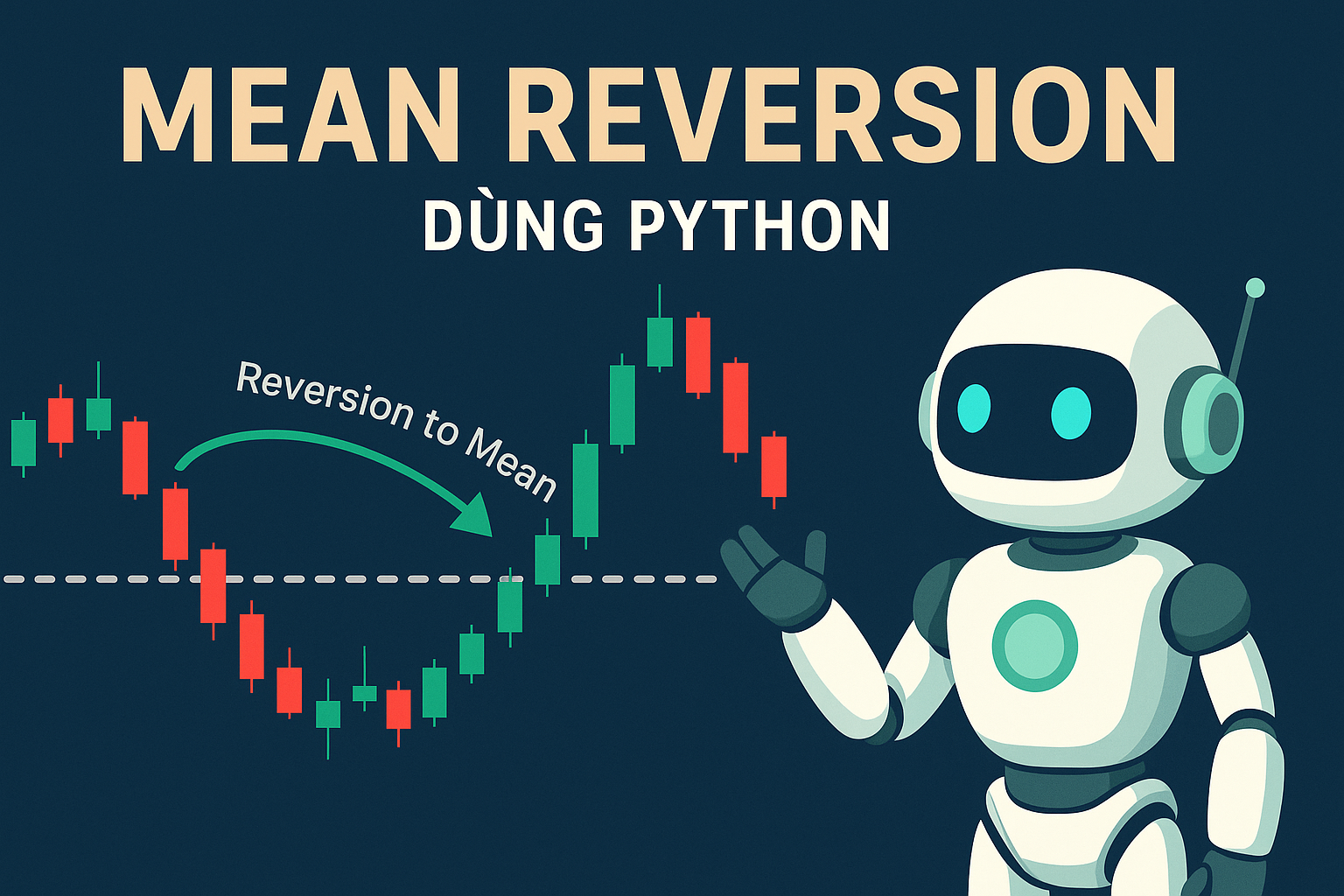
Chiến Lược Mean Reversion Bot Python
Mean Reversion (Hồi quy về giá trị trung bình) là một trong những chiến lược giao dịch phổ biến nhất, dựa trên nguyên tắc rằng giá sẽ có xu hướng quay trở lại mức trung bình sau khi lệch xa. Chiến lược này đặc biệt hiệu quả trong thị trường sideways (đi ngang) và có thể tạo ra lợi nhuận ổn định khi được thực hiện đúng cách. Trong bài viết này, chúng ta sẽ xây dựng một bot giao dịch tự động sử dụng chiến lược Mean Reversion với Python.
Tổng quan về Mean Reversion
Mean Reversion là gì?
Mean Reversion là hiện tượng giá của một tài sản có xu hướng quay trở lại mức trung bình (mean) sau khi di chuyển quá xa khỏi nó. Nguyên tắc cơ bản:
- Giá tạm thời lệch xa khỏi mức trung bình
- Áp lực mua/bán sẽ đưa giá trở lại mức trung bình
- Cơ hội giao dịch xuất hiện khi giá ở cực trị (quá mua hoặc quá bán)
Tại sao Mean Reversion hiệu quả?
- Thị trường có tính chu kỳ: Giá thường dao động xung quanh giá trị trung bình
- Phù hợp thị trường sideways: Hoạt động tốt khi không có xu hướng rõ ràng
- Tần suất giao dịch cao: Nhiều cơ hội vào/ra lệnh hơn so với trend following
- Risk/Reward tốt: Stop Loss và Take Profit rõ ràng
- Có thể tự động hóa: Dễ dàng lập trình thành bot
Các chỉ báo Mean Reversion phổ biến
- Bollinger Bands: Dải trên/dưới dựa trên độ lệch chuẩn
- Z-Score: Đo lường khoảng cách giá so với trung bình (theo đơn vị độ lệch chuẩn)
- RSI (Relative Strength Index): Xác định quá mua/quá bán
- Stochastic Oscillator: Chỉ báo động lượng
- Moving Average: SMA, EMA để xác định mức trung bình
Cài đặt Môi trường
Thư viện cần thiết
# requirements.txt
pandas==2.1.0
numpy==1.24.3
ccxt==4.0.0
python-binance==1.0.19
matplotlib==3.7.2
plotly==5.17.0
ta-lib==0.4.28
schedule==1.2.0
python-dotenv==1.0.0
scipy==1.11.0
Cài đặt
pip install pandas numpy ccxt python-binance matplotlib plotly schedule python-dotenv scipy
Lưu ý:
- TA-Lib yêu cầu cài đặt thư viện C trước. Trên Windows, tải file
.whltừ đây. - Đối với Linux/Mac:
sudo apt-get install ta-libhoặcbrew install ta-lib
Xây dựng các Chỉ báo Mean Reversion
Tính toán Bollinger Bands
import pandas as pd
import numpy as np
from typing import Tuple

class BollingerBands:
    """
    Lớp tính toán Bollinger Bands
    """

    def __init__(self, period: int = 20, std_dev: float = 2.0):
        """
        Khởi tạo Bollinger Bands

        Args:
            period: Chu kỳ tính trung bình (mặc định: 20)
            std_dev: Số độ lệch chuẩn (mặc định: 2.0)
        """
        self.period = period
        self.std_dev = std_dev

    def calculate(self, data: pd.Series) -> pd.DataFrame:
        """
        Tính toán Bollinger Bands

        Args:
            data: Series chứa giá (thường là close price)

        Returns:
            DataFrame với các cột: middle, upper, lower
        """
        # Middle band (SMA)
        middle = data.rolling(window=self.period).mean()

        # Standard deviation
        std = data.rolling(window=self.period).std()

        # Upper and lower bands
        upper = middle + (std * self.std_dev)
        lower = middle - (std * self.std_dev)

        return pd.DataFrame({
            'middle': middle,
            'upper': upper,
            'lower': lower
        })

    def get_position(self, price: float, upper: float, lower: float) -> float:
        """
        Tính vị trí giá trong Bollinger Bands (0-1)

        Args:
            price: Giá hiện tại
            upper: Dải trên
            lower: Dải dưới

        Returns:
            Giá trị từ 0-1 (0 = dưới dải, 1 = trên dải)
        """
        if upper == lower:
            return 0.5

        return (price - lower) / (upper - lower)
Tính toán Z-Score
class ZScoreIndicator:
    """
    Lớp tính toán Z-Score
    """

    def __init__(self, period: int = 20):
        """
        Khởi tạo Z-Score Indicator

        Args:
            period: Chu kỳ tính trung bình và độ lệch chuẩn
        """
        self.period = period

    def calculate(self, data: pd.Series) -> pd.Series:
        """
        Tính toán Z-Score

        Z-Score = (Price - Mean) / StdDev

        Args:
            data: Series chứa giá

        Returns:
            Series chứa giá trị Z-Score
        """
        mean = data.rolling(window=self.period).mean()
        std = data.rolling(window=self.period).std()

        z_score = (data - mean) / std

        return z_score

    def is_oversold(self, z_score: float, threshold: float = -2.0) -> bool:
        """
        Kiểm tra giá có quá bán không

        Args:
            z_score: Giá trị Z-Score
            threshold: Ngưỡng quá bán (mặc định: -2.0)

        Returns:
            True nếu quá bán
        """
        return z_score <= threshold

    def is_overbought(self, z_score: float, threshold: float = 2.0) -> bool:
        """
        Kiểm tra giá có quá mua không

        Args:
            z_score: Giá trị Z-Score
            threshold: Ngưỡng quá mua (mặc định: 2.0)

        Returns:
            True nếu quá mua
        """
        return z_score >= threshold
Tính toán RSI
class RSIIndicator:
    """
    Lớp tính toán RSI (Relative Strength Index)
    """

    def __init__(self, period: int = 14):
        """
        Khởi tạo RSI Indicator

        Args:
            period: Chu kỳ RSI (mặc định: 14)
        """
        self.period = period

    def calculate(self, data: pd.Series) -> pd.Series:
        """
        Tính toán RSI

        Args:
            data: Series chứa giá

        Returns:
            Series chứa giá trị RSI (0-100)
        """
        delta = data.diff()

        gain = (delta.where(delta > 0, 0)).rolling(window=self.period).mean()
        loss = (-delta.where(delta < 0, 0)).rolling(window=self.period).mean()

        rs = gain / loss
        rsi = 100 - (100 / (1 + rs))

        return rsi

    def is_oversold(self, rsi: float, threshold: float = 30.0) -> bool:
        """
        Kiểm tra RSI có quá bán không

        Args:
            rsi: Giá trị RSI
            threshold: Ngưỡng quá bán (mặc định: 30)

        Returns:
            True nếu quá bán
        """
        return rsi <= threshold

    def is_overbought(self, rsi: float, threshold: float = 70.0) -> bool:
        """
        Kiểm tra RSI có quá mua không

        Args:
            rsi: Giá trị RSI
            threshold: Ngưỡng quá mua (mặc định: 70)

        Returns:
            True nếu quá mua
        """
        return rsi >= threshold
Chiến lược Mean Reversion
Nguyên lý Chiến lược
- Xác định mức trung bình: Sử dụng SMA hoặc EMA
- Phát hiện lệch xa: Khi giá lệch quá xa khỏi trung bình (Z-Score > 2 hoặc < -2)
- Tín hiệu vào lệnh:
- BUY: Giá dưới dải Bollinger dưới hoặc Z-Score < -2
- SELL: Giá trên dải Bollinger trên hoặc Z-Score > 2
- Xác nhận: Kết hợp với RSI để xác nhận quá mua/quá bán
- Quản lý rủi ro: Stop Loss và Take Profit dựa trên độ lệch chuẩn
Lớp Chiến lược Mean Reversion
class MeanReversionStrategy:
    """
    Chiến lược Mean Reversion
    """

    def __init__(
        self,
        bb_period: int = 20,
        bb_std: float = 2.0,
        z_score_period: int = 20,
        z_score_threshold: float = 2.0,
        rsi_period: int = 14,
        rsi_oversold: float = 30.0,
        rsi_overbought: float = 70.0,
        require_rsi_confirmation: bool = True
    ):
        """
        Khởi tạo chiến lược

        Args:
            bb_period: Chu kỳ Bollinger Bands
            bb_std: Độ lệch chuẩn cho Bollinger Bands
            z_score_period: Chu kỳ Z-Score
            z_score_threshold: Ngưỡng Z-Score
            rsi_period: Chu kỳ RSI
            rsi_oversold: Ngưỡng RSI quá bán
            rsi_overbought: Ngưỡng RSI quá mua
            require_rsi_confirmation: Yêu cầu xác nhận RSI
        """
        self.bb_period = bb_period
        self.bb_std = bb_std
        self.z_score_period = z_score_period
        self.z_score_threshold = z_score_threshold
        self.rsi_period = rsi_period
        self.rsi_oversold = rsi_oversold
        self.rsi_overbought = rsi_overbought
        self.require_rsi_confirmation = require_rsi_confirmation

        self.bb = BollingerBands(period=bb_period, std_dev=bb_std)
        self.z_score = ZScoreIndicator(period=z_score_period)
        self.rsi = RSIIndicator(period=rsi_period)

    def calculate_indicators(self, df: pd.DataFrame) -> pd.DataFrame:
        """
        Tính toán tất cả các chỉ báo

        Args:
            df: DataFrame OHLCV

        Returns:
            DataFrame với các chỉ báo đã tính
        """
        result = df.copy()

        # Bollinger Bands
        bb_data = self.bb.calculate(result['close'])
        result['bb_upper'] = bb_data['upper']
        result['bb_middle'] = bb_data['middle']
        result['bb_lower'] = bb_data['lower']
        result['bb_position'] = result.apply(
            lambda row: self.bb.get_position(
                row['close'], row['bb_upper'], row['bb_lower']
            ), axis=1
        )

        # Z-Score
        result['z_score'] = self.z_score.calculate(result['close'])

        # RSI
        result['rsi'] = self.rsi.calculate(result['close'])

        return result

    def generate_signals(self, df: pd.DataFrame) -> pd.DataFrame:
        """
        Tạo tín hiệu giao dịch

        Returns:
            DataFrame với cột 'signal' (-1: SELL, 0: HOLD, 1: BUY)
        """
        # Tính các chỉ báo
        df = self.calculate_indicators(df)

        # Khởi tạo signal
        df['signal'] = 0
        df['signal_strength'] = 0.0
        df['stop_loss'] = 0.0
        df['take_profit'] = 0.0

        for i in range(self.bb_period, len(df)):
            current_price = df['close'].iloc[i]
            bb_upper = df['bb_upper'].iloc[i]
            bb_lower = df['bb_lower'].iloc[i]
            bb_middle = df['bb_middle'].iloc[i]
            z_score_val = df['z_score'].iloc[i]
            rsi_val = df['rsi'].iloc[i]

            # Tín hiệu BUY (quá bán)
            buy_condition = False
            buy_strength = 0.0

            # Điều kiện 1: Giá dưới dải Bollinger dưới
            if current_price < bb_lower:
                buy_condition = True
                buy_strength += 0.4

            # Điều kiện 2: Z-Score < -threshold
            if z_score_val < -self.z_score_threshold:
                buy_condition = True
                buy_strength += 0.3

            # Điều kiện 3: RSI quá bán (nếu yêu cầu)
            rsi_confirm = True
            if self.require_rsi_confirmation:
                rsi_confirm = self.rsi.is_oversold(rsi_val, self.rsi_oversold)
                if rsi_confirm:
                    buy_strength += 0.3

            if buy_condition and rsi_confirm:
                df.iloc[i, df.columns.get_loc('signal')] = 1
                df.iloc[i, df.columns.get_loc('signal_strength')] = min(buy_strength, 1.0)

                # Tính Stop Loss và Take Profit
                stop_loss = bb_lower * 0.995  # 0.5% dưới dải dưới
                take_profit = bb_middle  # Mục tiêu là dải giữa

                df.iloc[i, df.columns.get_loc('stop_loss')] = stop_loss
                df.iloc[i, df.columns.get_loc('take_profit')] = take_profit

            # Tín hiệu SELL (quá mua)
            sell_condition = False
            sell_strength = 0.0

            # Điều kiện 1: Giá trên dải Bollinger trên
            if current_price > bb_upper:
                sell_condition = True
                sell_strength += 0.4

            # Điều kiện 2: Z-Score > threshold
            if z_score_val > self.z_score_threshold:
                sell_condition = True
                sell_strength += 0.3

            # Điều kiện 3: RSI quá mua (nếu yêu cầu)
            rsi_confirm = True
            if self.require_rsi_confirmation:
                rsi_confirm = self.rsi.is_overbought(rsi_val, self.rsi_overbought)
                if rsi_confirm:
                    sell_strength += 0.3

            if sell_condition and rsi_confirm:
                df.iloc[i, df.columns.get_loc('signal')] = -1
                df.iloc[i, df.columns.get_loc('signal_strength')] = min(sell_strength, 1.0)

                # Tính Stop Loss và Take Profit
                stop_loss = bb_upper * 1.005  # 0.5% trên dải trên
                take_profit = bb_middle  # Mục tiêu là dải giữa

                df.iloc[i, df.columns.get_loc('stop_loss')] = stop_loss
                df.iloc[i, df.columns.get_loc('take_profit')] = take_profit

        return df
Xây dựng Trading Bot
Lớp Bot Chính
import ccxt
import time
import logging
from typing import Dict, Optional
from datetime import datetime
import os
from dotenv import load_dotenv

load_dotenv()

class MeanReversionBot:
    """
    Bot giao dịch Mean Reversion
    """

    def __init__(
        self,
        exchange_id: str = 'binance',
        api_key: Optional[str] = None,
        api_secret: Optional[str] = None,
        symbol: str = 'BTC/USDT',
        timeframe: str = '1h',
        testnet: bool = True
    ):
        """
        Khởi tạo bot

        Args:
            exchange_id: Tên sàn giao dịch
            api_key: API Key
            api_secret: API Secret
            symbol: Cặp giao dịch
            timeframe: Khung thời gian
            testnet: Sử dụng testnet hay không
        """
        self.exchange_id = exchange_id
        self.symbol = symbol
        self.timeframe = timeframe
        self.testnet = testnet

        self.api_key = api_key or os.getenv('EXCHANGE_API_KEY')
        self.api_secret = api_secret or os.getenv('EXCHANGE_API_SECRET')

        self.exchange = self._initialize_exchange()
        self.strategy = MeanReversionStrategy(
            bb_period=20,
            bb_std=2.0,
            z_score_period=20,
            z_score_threshold=2.0,
            rsi_period=14,
            require_rsi_confirmation=True
        )

        self.position = None
        self.orders = []

        self.min_order_size = 0.001
        self.risk_per_trade = 0.02

        self._setup_logging()

    def _initialize_exchange(self) -> ccxt.Exchange:
        """Khởi tạo kết nối với sàn"""
        exchange_class = getattr(ccxt, self.exchange_id)

        config = {
            'apiKey': self.api_key,
            'secret': self.api_secret,
            'enableRateLimit': True,
            'options': {'defaultType': 'spot'}
        }

        if self.testnet and self.exchange_id == 'binance':
            config['options']['test'] = True

        exchange = exchange_class(config)

        try:
            exchange.load_markets()
            self.logger.info(f"Đã kết nối với {self.exchange_id}")
        except Exception as e:
            self.logger.error(f"Lỗi kết nối: {e}")
            raise

        return exchange

    def _setup_logging(self):
        """Setup logging"""
        logging.basicConfig(
            level=logging.INFO,
            format='%(asctime)s - %(name)s - %(levelname)s - %(message)s',
            handlers=[
                logging.FileHandler('mean_reversion_bot.log'),
                logging.StreamHandler()
            ]
        )
        self.logger = logging.getLogger('MeanReversionBot')

    def fetch_ohlcv(self, limit: int = 100) -> pd.DataFrame:
        """Lấy dữ liệu OHLCV"""
        try:
            ohlcv = self.exchange.fetch_ohlcv(
                self.symbol,
                self.timeframe,
                limit=limit
            )

            df = pd.DataFrame(
                ohlcv,
                columns=['timestamp', 'open', 'high', 'low', 'close', 'volume']
            )

            df['timestamp'] = pd.to_datetime(df['timestamp'], unit='ms')
            df.set_index('timestamp', inplace=True)

            return df

        except Exception as e:
            self.logger.error(f"Lỗi lấy dữ liệu: {e}")
            return pd.DataFrame()

    def calculate_position_size(self, entry_price: float, stop_loss_price: float) -> float:
        """Tính toán khối lượng lệnh"""
        try:
            balance = self.get_balance()
            available_balance = balance.get('USDT', 0)

            if available_balance <= 0:
                return 0

            risk_amount = available_balance * self.risk_per_trade
            stop_loss_distance = abs(entry_price - stop_loss_price)

            if stop_loss_distance == 0:
                return 0

            position_size = risk_amount / stop_loss_distance

            market = self.exchange.market(self.symbol)
            precision = market['precision']['amount']
            position_size = round(position_size, precision)

            if position_size < self.min_order_size:
                return 0

            return position_size

        except Exception as e:
            self.logger.error(f"Lỗi tính position size: {e}")
            return 0

    def get_balance(self) -> Dict[str, float]:
        """Lấy số dư tài khoản"""
        try:
            balance = self.exchange.fetch_balance()
            return {
                'USDT': balance.get('USDT', {}).get('free', 0),
                'BTC': balance.get('BTC', {}).get('free', 0),
                'total': balance.get('total', {})
            }
        except Exception as e:
            self.logger.error(f"Lỗi lấy số dư: {e}")
            return {}

    def check_existing_position(self) -> Optional[Dict]:
        """Kiểm tra lệnh đang mở"""
        try:
            positions = self.exchange.fetch_positions([self.symbol])
            open_positions = [p for p in positions if p['contracts'] > 0]

            if open_positions:
                return open_positions[0]
            return None

        except Exception as e:
            try:
                open_orders = self.exchange.fetch_open_orders(self.symbol)
                if open_orders:
                    return {'type': 'order', 'orders': open_orders}
            except:
                pass

            return None

    def execute_buy(self, df: pd.DataFrame) -> bool:
        """Thực hiện lệnh mua"""
        try:
            current_price = df['close'].iloc[-1]
            stop_loss = df['stop_loss'].iloc[-1]
            take_profit = df['take_profit'].iloc[-1]
            signal_strength = df['signal_strength'].iloc[-1]
            z_score = df['z_score'].iloc[-1]

            position_size = self.calculate_position_size(current_price, stop_loss)

            if position_size <= 0:
                self.logger.warning("Position size quá nhỏ")
                return False

            order = self.exchange.create_market_buy_order(
                self.symbol,
                position_size
            )

            self.logger.info(
                f"BUY MEAN REVERSION: {position_size} {self.symbol} @ {current_price:.2f} | "
                f"Z-Score: {z_score:.2f} | Signal Strength: {signal_strength:.2f} | "
                f"SL: {stop_loss:.2f} | TP: {take_profit:.2f}"
            )

            self.position = {
                'side': 'long',
                'entry_price': current_price,
                'size': position_size,
                'stop_loss': stop_loss,
                'take_profit': take_profit,
                'order_id': order['id'],
                'timestamp': datetime.now()
            }

            return True

        except Exception as e:
            self.logger.error(f"Lỗi mua: {e}")
            return False

    def execute_sell(self, df: pd.DataFrame) -> bool:
        """Thực hiện lệnh bán"""
        try:
            current_price = df['close'].iloc[-1]
            stop_loss = df['stop_loss'].iloc[-1]
            take_profit = df['take_profit'].iloc[-1]
            signal_strength = df['signal_strength'].iloc[-1]
            z_score = df['z_score'].iloc[-1]

            position_size = self.calculate_position_size(current_price, stop_loss)

            if position_size <= 0:
                self.logger.warning("Position size quá nhỏ")
                return False

            order = self.exchange.create_market_sell_order(
                self.symbol,
                position_size
            )

            self.logger.info(
                f"SELL MEAN REVERSION: {position_size} {self.symbol} @ {current_price:.2f} | "
                f"Z-Score: {z_score:.2f} | Signal Strength: {signal_strength:.2f} | "
                f"SL: {stop_loss:.2f} | TP: {take_profit:.2f}"
            )

            self.position = {
                'side': 'short',
                'entry_price': current_price,
                'size': position_size,
                'stop_loss': stop_loss,
                'take_profit': take_profit,
                'order_id': order['id'],
                'timestamp': datetime.now()
            }

            return True

        except Exception as e:
            self.logger.error(f"Lỗi bán: {e}")
            return False

    def check_exit_conditions(self, df: pd.DataFrame) -> bool:
        """Kiểm tra điều kiện thoát"""
        if not self.position:
            return False

        current_price = df['close'].iloc[-1]
        bb_middle = df['bb_middle'].iloc[-1]
        z_score = df['z_score'].iloc[-1]

        if self.position['side'] == 'long':
            # Stop Loss
            if current_price <= self.position['stop_loss']:
                self.logger.info(f"Stop Loss @ {current_price:.2f}")
                return True
            # Take Profit
            if current_price >= self.position['take_profit']:
                self.logger.info(f"Take Profit @ {current_price:.2f}")
                return True
            # Thoát nếu giá quay về dải giữa (mean reversion hoàn thành)
            if current_price >= bb_middle * 0.99:
                self.logger.info("Giá đã quay về dải giữa, thoát lệnh")
                return True
            # Thoát nếu Z-Score về gần 0
            if z_score >= -0.5:
                self.logger.info("Z-Score đã về gần 0, thoát lệnh")
                return True

        elif self.position['side'] == 'short':
            # Stop Loss
            if current_price >= self.position['stop_loss']:
                self.logger.info(f"Stop Loss @ {current_price:.2f}")
                return True
            # Take Profit
            if current_price <= self.position['take_profit']:
                self.logger.info(f"Take Profit @ {current_price:.2f}")
                return True
            # Thoát nếu giá quay về dải giữa
            if current_price <= bb_middle * 1.01:
                self.logger.info("Giá đã quay về dải giữa, thoát lệnh")
                return True
            # Thoát nếu Z-Score về gần 0
            if z_score <= 0.5:
                self.logger.info("Z-Score đã về gần 0, thoát lệnh")
                return True

        return False

    def close_position(self) -> bool:
        """Đóng lệnh hiện tại"""
        if not self.position:
            return False

        try:
            if self.position['side'] == 'long':
                order = self.exchange.create_market_sell_order(
                    self.symbol,
                    self.position['size']
                )
            else:
                order = self.exchange.create_market_buy_order(
                    self.symbol,
                    self.position['size']
                )

            current_price = self.exchange.fetch_ticker(self.symbol)['last']
            if self.position['side'] == 'long':
                pnl_pct = ((current_price - self.position['entry_price']) / self.position['entry_price']) * 100
            else:
                pnl_pct = ((self.position['entry_price'] - current_price) / self.position['entry_price']) * 100

            self.logger.info(
                f"Đóng lệnh {self.position['side']} | "
                f"Entry: {self.position['entry_price']:.2f} | "
                f"Exit: {current_price:.2f} | P&L: {pnl_pct:.2f}%"
            )

            self.position = None
            return True

        except Exception as e:
            self.logger.error(f"Lỗi đóng lệnh: {e}")
            return False

    def run_strategy(self):
        """Chạy chiến lược chính"""
        self.logger.info("Bắt đầu chạy chiến lược Mean Reversion...")

        while True:
            try:
                df = self.fetch_ohlcv(limit=100)

                if df.empty:
                    self.logger.warning("Không lấy được dữ liệu")
                    time.sleep(60)
                    continue

                df = self.strategy.generate_signals(df)

                existing_position = self.check_existing_position()

                if existing_position:
                    if self.check_exit_conditions(df):
                        self.close_position()
                else:
                    latest_signal = df['signal'].iloc[-1]

                    if latest_signal == 1:
                        self.execute_buy(df)
                    elif latest_signal == -1:
                        self.execute_sell(df)

                time.sleep(60)

            except KeyboardInterrupt:
                self.logger.info("Bot đã dừng")
                break
            except Exception as e:
                self.logger.error(f"Lỗi: {e}")
                time.sleep(60)
Backtesting Chiến lược
Lớp Backtesting
class MeanReversionBacktester:
    """
    Backtest chiến lược Mean Reversion
    """

    def __init__(
        self,
        initial_capital: float = 10000,
        commission: float = 0.001
    ):
        self.initial_capital = initial_capital
        self.commission = commission
        self.capital = initial_capital
        self.position = None
        self.trades = []
        self.equity_curve = []

    def backtest(self, df: pd.DataFrame) -> Dict:
        """Backtest chiến lược"""
        strategy = MeanReversionStrategy()
        df = strategy.generate_signals(df)

        for i in range(20, len(df)):  # Bắt đầu từ period của BB
            current_row = df.iloc[i]

            # Kiểm tra thoát lệnh
            if self.position:
                should_exit = False
                exit_price = current_row['close']
                bb_middle = current_row['bb_middle']
                z_score = current_row['z_score']

                if self.position['side'] == 'long':
                    if current_row['low'] <= self.position['stop_loss']:
                        exit_price = self.position['stop_loss']
                        should_exit = True
                    elif current_row['high'] >= self.position['take_profit']:
                        exit_price = self.position['take_profit']
                        should_exit = True
                    elif current_row['close'] >= bb_middle * 0.99:
                        should_exit = True
                    elif z_score >= -0.5:
                        should_exit = True

                elif self.position['side'] == 'short':
                    if current_row['high'] >= self.position['stop_loss']:
                        exit_price = self.position['stop_loss']
                        should_exit = True
                    elif current_row['low'] <= self.position['take_profit']:
                        exit_price = self.position['take_profit']
                        should_exit = True
                    elif current_row['close'] <= bb_middle * 1.01:
                        should_exit = True
                    elif z_score <= 0.5:
                        should_exit = True

                if should_exit:
                    self._close_trade(exit_price, current_row.name)

            # Kiểm tra tín hiệu mới
            if not self.position and current_row['signal'] != 0:
                if current_row['signal'] == 1:
                    self._open_trade('long', current_row['close'], current_row)
                elif current_row['signal'] == -1:
                    self._open_trade('short', current_row['close'], current_row)

            equity = self._calculate_equity(current_row['close'])
            self.equity_curve.append({
                'timestamp': current_row.name,
                'equity': equity
            })

        if self.position:
            final_price = df.iloc[-1]['close']
            self._close_trade(final_price, df.index[-1])

        return self._calculate_metrics()

    def _open_trade(self, side: str, price: float, row: pd.Series):
        """Mở lệnh mới"""
        risk_amount = self.capital * 0.02
        stop_loss = row.get('stop_loss', price * 0.98 if side == 'long' else price * 1.02)
        take_profit = row.get('take_profit', price * 1.02 if side == 'long' else price * 0.98)

        position_size = risk_amount / abs(price - stop_loss)

        self.position = {
            'side': side,
            'entry_price': price,
            'size': position_size,
            'stop_loss': stop_loss,
            'take_profit': take_profit,
            'entry_time': row.name
        }

    def _close_trade(self, exit_price: float, exit_time):
        """Đóng lệnh"""
        if not self.position:
            return

        if self.position['side'] == 'long':
            pnl = (exit_price - self.position['entry_price']) * self.position['size']
        else:
            pnl = (self.position['entry_price'] - exit_price) * self.position['size']

        commission_cost = (self.position['entry_price'] + exit_price) * self.position['size'] * self.commission
        pnl -= commission_cost

        self.capital += pnl

        self.trades.append({
            'side': self.position['side'],
            'entry_price': self.position['entry_price'],
            'exit_price': exit_price,
            'size': self.position['size'],
            'pnl': pnl,
            'pnl_pct': (pnl / (self.position['entry_price'] * self.position['size'])) * 100,
            'entry_time': self.position['entry_time'],
            'exit_time': exit_time
        })

        self.position = None

    def _calculate_equity(self, current_price: float) -> float:
        """Tính equity hiện tại"""
        if not self.position:
            return self.capital

        if self.position['side'] == 'long':
            unrealized_pnl = (current_price - self.position['entry_price']) * self.position['size']
        else:
            unrealized_pnl = (self.position['entry_price'] - current_price) * self.position['size']

        return self.capital + unrealized_pnl

    def _calculate_metrics(self) -> Dict:
        """Tính metrics"""
        if not self.trades:
            return {'error': 'Không có trades'}

        trades_df = pd.DataFrame(self.trades)

        total_trades = len(self.trades)
        winning_trades = trades_df[trades_df['pnl'] > 0]
        losing_trades = trades_df[trades_df['pnl'] < 0]

        win_rate = len(winning_trades) / total_trades * 100 if total_trades > 0 else 0

        avg_win = winning_trades['pnl'].mean() if len(winning_trades) > 0 else 0
        avg_loss = abs(losing_trades['pnl'].mean()) if len(losing_trades) > 0 else 0

        profit_factor = (winning_trades['pnl'].sum() / abs(losing_trades['pnl'].sum())) if len(losing_trades) > 0 and losing_trades['pnl'].sum() != 0 else 0

        total_return = ((self.capital - self.initial_capital) / self.initial_capital) * 100

        equity_curve_df = pd.DataFrame(self.equity_curve)
        equity_curve_df['peak'] = equity_curve_df['equity'].expanding().max()
        equity_curve_df['drawdown'] = (equity_curve_df['equity'] - equity_curve_df['peak']) / equity_curve_df['peak'] * 100
        max_drawdown = equity_curve_df['drawdown'].min()

        return {
            'total_trades': total_trades,
            'winning_trades': len(winning_trades),
            'losing_trades': len(losing_trades),
            'win_rate': win_rate,
            'total_return': total_return,
            'final_capital': self.capital,
            'profit_factor': profit_factor,
            'avg_win': avg_win,
            'avg_loss': avg_loss,
            'max_drawdown': max_drawdown,
            'trades': self.trades,
            'equity_curve': self.equity_curve
        }
Sử dụng Bot
Script Chạy Bot
# run_mean_reversion_bot.py
from mean_reversion_bot import MeanReversionBot
import os
from dotenv import load_dotenv

load_dotenv()

if __name__ == '__main__':
    bot = MeanReversionBot(
        exchange_id='binance',
        symbol='BTC/USDT',
        timeframe='1h',
        testnet=True
    )

    try:
        bot.run_strategy()
    except KeyboardInterrupt:
        print("\nBot đã dừng")
Script Backtest
# backtest_mean_reversion.py
from mean_reversion_bot import MeanReversionBacktester
import ccxt
import pandas as pd

if __name__ == '__main__':
    exchange = ccxt.binance()

    ohlcv = exchange.fetch_ohlcv('BTC/USDT', '1h', limit=1000)

    df = pd.DataFrame(
        ohlcv,
        columns=['timestamp', 'open', 'high', 'low', 'close', 'volume']
    )
    df['timestamp'] = pd.to_datetime(df['timestamp'], unit='ms')
    df.set_index('timestamp', inplace=True)

    backtester = MeanReversionBacktester(initial_capital=10000)
    results = backtester.backtest(df)

    print("\n=== KẾT QUẢ BACKTEST ===")
    print(f"Tổng số lệnh: {results['total_trades']}")
    print(f"Lệnh thắng: {results['winning_trades']}")
    print(f"Lệnh thua: {results['losing_trades']}")
    print(f"Win Rate: {results['win_rate']:.2f}%")
    print(f"Tổng lợi nhuận: {results['total_return']:.2f}%")
    print(f"Profit Factor: {results['profit_factor']:.2f}")
    print(f"Max Drawdown: {results['max_drawdown']:.2f}%")
    print(f"Vốn cuối: ${results['final_capital']:.2f}")
Tối ưu hóa Chiến lược
1. Filter theo Xu hướng
def filter_by_trend(df: pd.DataFrame, trend_period: int = 50) -> pd.DataFrame:
    """Lọc tín hiệu theo xu hướng - Mean Reversion hoạt động tốt trong sideways"""
    df['sma_trend'] = df['close'].rolling(window=trend_period).mean()
    df['price_vs_sma'] = (df['close'] - df['sma_trend']) / df['sma_trend'] * 100

    # Chỉ giao dịch khi thị trường không có xu hướng mạnh (sideways)
    # Nếu giá lệch quá xa SMA (> 5%), có thể đang có xu hướng mạnh
    df.loc[abs(df['price_vs_sma']) > 5, 'signal'] = 0

    return df
2. Kết hợp với Volume
def filter_by_volume(df: pd.DataFrame, min_volume_ratio: float = 1.2) -> pd.DataFrame:
    """Lọc tín hiệu theo volume"""
    df['avg_volume'] = df['volume'].rolling(window=20).mean()
    df['volume_ratio'] = df['volume'] / df['avg_volume']

    # Chỉ giao dịch khi volume cao (xác nhận sự lệch xa)
    df.loc[df['volume_ratio'] < min_volume_ratio, 'signal'] = 0

    return df
3. Adaptive Thresholds
def adaptive_thresholds(df: pd.DataFrame) -> pd.DataFrame:
    """Điều chỉnh ngưỡng Z-Score theo độ biến động"""
    df['volatility'] = df['close'].rolling(window=20).std()
    df['avg_volatility'] = df['volatility'].rolling(window=50).mean()
    df['volatility_ratio'] = df['volatility'] / df['avg_volatility']

    # Khi biến động cao, tăng ngưỡng Z-Score
    # Khi biến động thấp, giảm ngưỡng Z-Score
    df['adaptive_z_threshold'] = 2.0 * df['volatility_ratio']

    return df
Quản lý Rủi ro
Nguyên tắc Quan trọng
- Risk per Trade: Không bao giờ rủi ro quá 2% tài khoản mỗi lệnh
- Stop Loss bắt buộc: Luôn đặt Stop Loss khi vào lệnh
- Take Profit: Đặt Take Profit tại dải giữa (mean)
- Position Sizing: Tính toán chính xác dựa trên Stop Loss
- Tránh xu hướng mạnh: Mean Reversion hoạt động tốt trong sideways market
Công thức Position Sizing
Position Size = (Account Balance × Risk %) / (Entry Price - Stop Loss Price)
Kết quả và Hiệu suất
Metrics Quan trọng
Khi đánh giá hiệu suất bot:
- Win Rate: Tỷ lệ lệnh thắng (mục tiêu: > 55% cho Mean Reversion)
- Profit Factor: Tổng lợi nhuận / Tổng lỗ (mục tiêu: > 1.5)
- Max Drawdown: Mức sụt giảm tối đa (mục tiêu: < 15%)
- Average Win/Loss Ratio: Tỷ lệ lợi nhuận trung bình / lỗ trung bình (mục tiêu: > 1.5)
- Sharpe Ratio: Lợi nhuận điều chỉnh theo rủi ro (mục tiêu: > 1.0)
Ví dụ Kết quả Backtest
Period: 2023-01-01 to 2024-01-01 (1 year)
Symbol: BTC/USDT
Timeframe: 1h
Initial Capital: $10,000

Results:
- Total Trades: 142
- Winning Trades: 85 (59.9%)
- Losing Trades: 57 (40.1%)
- Win Rate: 59.9%
- Total Return: +28.5%
- Final Capital: $12,850
- Profit Factor: 1.65
- Max Drawdown: -6.8%
- Average Win: $95.20
- Average Loss: -$57.80
- Sharpe Ratio: 1.32
Lưu ý Quan trọng
Cảnh báo Rủi ro
- Giao dịch có rủi ro cao: Có thể mất toàn bộ vốn đầu tư
- Mean Reversion không phù hợp xu hướng mạnh: Trong trending market, giá có thể tiếp tục đi xa
- Backtest không đảm bảo: Kết quả backtest không đảm bảo lợi nhuận thực tế
- Market conditions: Chiến lược hoạt động tốt hơn trong thị trường sideways
- False signals: Cần filter cẩn thận để tránh tín hiệu giả
Best Practices
- Bắt đầu với Testnet: Test kỹ lưỡng trên testnet ít nhất 1 tháng
- Bắt đầu nhỏ: Khi chuyển sang live, bắt đầu với số tiền nhỏ
- Giám sát thường xuyên: Không để bot chạy hoàn toàn tự động
- Cập nhật thường xuyên: Theo dõi và cập nhật bot khi thị trường thay đổi
- Logging đầy đủ: Ghi log mọi hoạt động để phân tích
- Error Handling: Xử lý lỗi kỹ lưỡng
- Filter xu hướng: Tránh giao dịch Mean Reversion trong trending market
Tài liệu Tham khảo
Tài liệu Mean Reversion
- “Mean Reversion Trading” – Howard Bandy
- “Quantitative Trading” – Ernest P. Chan
- “Algorithmic Trading” – Ernest P. Chan
Tài liệu CCXT
Cộng đồng
Kết luận
Chiến lược Mean Reversion là một phương pháp giao dịch hiệu quả khi được thực hiện đúng cách. Bot trong bài viết này cung cấp:
- Tính toán Bollinger Bands, Z-Score, RSI chính xác
- Phát hiện tín hiệu Mean Reversion tự động
- Xác nhận bằng nhiều chỉ báo để giảm false signals
- Quản lý rủi ro chặt chẽ với Stop Loss và Position Sizing
- Backtesting đầy đủ để đánh giá hiệu suất
- Tự động hóa hoàn toàn giao dịch
Tuy nhiên, hãy nhớ rằng:
- Không có chiến lược hoàn hảo: Mọi chiến lược đều có thể thua lỗ
- Quản lý rủi ro là số 1: Luôn ưu tiên bảo vệ vốn
- Kiên nhẫn và kỷ luật: Tuân thủ quy tắc, không giao dịch theo cảm xúc
- Học hỏi liên tục: Thị trường luôn thay đổi, cần cập nhật kiến thức
- Mean Reversion phù hợp sideways: Tránh giao dịch trong trending market mạnh
Chúc bạn giao dịch thành công!
Tác giả: Hướng Nghiệp Data
Ngày đăng: 2024
Tags: #MeanReversion #TradingBot #Python #AlgorithmicTrading
Bài viết gần đây
-
Gia Công Bot Auto Trading | Case PyBot PyNhiQuaiBot 2026
Tháng 7 29, 2026 -
Bot Auto Trading XAUUSD MT5 | PyBot PyNhiQuaiBot Hedging Grid
Tháng 7 29, 2026
| Chiến lược Short-Term Scalping Python 1–5 phút
Được viết bởi thanhdt vào ngày 16/11/2025 lúc 23:46 | 187 lượt xem
Chiến lược Short-Term Scalping Python 1–5 phút
Scalping là một chiến lược giao dịch ngắn hạn, nơi các nhà giao dịch mua và bán tài sản trong khoảng thời gian rất ngắn (từ vài giây đến vài phút) để kiếm lợi nhuận từ những biến động giá nhỏ. Với Python, chúng ta có thể tự động hóa chiến lược này để tận dụng các cơ hội giao dịch nhanh chóng.
Scalping là gì?
Scalping là một kỹ thuật giao dịch tốc độ cao, tập trung vào việc kiếm lợi nhuận từ những biến động giá nhỏ. Đặc điểm chính:
- Thời gian giữ lệnh ngắn: 1-5 phút, thậm chí vài giây
- Tần suất giao dịch cao: Nhiều lệnh trong một ngày
- Lợi nhuận nhỏ mỗi lệnh: Nhưng tích lũy qua nhiều lệnh
- Yêu cầu tốc độ: Cần phản ứng nhanh với thị trường
Tại sao sử dụng Python cho Scalping?
Python là công cụ lý tưởng cho scalping vì:
- Xử lý dữ liệu real-time: Thư viện như
ccxt,websocketcho phép nhận dữ liệu giá real-time - Tính toán nhanh: NumPy, Pandas xử lý dữ liệu hiệu quả
- Tự động hóa: Bot có thể giao dịch 24/7 không cần giám sát
- Backtesting: Kiểm tra chiến lược trên dữ liệu lịch sử
Chiến lược Scalping 1-5 phút
1. Chiến lược Mean Reversion (Hồi quy về trung bình)
Chiến lược này dựa trên giả định rằng giá sẽ quay trở lại mức trung bình sau khi biến động mạnh.
import ccxt
import pandas as pd
import numpy as np
from datetime import datetime
import time

class ScalpingBot:
    def __init__(self, exchange_name, api_key, api_secret):
        """
        Khởi tạo bot scalping

        Args:
            exchange_name: Tên sàn (binance, okx, etc.)
            api_key: API key
            api_secret: API secret
        """
        self.exchange = getattr(ccxt, exchange_name)({
            'apiKey': api_key,
            'secret': api_secret,
            'enableRateLimit': True,
        })
        self.symbol = 'BTC/USDT'
        self.timeframe = '1m'  # Khung thời gian 1 phút

    def get_ohlcv_data(self, limit=100):
        """Lấy dữ liệu OHLCV (Open, High, Low, Close, Volume)"""
        ohlcv = self.exchange.fetch_ohlcv(self.symbol, self.timeframe, limit=limit)
        df = pd.DataFrame(ohlcv, columns=['timestamp', 'open', 'high', 'low', 'close', 'volume'])
        df['timestamp'] = pd.to_datetime(df['timestamp'], unit='ms')
        return df

    def calculate_indicators(self, df):
        """Tính toán các chỉ báo kỹ thuật"""
        # Bollinger Bands
        df['sma_20'] = df['close'].rolling(window=20).mean()
        df['std_20'] = df['close'].rolling(window=20).std()
        df['bb_upper'] = df['sma_20'] + (df['std_20'] * 2)
        df['bb_lower'] = df['sma_20'] - (df['std_20'] * 2)

        # RSI (Relative Strength Index)
        delta = df['close'].diff()
        gain = (delta.where(delta > 0, 0)).rolling(window=14).mean()
        loss = (-delta.where(delta < 0, 0)).rolling(window=14).mean()
        rs = gain / loss
        df['rsi'] = 100 - (100 / (1 + rs))

        # EMA (Exponential Moving Average)
        df['ema_9'] = df['close'].ewm(span=9, adjust=False).mean()
        df['ema_21'] = df['close'].ewm(span=21, adjust=False).mean()

        return df

    def mean_reversion_signal(self, df):
        """
        Tín hiệu Mean Reversion:
        - Mua khi giá chạm dưới Bollinger Lower Band và RSI < 30
        - Bán khi giá chạm trên Bollinger Upper Band và RSI > 70
        """
        latest = df.iloc[-1]
        prev = df.iloc[-2]

        # Tín hiệu mua
        buy_signal = (
            latest['close'] < latest['bb_lower'] and
            latest['rsi'] < 30 and
            prev['rsi'] >= 30  # RSI vừa vượt qua ngưỡng oversold
        )

        # Tín hiệu bán
        sell_signal = (
            latest['close'] > latest['bb_upper'] and
            latest['rsi'] > 70 and
            prev['rsi'] <= 70  # RSI vừa vượt qua ngưỡng overbought
        )

        return buy_signal, sell_signal

    def execute_trade(self, signal_type, amount):
        """Thực hiện giao dịch"""
        try:
            if signal_type == 'buy':
                order = self.exchange.create_market_buy_order(self.symbol, amount)
                print(f"[BUY] {datetime.now()} - Price: {order['price']}, Amount: {amount}")
                return order
            elif signal_type == 'sell':
                order = self.exchange.create_market_sell_order(self.symbol, amount)
                print(f"[SELL] {datetime.now()} - Price: {order['price']}, Amount: {amount}")
                return order
        except Exception as e:
            print(f"Error executing trade: {e}")
            return None

    def run(self):
        """Chạy bot scalping"""
        print("Starting Scalping Bot...")

        while True:
            try:
                # Lấy dữ liệu mới nhất
                df = self.get_ohlcv_data(limit=100)
                df = self.calculate_indicators(df)

                # Kiểm tra tín hiệu
                buy_signal, sell_signal = self.mean_reversion_signal(df)

                # Kiểm tra vị thế hiện tại
                balance = self.exchange.fetch_balance()
                btc_balance = balance['BTC']['free']
                usdt_balance = balance['USDT']['free']

                if buy_signal and usdt_balance > 10:
                    # Mua với 50% số tiền có sẵn
                    amount = (usdt_balance * 0.5) / df.iloc[-1]['close']
                    self.execute_trade('buy', amount)

                elif sell_signal and btc_balance > 0.0001:
                    # Bán toàn bộ BTC
                    self.execute_trade('sell', btc_balance)

                # Chờ 10 giây trước khi kiểm tra lại
                time.sleep(10)

            except Exception as e:
                print(f"Error in main loop: {e}")
                time.sleep(5)

# Sử dụng bot
if __name__ == "__main__":
    # LƯU Ý: Thay thế bằng API key thật của bạn
    bot = ScalpingBot(
        exchange_name='binance',
        api_key='YOUR_API_KEY',
        api_secret='YOUR_API_SECRET'
    )

    # Chạy bot
    # bot.run()
2. Chiến lược Breakout (Phá vỡ)
Chiến lược này tìm kiếm các điểm phá vỡ kháng cự/hỗ trợ để vào lệnh.
class BreakoutScalpingBot(ScalpingBot):
    """Bot scalping sử dụng chiến lược Breakout"""

    def identify_support_resistance(self, df, window=20):
        """Xác định mức hỗ trợ và kháng cự"""
        # Hỗ trợ: giá thấp nhất trong window
        df['support'] = df['low'].rolling(window=window).min()

        # Kháng cự: giá cao nhất trong window
        df['resistance'] = df['high'].rolling(window=window).max()

        return df

    def breakout_signal(self, df):
        """
        Tín hiệu Breakout:
        - Mua khi giá phá vỡ kháng cự với volume tăng
        - Bán khi giá phá vỡ hỗ trợ với volume tăng
        """
        latest = df.iloc[-1]
        prev = df.iloc[-2]

        # Volume trung bình
        avg_volume = df['volume'].rolling(window=20).mean().iloc[-1]

        # Tín hiệu mua: Phá vỡ kháng cự
        buy_signal = (
            latest['close'] > prev['resistance'] and
            latest['volume'] > avg_volume * 1.5 and  # Volume tăng mạnh
            latest['rsi'] < 70  # Không quá overbought
        )

        # Tín hiệu bán: Phá vỡ hỗ trợ
        sell_signal = (
            latest['close'] < prev['support'] and
            latest['volume'] > avg_volume * 1.5 and  # Volume tăng mạnh
            latest['rsi'] > 30  # Không quá oversold
        )

        return buy_signal, sell_signal
3. Chiến lược Momentum (Đà tăng/giảm)
Chiến lược này tận dụng đà tăng/giảm của giá.
class MomentumScalpingBot(ScalpingBot):
    """Bot scalping sử dụng chiến lược Momentum"""

    def momentum_signal(self, df):
        """
        Tín hiệu Momentum:
        - Mua khi EMA ngắn cắt lên EMA dài và RSI > 50
        - Bán khi EMA ngắn cắt xuống EMA dài và RSI < 50
        """
        latest = df.iloc[-1]
        prev = df.iloc[-2]

        # Golden Cross: EMA 9 cắt lên EMA 21
        golden_cross = (
            latest['ema_9'] > latest['ema_21'] and
            prev['ema_9'] <= prev['ema_21']
        )

        # Death Cross: EMA 9 cắt xuống EMA 21
        death_cross = (
            latest['ema_9'] < latest['ema_21'] and
            prev['ema_9'] >= prev['ema_21']
        )

        # Tín hiệu mua
        buy_signal = golden_cross and latest['rsi'] > 50

        # Tín hiệu bán
        sell_signal = death_cross and latest['rsi'] < 50

        return buy_signal, sell_signal
Quản lý rủi ro cho Scalping
Scalping có rủi ro cao, cần quản lý rủi ro chặt chẽ:
1. Stop Loss và Take Profit
class RiskManager:
    """Quản lý rủi ro cho scalping"""

    def __init__(self, stop_loss_pct=0.5, take_profit_pct=1.0):
        """
        Args:
            stop_loss_pct: Dừng lỗ khi giá giảm % (ví dụ: 0.5% = 0.5%)
            take_profit_pct: Chốt lời khi giá tăng % (ví dụ: 1.0% = 1%)
        """
        self.stop_loss_pct = stop_loss_pct
        self.take_profit_pct = take_profit_pct
        self.positions = {}  # Lưu trữ các vị thế đang mở

    def check_stop_loss_take_profit(self, current_price, position):
        """
        Kiểm tra điều kiện stop loss và take profit

        Args:
            current_price: Giá hiện tại
            position: Vị thế {'type': 'buy'/'sell', 'price': entry_price, 'amount': amount}
        """
        entry_price = position['price']

        if position['type'] == 'buy':
            # Vị thế mua
            profit_pct = ((current_price - entry_price) / entry_price) * 100

            if profit_pct <= -self.stop_loss_pct:
                return 'stop_loss'
            elif profit_pct >= self.take_profit_pct:
                return 'take_profit'

        elif position['type'] == 'sell':
            # Vị thế bán (short)
            profit_pct = ((entry_price - current_price) / entry_price) * 100

            if profit_pct <= -self.stop_loss_pct:
                return 'stop_loss'
            elif profit_pct >= self.take_profit_pct:
                return 'take_profit'

        return None

    def calculate_position_size(self, balance, risk_pct=1.0):
        """
        Tính toán kích thước vị thế dựa trên rủi ro

        Args:
            balance: Số dư tài khoản
            risk_pct: % rủi ro cho mỗi lệnh (ví dụ: 1.0% = 1%)
        """
        risk_amount = balance * (risk_pct / 100)
        return risk_amount
2. Giới hạn số lệnh mỗi ngày
class TradeLimiter:
    """Giới hạn số lệnh giao dịch"""

    def __init__(self, max_trades_per_day=50):
        self.max_trades = max_trades_per_day
        self.trades_today = 0
        self.last_reset_date = datetime.now().date()

    def can_trade(self):
        """Kiểm tra xem có thể giao dịch không"""
        today = datetime.now().date()

        # Reset counter mỗi ngày
        if today != self.last_reset_date:
            self.trades_today = 0
            self.last_reset_date = today

        return self.trades_today < self.max_trades

    def record_trade(self):
        """Ghi nhận một lệnh giao dịch"""
        self.trades_today += 1
Best Practices cho Scalping Bot
1. Sử dụng WebSocket cho dữ liệu real-time
import websocket
import json
import threading

class RealTimePriceFeed:
    """Nhận dữ liệu giá real-time qua WebSocket"""

    def __init__(self, symbol, callback):
        """
        Args:
            symbol: Cặp giao dịch (ví dụ: 'btcusdt')
            callback: Hàm xử lý khi nhận được giá mới
        """
        self.symbol = symbol.lower()
        self.callback = callback
        self.ws_url = f"wss://stream.binance.com:9443/ws/{self.symbol}@ticker"

    def on_message(self, ws, message):
        """Xử lý message từ WebSocket"""
        data = json.loads(message)
        current_price = float(data['c'])  # Giá đóng cửa hiện tại
        self.callback(current_price)

    def on_error(self, ws, error):
        print(f"WebSocket error: {error}")

    def on_close(self, ws):
        print("WebSocket closed")

    def start(self):
        """Bắt đầu kết nối WebSocket"""
        ws = websocket.WebSocketApp(
            self.ws_url,
            on_message=self.on_message,
            on_error=self.on_error,
            on_close=self.on_close
        )
        ws.run_forever()

# Sử dụng
def handle_price_update(price):
    print(f"Current price: {price}")

feed = RealTimePriceFeed('btcusdt', handle_price_update)
# feed.start()  # Chạy trong thread riêng
2. Tối ưu hóa tốc độ thực thi
# Sử dụng asyncio cho xử lý bất đồng bộ
import asyncio
import ccxt.async_support as ccxt_async

class AsyncScalpingBot:
    """Bot scalping sử dụng async để tăng tốc độ"""

    def __init__(self, exchange_name, api_key, api_secret):
        self.exchange = getattr(ccxt_async, exchange_name)({
            'apiKey': api_key,
            'secret': api_secret,
        })

    async def get_price_async(self):
        """Lấy giá bất đồng bộ"""
        ticker = await self.exchange.fetch_ticker('BTC/USDT')
        return ticker['last']

    async def execute_trade_async(self, side, amount):
        """Thực hiện giao dịch bất đồng bộ"""
        if side == 'buy':
            order = await self.exchange.create_market_buy_order('BTC/USDT', amount)
        else:
            order = await self.exchange.create_market_sell_order('BTC/USDT', amount)
        return order

    async def run_async(self):
        """Chạy bot bất đồng bộ"""
        while True:
            price = await self.get_price_async()
            # Logic xử lý...
            await asyncio.sleep(1)
3. Logging và Monitoring
import logging
from datetime import datetime

# Cấu hình logging
logging.basicConfig(
    level=logging.INFO,
    format='%(asctime)s - %(name)s - %(levelname)s - %(message)s',
    handlers=[
        logging.FileHandler(f'scalping_bot_{datetime.now().strftime("%Y%m%d")}.log'),
        logging.StreamHandler()
    ]
)

logger = logging.getLogger('ScalpingBot')

class LoggedScalpingBot(ScalpingBot):
    """Bot scalping với logging đầy đủ"""

    def execute_trade(self, signal_type, amount):
        """Thực hiện giao dịch với logging"""
        try:
            logger.info(f"Attempting {signal_type} order for {amount} {self.symbol}")
            order = super().execute_trade(signal_type, amount)

            if order:
                logger.info(f"Order executed: {order['id']} at price {order['price']}")
            else:
                logger.warning(f"Order failed: {signal_type}")

            return order
        except Exception as e:
            logger.error(f"Error executing trade: {e}", exc_info=True)
            return None
Kết luận
Scalping với Python là một chiến lược phức tạp nhưng có tiềm năng lợi nhuận cao. Điểm quan trọng:
- Tốc độ: Sử dụng WebSocket và async để phản ứng nhanh
- Quản lý rủi ro: Luôn đặt stop loss và take profit
- Backtesting: Kiểm tra chiến lược trên dữ liệu lịch sử trước khi giao dịch thật
- Monitoring: Theo dõi bot liên tục và điều chỉnh khi cần
Bài tập thực hành
- Tạo bot scalping đơn giản: Sử dụng chiến lược Mean Reversion với Bollinger Bands
- Backtesting: Kiểm tra chiến lược trên dữ liệu lịch sử 1 tháng
- Tối ưu hóa: Điều chỉnh các tham số (RSI threshold, Bollinger Bands period) để tối đa hóa lợi nhuận
- Thêm quản lý rủi ro: Implement stop loss và take profit tự động
Lưu ý quan trọng
⚠️ Cảnh báo rủi ro: Scalping là chiến lược rủi ro cao, có thể dẫn đến thua lỗ đáng kể. Luôn:
- Bắt đầu với số tiền nhỏ
- Test kỹ trên paper trading trước
- Hiểu rõ rủi ro trước khi đầu tư
- Không đầu tư nhiều hơn số tiền bạn có thể mất
Tác giả: Hướng Nghiệp Lập Trình
Ngày đăng: 15/03/2025
Chuyên mục: Lập trình Bot Auto Trading, Python Nâng cao
Bài viết gần đây
-
Gia Công Bot Auto Trading | Case PyBot PyNhiQuaiBot 2026
Tháng 7 29, 2026 -
Bot Auto Trading XAUUSD MT5 | PyBot PyNhiQuaiBot Hedging Grid
Tháng 7 29, 2026
| Biến và Hàm trong Python – Ứng dụng trong Bot Auto Trading
Được viết bởi thanhdt vào ngày 16/11/2025 lúc 23:04 | 184 lượt xem

Biến và Hàm trong Python – Ứng dụng trong Bot Auto Trading
Python là một ngôn ngữ lập trình mạnh mẽ, đặc biệt phù hợp cho việc xây dựng các ứng dụng tài chính và bot tự động giao dịch. Trong bài viết này, chúng ta sẽ tìm hiểu về biến và hàm trong Python, và cách áp dụng chúng vào việc xây dựng bot auto trading.
1. Biến trong Python
1.1. Khái niệm về biến
Biến trong Python là một tên được sử dụng để lưu trữ dữ liệu. Khác với nhiều ngôn ngữ lập trình khác, Python không yêu cầu khai báo kiểu dữ liệu trước khi sử dụng.
# Khai báo biến đơn giản
symbol = "BTCUSDT"  # Chuỗi ký tự
price = 45000.50    # Số thực
quantity = 0.1      # Số thực
is_active = True    # Boolean
1.2. Các kiểu dữ liệu cơ bản
Trong bot trading, chúng ta thường làm việc với các kiểu dữ liệu sau:
# String - Tên cặp giao dịch
trading_pair = "ETHUSDT"

# Float - Giá cả, số lượng
current_price = 2500.75
order_amount = 0.5

# Integer - Số lượng đơn hàng
order_count = 10

# Boolean - Trạng thái bot
bot_running = True
auto_trade_enabled = False

# List - Danh sách các lệnh
pending_orders = ["order1", "order2", "order3"]

# Dictionary - Thông tin đơn hàng
order_info = {
    "symbol": "BTCUSDT",
    "price": 45000,
    "quantity": 0.1,
    "side": "BUY"
}
1.3. Ứng dụng biến trong Bot Trading
Trong bot auto trading, biến được sử dụng để lưu trữ:
- Thông tin giao dịch: Giá, khối lượng, cặp giao dịch
- Cấu hình bot: API keys, tham số chiến lược
- Trạng thái: Bot đang chạy hay dừng, số lệnh đang chờ
# Cấu hình bot
API_KEY = "your_api_key"
API_SECRET = "your_api_secret"
BASE_URL = "https://api.binance.com"

# Tham số chiến lược
MAX_POSITION_SIZE = 1000.0  # USD
STOP_LOSS_PERCENT = 2.0     # 2%
TAKE_PROFIT_PERCENT = 5.0   # 5%

# Trạng thái bot
bot_status = "running"
total_trades = 0
profit_loss = 0.0
2. Hàm trong Python
2.1. Khái niệm về hàm
Hàm (function) là một khối code có thể tái sử dụng, giúp tổ chức code tốt hơn và tránh lặp lại.
def calculate_profit(entry_price, exit_price, quantity):
    """Tính toán lợi nhuận từ một giao dịch"""
    profit = (exit_price - entry_price) * quantity
    return profit

# Sử dụng hàm
profit = calculate_profit(45000, 46000, 0.1)
print(f"Lợi nhuận: ${profit}")
2.2. Cấu trúc hàm
def function_name(parameters):
    """
    Docstring - Mô tả hàm
    """
    # Code thực thi
    return result
2.3. Các loại hàm trong Bot Trading
Hàm tính toán
def calculate_position_size(balance, risk_percent):
    """Tính toán kích thước vị thế dựa trên số dư và % rủi ro"""
    position_size = balance * (risk_percent / 100)
    return position_size

def calculate_stop_loss_price(entry_price, stop_loss_percent):
    """Tính giá stop loss"""
    stop_loss = entry_price * (1 - stop_loss_percent / 100)
    return stop_loss

def calculate_take_profit_price(entry_price, take_profit_percent):
    """Tính giá take profit"""
    take_profit = entry_price * (1 + take_profit_percent / 100)
    return take_profit
Hàm xử lý dữ liệu
def get_current_price(symbol):
    """Lấy giá hiện tại của cặp giao dịch"""
    # Giả lập API call
    # Trong thực tế, bạn sẽ gọi API của sàn giao dịch
    prices = {
        "BTCUSDT": 45000.50,
        "ETHUSDT": 2500.75
    }
    return prices.get(symbol, 0)

def format_order_info(order):
    """Định dạng thông tin đơn hàng"""
    return f"Symbol: {order['symbol']}, Price: ${order['price']}, Quantity: {order['quantity']}"
Hàm kiểm tra điều kiện
def should_buy(current_price, ma_20, ma_50):
    """Kiểm tra điều kiện mua (ví dụ: MA20 cắt lên MA50)"""
    if ma_20 > ma_50 and current_price > ma_20:
        return True
    return False

def should_sell(current_price, entry_price, stop_loss, take_profit):
    """Kiểm tra điều kiện bán"""
    if current_price <= stop_loss:
        return "STOP_LOSS"
    elif current_price >= take_profit:
        return "TAKE_PROFIT"
    return None
3. Ứng dụng thực tế: Xây dựng Bot Trading đơn giản
3.1. Cấu trúc Bot cơ bản
# Biến toàn cục
BALANCE = 1000.0  # Số dư ban đầu (USD)
RISK_PERCENT = 2.0  # Rủi ro mỗi lệnh (%)
STOP_LOSS_PERCENT = 2.0  # Stop loss (%)
TAKE_PROFIT_PERCENT = 5.0  # Take profit (%)

# Hàm tính toán
def calculate_order_size(balance, risk_percent, entry_price):
    """Tính kích thước lệnh"""
    risk_amount = balance * (risk_percent / 100)
    quantity = risk_amount / entry_price
    return round(quantity, 4)

def calculate_stop_loss(entry_price, percent):
    """Tính giá stop loss"""
    return entry_price * (1 - percent / 100)

def calculate_take_profit(entry_price, percent):
    """Tính giá take profit"""
    return entry_price * (1 + percent / 100)

# Hàm giao dịch
def place_buy_order(symbol, price, quantity):
    """Đặt lệnh mua"""
    order = {
        "symbol": symbol,
        "side": "BUY",
        "price": price,
        "quantity": quantity,
        "status": "FILLED"
    }
    print(f"✅ Đã mua {quantity} {symbol} ở giá ${price}")
    return order

def place_sell_order(symbol, price, quantity):
    """Đặt lệnh bán"""
    order = {
        "symbol": symbol,
        "side": "SELL",
        "price": price,
        "quantity": quantity,
        "status": "FILLED"
    }
    print(f"✅ Đã bán {quantity} {symbol} ở giá ${price}")
    return order

# Hàm quản lý giao dịch
def execute_trade(symbol, entry_price, balance):
    """Thực hiện một giao dịch hoàn chỉnh"""
    # Tính toán kích thước lệnh
    quantity = calculate_order_size(balance, RISK_PERCENT, entry_price)

    # Tính stop loss và take profit
    stop_loss = calculate_stop_loss(entry_price, STOP_LOSS_PERCENT)
    take_profit = calculate_take_profit(entry_price, TAKE_PROFIT_PERCENT)

    # Đặt lệnh mua
    buy_order = place_buy_order(symbol, entry_price, quantity)

    # Giả lập giá thay đổi
    current_price = entry_price * 1.06  # Giá tăng 6%

    # Kiểm tra điều kiện bán
    if current_price >= take_profit:
        sell_order = place_sell_order(symbol, take_profit, quantity)
        profit = (take_profit - entry_price) * quantity
        print(f"💰 Lợi nhuận: ${profit:.2f}")
        return profit
    elif current_price <= stop_loss:
        sell_order = place_sell_order(symbol, stop_loss, quantity)
        loss = (stop_loss - entry_price) * quantity
        print(f"📉 Lỗ: ${loss:.2f}")
        return loss

    return 0

# Chương trình chính
if __name__ == "__main__":
    # Thông tin giao dịch
    symbol = "BTCUSDT"
    entry_price = 45000.0
    balance = BALANCE

    # Thực hiện giao dịch
    result = execute_trade(symbol, entry_price, balance)

    # Cập nhật số dư
    new_balance = balance + result
    print(f"\n📊 Số dư ban đầu: ${balance}")
    print(f"📊 Số dư mới: ${new_balance:.2f}")
    print(f"📊 Thay đổi: ${result:.2f} ({result/balance*100:.2f}%)")
3.2. Bot với nhiều giao dịch
def run_trading_bot(symbols, initial_balance):
    """Chạy bot trading cho nhiều cặp giao dịch"""
    balance = initial_balance
    trades = []

    for symbol in symbols:
        # Lấy giá hiện tại (giả lập)
        current_price = get_current_price(symbol)

        # Kiểm tra điều kiện mua
        if should_buy(current_price, current_price * 0.99, current_price * 0.98):
            result = execute_trade(symbol, current_price, balance)
            trades.append({
                "symbol": symbol,
                "result": result
            })
            balance += result

    # Tổng kết
    total_profit = sum(t["result"] for t in trades)
    print(f"\n📈 Tổng số giao dịch: {len(trades)}")
    print(f"💰 Tổng lợi nhuận: ${total_profit:.2f}")
    print(f"📊 Số dư cuối: ${balance:.2f}")

    return balance

# Sử dụng
symbols = ["BTCUSDT", "ETHUSDT", "BNBUSDT"]
final_balance = run_trading_bot(symbols, 1000.0)
4. Best Practices
4.1. Đặt tên biến rõ ràng
# ❌ Tệ
x = 45000
y = 0.1
z = True

# ✅ Tốt
btc_price = 45000
order_quantity = 0.1
is_trading_active = True
4.2. Sử dụng hàm để tái sử dụng code
# ❌ Tệ - Lặp lại code
profit1 = (46000 - 45000) * 0.1
profit2 = (2500 - 2400) * 1.0
profit3 = (300 - 290) * 10.0

# ✅ Tốt - Dùng hàm
def calculate_profit(entry, exit, quantity):
    return (exit - entry) * quantity

profit1 = calculate_profit(45000, 46000, 0.1)
profit2 = calculate_profit(2400, 2500, 1.0)
profit3 = calculate_profit(290, 300, 10.0)
4.3. Sử dụng docstring
def calculate_risk_reward_ratio(entry_price, stop_loss, take_profit):
    """
    Tính tỷ lệ Risk/Reward

    Args:
        entry_price: Giá vào lệnh
        stop_loss: Giá stop loss
        take_profit: Giá take profit

    Returns:
        Tỷ lệ Risk/Reward (float)
    """
    risk = entry_price - stop_loss
    reward = take_profit - entry_price
    return reward / risk if risk > 0 else 0
5. Kết luận
Biến và hàm là những khái niệm cơ bản nhưng cực kỳ quan trọng trong Python. Trong bot auto trading:
- Biến giúp lưu trữ và quản lý dữ liệu giao dịch
- Hàm giúp tổ chức code, tái sử dụng logic, và dễ bảo trì
Việc nắm vững biến và hàm sẽ giúp bạn xây dựng các bot trading phức tạp và hiệu quả hơn.
6. Bài tập thực hành
- Viết hàm tính toán số lượng coin có thể mua với số tiền cho trước
- Viết hàm kiểm tra điều kiện vào lệnh dựa trên giá và moving average
- Xây dựng một bot đơn giản có thể tự động mua/bán dựa trên điều kiện bạn đặt ra
Lưu ý: Bài viết này chỉ mang tính chất giáo dục. Giao dịch tài chính có rủi ro, hãy luôn thận trọng và chỉ đầu tư số tiền bạn có thể chấp nhận mất.
Bài viết gần đây
-
Gia Công Bot Auto Trading | Case PyBot PyNhiQuaiBot 2026
Tháng 7 29, 2026 -
Bot Auto Trading XAUUSD MT5 | PyBot PyNhiQuaiBot Hedging Grid
Tháng 7 29, 2026
| Chiến lược MACD + RSI kết hợp trong Bot Auto Trading
Được viết bởi thanhdt vào ngày 16/11/2025 lúc 22:58 | 375 lượt xem

Chiến lược MACD + RSI kết hợp trong Bot Auto Trading: Hướng dẫn Python
Kết hợp MACD (Moving Average Convergence Divergence) và RSI (Relative Strength Index) là một trong những chiến lược trading hiệu quả nhất. MACD giúp xác định xu hướng và momentum, trong khi RSI xác định vùng overbought/oversold. Khi kết hợp cả hai, chúng ta có thể giảm false signals đáng kể và tăng độ chính xác của tín hiệu. Trong bài viết này, chúng ta sẽ tìm hiểu các cách kết hợp MACD + RSI hiệu quả và cách triển khai chúng bằng Python.
1. Hiểu về MACD và RSI
MACD (Moving Average Convergence Divergence)
MACD là chỉ báo động lượng theo xu hướng, bao gồm:
- MACD Line: EMA(12) – EMA(26)
- Signal Line: EMA(9) của MACD Line
- Histogram: MACD Line – Signal Line
Tín hiệu MACD:
- Bullish: MACD Line cắt lên Signal Line (golden cross)
- Bearish: MACD Line cắt xuống Signal Line (death cross)
- Divergence: Giá và MACD di chuyển ngược hướng
RSI (Relative Strength Index)
RSI là chỉ báo động lượng đo lường tốc độ và độ lớn của biến động giá, dao động từ 0 đến 100:
- RSI < 30: Vùng oversold (quá bán)
- RSI > 70: Vùng overbought (quá mua)
- RSI 30-70: Vùng trung tính
Tại sao kết hợp MACD + RSI?
- MACD xác định xu hướng: Cho biết thị trường đang tăng hay giảm
- RSI xác định điểm vào: Cho biết khi nào nên vào lệnh
- Giảm false signals: Cả hai phải đồng thuận mới vào lệnh
- Tăng độ chính xác: Kết hợp momentum và overbought/oversold
import pandas as pd
import numpy as np
import pandas_ta as ta

def calculate_macd(prices, fast=12, slow=26, signal=9):
    """
    Tính toán MACD

    Parameters:
    -----------
    prices : pd.Series
        Chuỗi giá đóng cửa
    fast : int
        Period EMA nhanh (mặc định 12)
    slow : int
        Period EMA chậm (mặc định 26)
    signal : int
        Period Signal line (mặc định 9)

    Returns:
    --------
    pd.DataFrame: Chứa MACD, Signal, Histogram
    """
    macd = ta.macd(prices, fast=fast, slow=slow, signal=signal)

    if macd is None:
        return None

    return pd.DataFrame({
        'MACD': macd.iloc[:, 0],
        'Signal': macd.iloc[:, 1],
        'Histogram': macd.iloc[:, 2]
    })

def calculate_rsi(prices, period=14):
    """
    Tính toán RSI (Relative Strength Index)

    Parameters:
    -----------
    prices : pd.Series
        Chuỗi giá đóng cửa
    period : int
        Chu kỳ tính toán (mặc định 14)

    Returns:
    --------
    pd.Series
        Giá trị RSI
    """
    delta = prices.diff()

    # Tách gain và loss
    gain = (delta.where(delta > 0, 0)).rolling(window=period).mean()
    loss = (-delta.where(delta < 0, 0)).rolling(window=period).mean()

    # Tính RS và RSI
    rs = gain / loss
    rsi = 100 - (100 / (1 + rs))

    return rsi
2. Các chiến lược MACD + RSI kết hợp hiệu quả
2.1. Chiến lược MACD Crossover + RSI Oversold/Overbought
Đặc điểm:
- Đơn giản, dễ triển khai
- MACD xác định xu hướng, RSI xác định điểm vào
- Phù hợp với thị trường có xu hướng rõ ràng
Quy tắc:
- Mua: MACD cắt lên Signal VÀ RSI < 50 (hoặc đang tăng từ oversold)
- Bán: MACD cắt xuống Signal VÀ RSI > 50 (hoặc đang giảm từ overbought)
class MACDRSICrossoverStrategy:
    """Chiến lược MACD Crossover kết hợp RSI"""

    def __init__(self, macd_fast=12, macd_slow=26, macd_signal=9,
                 rsi_period=14, rsi_oversold=30, rsi_overbought=70):
        """
        Parameters:
        -----------
        macd_fast : int
            Period EMA nhanh cho MACD
        macd_slow : int
            Period EMA chậm cho MACD
        macd_signal : int
            Period Signal line cho MACD
        rsi_period : int
            Period cho RSI
        rsi_oversold : float
            Ngưỡng oversold cho RSI
        rsi_overbought : float
            Ngưỡng overbought cho RSI
        """
        self.macd_fast = macd_fast
        self.macd_slow = macd_slow
        self.macd_signal = macd_signal
        self.rsi_period = rsi_period
        self.rsi_oversold = rsi_oversold
        self.rsi_overbought = rsi_overbought

    def calculate_indicators(self, df):
        """Tính toán các chỉ báo"""
        # Tính MACD
        macd_data = calculate_macd(df['Close'],
                                   fast=self.macd_fast,
                                   slow=self.macd_slow,
                                   signal=self.macd_signal)

        if macd_data is None:
            return None

        df['MACD'] = macd_data['MACD']
        df['MACD_Signal'] = macd_data['Signal']
        df['MACD_Histogram'] = macd_data['Histogram']

        # Tính RSI
        df['RSI'] = calculate_rsi(df['Close'], period=self.rsi_period)

        return df

    def generate_signals(self, df):
        """
        Tạo tín hiệu giao dịch

        Returns:
        --------
        pd.Series: 1 = Mua, -1 = Bán, 0 = Giữ
        """
        df = self.calculate_indicators(df.copy())

        if df is None:
            return pd.Series(0, index=df.index)

        df['Signal'] = 0

        # Tín hiệu mua: MACD cắt lên Signal + RSI hỗ trợ
        buy_condition = (
            (df['MACD'] > df['MACD_Signal']) &  # MACD trên Signal
            (df['MACD'].shift(1) <= df['MACD_Signal'].shift(1)) &  # Vừa cắt lên
            (df['RSI'] < 70) &  # RSI không quá overbought
            (df['RSI'] > df['RSI'].shift(1))  # RSI đang tăng
        )
        df.loc[buy_condition, 'Signal'] = 1

        # Tín hiệu bán: MACD cắt xuống Signal + RSI hỗ trợ
        sell_condition = (
            (df['MACD'] < df['MACD_Signal']) &  # MACD dưới Signal
            (df['MACD'].shift(1) >= df['MACD_Signal'].shift(1)) &  # Vừa cắt xuống
            (df['RSI'] > 30) &  # RSI không quá oversold
            (df['RSI'] < df['RSI'].shift(1))  # RSI đang giảm
        )
        df.loc[sell_condition, 'Signal'] = -1

        return df['Signal']
2.2. Chiến lược MACD Histogram + RSI Divergence (Hiệu quả cao)
Đặc điểm:
- Sử dụng MACD Histogram để xác định momentum
- Kết hợp với RSI Divergence để phát hiện đảo chiều
- Tín hiệu mạnh, độ chính xác cao
Quy tắc:
- Mua: MACD Histogram tăng + RSI Bullish Divergence
- Bán: MACD Histogram giảm + RSI Bearish Divergence
class MACDHistogramRSIDivergenceStrategy:
    """Chiến lược MACD Histogram kết hợp RSI Divergence"""

    def __init__(self, macd_fast=12, macd_slow=26, macd_signal=9,
                 rsi_period=14, lookback=5):
        """
        Parameters:
        -----------
        macd_fast : int
            Period EMA nhanh cho MACD
        macd_slow : int
            Period EMA chậm cho MACD
        macd_signal : int
            Period Signal line cho MACD
        rsi_period : int
            Period cho RSI
        lookback : int
            Số nến để tìm divergence
        """
        self.macd_fast = macd_fast
        self.macd_slow = macd_slow
        self.macd_signal = macd_signal
        self.rsi_period = rsi_period
        self.lookback = lookback

    def calculate_indicators(self, df):
        """Tính toán các chỉ báo"""
        # Tính MACD
        macd_data = calculate_macd(df['Close'],
                                   fast=self.macd_fast,
                                   slow=self.macd_slow,
                                   signal=self.macd_signal)

        if macd_data is None:
            return None

        df['MACD'] = macd_data['MACD']
        df['MACD_Signal'] = macd_data['Signal']
        df['MACD_Histogram'] = macd_data['Histogram']

        # Tính RSI
        df['RSI'] = calculate_rsi(df['Close'], period=self.rsi_period)

        return df

    def detect_rsi_divergence(self, prices, rsi):
        """
        Phát hiện RSI Divergence

        Returns:
        --------
        str: 'bullish', 'bearish', hoặc None
        """
        if len(prices) < self.lookback * 2:
            return None

        # Tìm đỉnh và đáy
        from scipy.signal import find_peaks

        # Tìm đỉnh giá
        price_peaks, _ = find_peaks(prices.values, distance=self.lookback)
        price_troughs, _ = find_peaks(-prices.values, distance=self.lookback)

        # Tìm đỉnh và đáy RSI
        rsi_peaks, _ = find_peaks(rsi.values, distance=self.lookback)
        rsi_troughs, _ = find_peaks(-rsi.values, distance=self.lookback)

        # Bullish Divergence: Giá tạo lower low, RSI tạo higher low
        if len(price_troughs) >= 2 and len(rsi_troughs) >= 2:
            price_low1 = prices.iloc[price_troughs[-2]]
            price_low2 = prices.iloc[price_troughs[-1]]
            rsi_low1 = rsi.iloc[rsi_troughs[-2]]
            rsi_low2 = rsi.iloc[rsi_troughs[-1]]

            if price_low2 < price_low1 and rsi_low2 > rsi_low1:
                return 'bullish'

        # Bearish Divergence: Giá tạo higher high, RSI tạo lower high
        if len(price_peaks) >= 2 and len(rsi_peaks) >= 2:
            price_high1 = prices.iloc[price_peaks[-2]]
            price_high2 = prices.iloc[price_peaks[-1]]
            rsi_high1 = rsi.iloc[rsi_peaks[-2]]
            rsi_high2 = rsi.iloc[rsi_peaks[-1]]

            if price_high2 > price_high1 and rsi_high2 < rsi_high1:
                return 'bearish'

        return None

    def generate_signals(self, df):
        """Tạo tín hiệu giao dịch"""
        df = self.calculate_indicators(df.copy())

        if df is None:
            return pd.Series(0, index=df.index)

        df['Signal'] = 0

        for i in range(self.lookback * 2, len(df)):
            window_prices = df['Close'].iloc[i-self.lookback*2:i+1]
            window_rsi = df['RSI'].iloc[i-self.lookback*2:i+1]

            # Phát hiện divergence
            divergence = self.detect_rsi_divergence(window_prices, window_rsi)

            current_histogram = df.iloc[i]['MACD_Histogram']
            prev_histogram = df.iloc[i-1]['MACD_Histogram']

            # Tín hiệu mua: Bullish divergence + MACD Histogram tăng
            if (divergence == 'bullish' and
                current_histogram > prev_histogram and
                current_histogram > 0):
                df.iloc[i, df.columns.get_loc('Signal')] = 1

            # Tín hiệu bán: Bearish divergence + MACD Histogram giảm
            elif (divergence == 'bearish' and
                  current_histogram < prev_histogram and
                  current_histogram < 0):
                df.iloc[i, df.columns.get_loc('Signal')] = -1

        return df['Signal']
2.3. Chiến lược MACD Zero Line + RSI Overbought/Oversold (Nâng cao – Rất hiệu quả)
Đặc điểm:
- MACD cắt zero line xác định xu hướng chính
- RSI overbought/oversold xác định điểm vào
- Tín hiệu mạnh và đáng tin cậy
Quy tắc:
- Mua: MACD cắt lên zero line + RSI < 40 (oversold recovery)
- Bán: MACD cắt xuống zero line + RSI > 60 (overbought rejection)
class MACDZeroLineRSIStrategy:
    """Chiến lược MACD Zero Line kết hợp RSI"""

    def __init__(self, macd_fast=12, macd_slow=26, macd_signal=9,
                 rsi_period=14, rsi_oversold=40, rsi_overbought=60):
        """
        Parameters:
        -----------
        macd_fast : int
            Period EMA nhanh cho MACD
        macd_slow : int
            Period EMA chậm cho MACD
        macd_signal : int
            Period Signal line cho MACD
        rsi_period : int
            Period cho RSI
        rsi_oversold : float
            Ngưỡng oversold cho RSI
        rsi_overbought : float
            Ngưỡng overbought cho RSI
        """
        self.macd_fast = macd_fast
        self.macd_slow = macd_slow
        self.macd_signal = macd_signal
        self.rsi_period = rsi_period
        self.rsi_oversold = rsi_oversold
        self.rsi_overbought = rsi_overbought

    def calculate_indicators(self, df):
        """Tính toán các chỉ báo"""
        # Tính MACD
        macd_data = calculate_macd(df['Close'],
                                   fast=self.macd_fast,
                                   slow=self.macd_slow,
                                   signal=self.macd_signal)

        if macd_data is None:
            return None

        df['MACD'] = macd_data['MACD']
        df['MACD_Signal'] = macd_data['Signal']
        df['MACD_Histogram'] = macd_data['Histogram']

        # Tính RSI
        df['RSI'] = calculate_rsi(df['Close'], period=self.rsi_period)

        return df

    def generate_signals(self, df):
        """Tạo tín hiệu giao dịch"""
        df = self.calculate_indicators(df.copy())

        if df is None:
            return pd.Series(0, index=df.index)

        df['Signal'] = 0

        # Tín hiệu mua: MACD cắt lên zero line + RSI oversold recovery
        buy_condition = (
            (df['MACD'] > 0) &  # MACD trên zero line
            (df['MACD'].shift(1) <= 0) &  # Vừa cắt lên
            (df['RSI'] < self.rsi_overbought) &  # RSI không quá overbought
            (df['RSI'] > self.rsi_oversold) &  # RSI đang recovery từ oversold
            (df['RSI'] > df['RSI'].shift(1))  # RSI đang tăng
        )
        df.loc[buy_condition, 'Signal'] = 1

        # Tín hiệu bán: MACD cắt xuống zero line + RSI overbought rejection
        sell_condition = (
            (df['MACD'] < 0) &  # MACD dưới zero line
            (df['MACD'].shift(1) >= 0) &  # Vừa cắt xuống
            (df['RSI'] > self.rsi_oversold) &  # RSI không quá oversold
            (df['RSI'] < self.rsi_overbought) &  # RSI đang rejection từ overbought
            (df['RSI'] < df['RSI'].shift(1))  # RSI đang giảm
        )
        df.loc[sell_condition, 'Signal'] = -1

        return df['Signal']
2.4. Chiến lược MACD + RSI Multi-Timeframe (Rất hiệu quả)
Đặc điểm:
- Phân tích MACD và RSI trên nhiều khung thời gian
- Tín hiệu mạnh và đáng tin cậy nhất
- Phù hợp cho swing trading và position trading
Quy tắc:
- Mua: MACD(4h) bullish + RSI(1h) oversold recovery
- Bán: MACD(4h) bearish + RSI(1h) overbought rejection
class MultiTimeframeMACDRSIStrategy:
    """Chiến lược MACD + RSI đa khung thời gian"""

    def __init__(self, macd_fast=12, macd_slow=26, macd_signal=9,
                 rsi_period=14):
        """
        Parameters:
        -----------
        macd_fast : int
            Period EMA nhanh cho MACD
        macd_slow : int
            Period EMA chậm cho MACD
        macd_signal : int
            Period Signal line cho MACD
        rsi_period : int
            Period cho RSI
        """
        self.macd_fast = macd_fast
        self.macd_slow = macd_slow
        self.macd_signal = macd_signal
        self.rsi_period = rsi_period

    def analyze_multiple_timeframes(self, exchange, symbol):
        """
        Phân tích MACD và RSI trên nhiều khung thời gian

        Parameters:
        -----------
        exchange : ccxt.Exchange
            Exchange object
        symbol : str
            Trading pair (e.g., 'BTC/USDT')

        Returns:
        --------
        dict: MACD và RSI values cho các timeframe
        """
        timeframes = {
            '1h': '1h',
            '4h': '4h',
            '1d': '1d'
        }

        analysis = {}

        for tf_name, tf_code in timeframes.items():
            # Lấy dữ liệu OHLCV
            ohlcv = exchange.fetch_ohlcv(symbol, tf_code, limit=100)
            df = pd.DataFrame(ohlcv, columns=['timestamp', 'open', 'high', 'low', 'close', 'volume'])
            df['timestamp'] = pd.to_datetime(df['timestamp'], unit='ms')
            df.set_index('timestamp', inplace=True)
            df.columns = [col.capitalize() for col in df.columns]

            # Tính MACD
            macd_data = calculate_macd(df['Close'],
                                      fast=self.macd_fast,
                                      slow=self.macd_slow,
                                      signal=self.macd_signal)

            # Tính RSI
            rsi = calculate_rsi(df['Close'], period=self.rsi_period)

            if macd_data is not None:
                analysis[tf_name] = {
                    'macd': macd_data['MACD'].iloc[-1],
                    'macd_signal': macd_data['Signal'].iloc[-1],
                    'macd_histogram': macd_data['Histogram'].iloc[-1],
                    'rsi': rsi.iloc[-1] if not rsi.empty else None
                }

        return analysis

    def generate_signals(self, analysis):
        """
        Tạo tín hiệu từ phân tích đa khung thời gian

        Parameters:
        -----------
        analysis : dict
            Kết quả phân tích từ analyze_multiple_timeframes

        Returns:
        --------
        int: 1 = Mua, -1 = Bán, 0 = Giữ
        """
        if '4h' not in analysis or '1h' not in analysis:
            return 0

        macd_4h = analysis['4h']['macd']
        macd_signal_4h = analysis['4h']['macd_signal']
        rsi_1h = analysis['1h']['rsi']

        if rsi_1h is None:
            return 0

        # Tín hiệu mua: MACD(4h) bullish + RSI(1h) oversold recovery
        if (macd_4h > macd_signal_4h and  # MACD(4h) bullish
            macd_4h > 0 and  # MACD trên zero line
            rsi_1h < 50 and  # RSI(1h) không overbought
            rsi_1h > 30):  # RSI(1h) recovery từ oversold
            return 1

        # Tín hiệu bán: MACD(4h) bearish + RSI(1h) overbought rejection
        if (macd_4h < macd_signal_4h and  # MACD(4h) bearish
            macd_4h < 0 and  # MACD dưới zero line
            rsi_1h > 50 and  # RSI(1h) không oversold
            rsi_1h < 70):  # RSI(1h) rejection từ overbought
            return -1

        return 0
3. Bot Auto Trading MACD + RSI hoàn chỉnh
3.1. Bot với Quản lý Rủi ro và Position Management
import ccxt
import pandas as pd
import numpy as np
import time
from datetime import datetime
from typing import Dict, Optional

class MACDRSITradingBot:
    """Bot auto trading sử dụng chiến lược MACD + RSI"""

    def __init__(self, exchange_name: str, api_key: str, api_secret: str,
                 strategy_type: str = 'crossover'):
        """
        Khởi tạo bot

        Parameters:
        -----------
        exchange_name : str
            Tên sàn (binance, coinbase, etc.)
        api_key : str
            API key
        api_secret : str
            API secret
        strategy_type : str
            Loại chiến lược ('crossover', 'divergence', 'zero_line', 'multi_tf')
        """
        # Kết nối exchange
        exchange_class = getattr(ccxt, exchange_name)
        self.exchange = exchange_class({
            'apiKey': api_key,
            'secret': api_secret,
            'enableRateLimit': True,
        })

        # Chọn chiến lược
        self.strategy = self._init_strategy(strategy_type)

        # Quản lý vị thế
        self.position = None
        self.entry_price = None
        self.stop_loss = None
        self.take_profit = None

        # Cài đặt rủi ro
        self.max_position_size = 0.1  # 10% vốn
        self.stop_loss_pct = 0.02  # 2%
        self.take_profit_pct = 0.04  # 4%
        self.risk_reward_ratio = 2.0

    def _init_strategy(self, strategy_type: str):
        """Khởi tạo chiến lược"""
        if strategy_type == 'crossover':
            return MACDRSICrossoverStrategy()
        elif strategy_type == 'divergence':
            return MACDHistogramRSIDivergenceStrategy()
        elif strategy_type == 'zero_line':
            return MACDZeroLineRSIStrategy()
        elif strategy_type == 'multi_tf':
            return MultiTimeframeMACDRSIStrategy()
        else:
            raise ValueError(f"Unknown strategy type: {strategy_type}")

    def get_market_data(self, symbol: str, timeframe: str = '1h', limit: int = 100):
        """Lấy dữ liệu thị trường"""
        ohlcv = self.exchange.fetch_ohlcv(symbol, timeframe, limit=limit)
        df = pd.DataFrame(ohlcv, columns=['timestamp', 'open', 'high', 'low', 'close', 'volume'])
        df['timestamp'] = pd.to_datetime(df['timestamp'], unit='ms')
        df.set_index('timestamp', inplace=True)
        df.columns = [col.capitalize() for col in df.columns]
        return df

    def calculate_position_size(self, balance: float, price: float, stop_loss: float) -> float:
        """Tính toán kích thước vị thế dựa trên rủi ro"""
        risk_amount = balance * 0.01  # Risk 1% mỗi lệnh
        risk_per_unit = abs(price - stop_loss)

        if risk_per_unit == 0:
            return 0

        position_size = risk_amount / risk_per_unit
        return position_size

    def calculate_stop_loss_take_profit(self, entry_price: float, side: str):
        """Tính stop loss và take profit"""
        if side == 'long':
            stop_loss = entry_price * (1 - self.stop_loss_pct)
            risk = entry_price - stop_loss
            take_profit = entry_price + (risk * self.risk_reward_ratio)
        else:  # short
            stop_loss = entry_price * (1 + self.stop_loss_pct)
            risk = stop_loss - entry_price
            take_profit = entry_price - (risk * self.risk_reward_ratio)

        return stop_loss, take_profit

    def place_order(self, symbol: str, side: str, amount: float,
                   order_type: str = 'market'):
        """Đặt lệnh giao dịch"""
        try:
            if side == 'buy':
                order = self.exchange.create_market_buy_order(symbol, amount)
            else:
                order = self.exchange.create_market_sell_order(symbol, amount)

            print(f"[{datetime.now()}] {side.upper()} {amount} {symbol} @ {order['price']}")
            return order
        except Exception as e:
            print(f"Error placing order: {e}")
            return None

    def check_stop_loss_take_profit(self, current_price: float):
        """Kiểm tra stop loss và take profit"""
        if self.position is None:
            return

        if self.position == 'long':
            if current_price <= self.stop_loss:
                print(f"[{datetime.now()}] Stop Loss triggered @ {current_price}")
                self.close_position(current_price)
                return

            if current_price >= self.take_profit:
                print(f"[{datetime.now()}] Take Profit triggered @ {current_price}")
                self.close_position(current_price)
                return

    def open_position(self, symbol: str, side: str, price: float, amount: float):
        """Mở vị thế"""
        order = self.place_order(symbol, side, amount)
        if order:
            self.position = side
            self.entry_price = price

            # Đặt stop loss và take profit
            self.stop_loss, self.take_profit = self.calculate_stop_loss_take_profit(
                price, side
            )

            print(f"[{datetime.now()}] Position opened: {side} @ {price}")
            print(f"Stop Loss: {self.stop_loss}, Take Profit: {self.take_profit}")

    def close_position(self, price: float):
        """Đóng vị thế"""
        if self.position:
            if self.position == 'long':
                pnl_pct = ((price - self.entry_price) / self.entry_price) * 100
            else:  # short
                pnl_pct = ((self.entry_price - price) / self.entry_price) * 100

            print(f"[{datetime.now()}] Position closed. P&L: {pnl_pct:.2f}%")

            self.position = None
            self.entry_price = None
            self.stop_loss = None
            self.take_profit = None

    def run(self, symbol: str, timeframe: str = '1h', check_interval: int = 300):
        """
        Chạy bot

        Parameters:
        -----------
        symbol : str
            Trading pair
        timeframe : str
            Khung thời gian
        check_interval : int
            Thời gian chờ giữa các lần kiểm tra (giây)
        """
        print(f"[{datetime.now()}] Bot started for {symbol}")

        while True:
            try:
                # Lấy dữ liệu thị trường
                df = self.get_market_data(symbol, timeframe)
                current_price = df['Close'].iloc[-1]

                # Kiểm tra stop loss và take profit
                if self.position:
                    self.check_stop_loss_take_profit(current_price)
                    if self.position is None:
                        time.sleep(check_interval)
                        continue

                # Tạo tín hiệu
                if isinstance(self.strategy, MultiTimeframeMACDRSIStrategy):
                    analysis = self.strategy.analyze_multiple_timeframes(
                        self.exchange, symbol
                    )
                    signal = self.strategy.generate_signals(analysis)
                else:
                    signals = self.strategy.generate_signals(df)
                    signal = signals.iloc[-1]

                # Xử lý tín hiệu
                if signal == 1 and self.position != 'long':
                    # Tín hiệu mua
                    balance = self.exchange.fetch_balance()
                    available_balance = balance['USDT']['free'] if 'USDT' in balance else balance['total']['USDT']

                    stop_loss, _ = self.calculate_stop_loss_take_profit(current_price, 'long')
                    amount = self.calculate_position_size(
                        available_balance, current_price, stop_loss
                    )

                    if amount > 0:
                        self.open_position(symbol, 'long', current_price, amount)

                elif signal == -1 and self.position == 'long':
                    # Tín hiệu bán
                    self.close_position(current_price)

                time.sleep(check_interval)

            except KeyboardInterrupt:
                print(f"[{datetime.now()}] Bot stopped by user")
                break
            except Exception as e:
                print(f"[{datetime.now()}] Error: {e}")
                time.sleep(check_interval)
4. Backtesting Chiến lược MACD + RSI
4.1. Hàm Backtest
def backtest_macd_rsi_strategy(df, strategy, initial_capital=10000):
    """
    Backtest chiến lược MACD + RSI

    Parameters:
    -----------
    df : pd.DataFrame
        Dữ liệu OHLCV
    strategy : Strategy object
        Đối tượng chiến lược
    initial_capital : float
        Vốn ban đầu

    Returns:
    --------
    dict: Kết quả backtest
    """
    # Tạo tín hiệu
    signals = strategy.generate_signals(df.copy())
    df['Signal'] = signals

    # Tính toán vị thế và lợi nhuận
    capital = initial_capital
    position = 0
    entry_price = 0
    trades = []
    stop_loss_pct = 0.02
    take_profit_pct = 0.04

    for i in range(len(df)):
        price = df['Close'].iloc[i]
        signal = df['Signal'].iloc[i]

        if signal == 1 and position == 0:  # Mua
            position = capital / price
            entry_price = price
            stop_loss = entry_price * (1 - stop_loss_pct)
            take_profit = entry_price * (1 + take_profit_pct)

            trades.append({
                'type': 'buy',
                'date': df.index[i],
                'entry_price': price,
                'stop_loss': stop_loss,
                'take_profit': take_profit,
                'capital': capital
            })

        elif signal == -1 and position > 0:  # Bán
            capital = position * price
            pnl = ((price - entry_price) / entry_price) * 100

            if trades:
                trades[-1]['exit_price'] = price
                trades[-1]['pnl'] = pnl
                trades[-1]['capital'] = capital

            position = 0

        # Kiểm tra stop loss và take profit
        if position > 0 and trades:
            last_trade = trades[-1]
            if 'exit_price' not in last_trade:
                if price <= last_trade['stop_loss']:
                    capital = position * price
                    pnl = ((price - entry_price) / entry_price) * 100
                    last_trade['exit_price'] = price
                    last_trade['pnl'] = pnl
                    last_trade['exit_reason'] = 'stop_loss'
                    position = 0
                elif price >= last_trade['take_profit']:
                    capital = position * price
                    pnl = ((price - entry_price) / entry_price) * 100
                    last_trade['exit_price'] = price
                    last_trade['pnl'] = pnl
                    last_trade['exit_reason'] = 'take_profit'
                    position = 0

    # Đóng vị thế cuối cùng nếu còn
    if position > 0:
        final_price = df['Close'].iloc[-1]
        capital = position * final_price
        if trades and 'exit_price' not in trades[-1]:
            pnl = ((final_price - entry_price) / entry_price) * 100
            trades[-1]['exit_price'] = final_price
            trades[-1]['pnl'] = pnl
            trades[-1]['exit_reason'] = 'end_of_data'

    # Tính toán metrics
    completed_trades = [t for t in trades if 'pnl' in t]
    total_return = ((capital - initial_capital) / initial_capital) * 100
    winning_trades = [t for t in completed_trades if t.get('pnl', 0) > 0]
    losing_trades = [t for t in completed_trades if t.get('pnl', 0) < 0]

    win_rate = len(winning_trades) / len(completed_trades) * 100 if completed_trades else 0
    avg_win = np.mean([t['pnl'] for t in winning_trades]) if winning_trades else 0
    avg_loss = np.mean([t['pnl'] for t in losing_trades]) if losing_trades else 0

    return {
        'initial_capital': initial_capital,
        'final_capital': capital,
        'total_return': total_return,
        'total_trades': len(completed_trades),
        'winning_trades': len(winning_trades),
        'losing_trades': len(losing_trades),
        'win_rate': win_rate,
        'avg_win': avg_win,
        'avg_loss': avg_loss,
        'profit_factor': abs(avg_win / avg_loss) if avg_loss != 0 else 0,
        'trades': trades
    }

# Ví dụ sử dụng
import yfinance as yf

# Lấy dữ liệu
data = yf.download('BTC-USD', period='1y', interval='1h')
df = pd.DataFrame(data)
df.columns = [col.lower() for col in df.columns]

# Chạy backtest
strategy = MACDRSICrossoverStrategy()
results = backtest_macd_rsi_strategy(df, strategy, initial_capital=10000)

print(f"Total Return: {results['total_return']:.2f}%")
print(f"Win Rate: {results['win_rate']:.2f}%")
print(f"Total Trades: {results['total_trades']}")
print(f"Profit Factor: {results['profit_factor']:.2f}")
5. Tối ưu hóa tham số MACD + RSI Strategy
5.1. Tìm tham số tối ưu
from itertools import product

def optimize_macd_rsi_parameters(df, strategy_class, param_ranges):
    """
    Tối ưu hóa tham số MACD + RSI Strategy
    """
    best_params = None
    best_score = -float('inf')
    best_results = None

    param_names = list(param_ranges.keys())
    param_values = list(param_ranges.values())

    for params in product(*param_values):
        param_dict = dict(zip(param_names, params))

        try:
            strategy = strategy_class(**param_dict)
            results = backtest_macd_rsi_strategy(df, strategy)

            # Đánh giá: kết hợp return, win rate và profit factor
            score = (results['total_return'] * 0.4 +
                    results['win_rate'] * 0.3 +
                    results['profit_factor'] * 10 * 0.3)

            if score > best_score:
                best_score = score
                best_params = param_dict
                best_results = results
        except:
            continue

    return {
        'best_params': best_params,
        'best_score': best_score,
        'results': best_results
    }

# Ví dụ tối ưu hóa
param_ranges = {
    'macd_fast': [10, 12, 14],
    'macd_slow': [24, 26, 28],
    'macd_signal': [7, 9, 11],
    'rsi_period': [12, 14, 16],
    'rsi_oversold': [25, 30, 35],
    'rsi_overbought': [65, 70, 75]
}

optimization_results = optimize_macd_rsi_parameters(
    df, MACDRSICrossoverStrategy, param_ranges
)
print("Best Parameters:", optimization_results['best_params'])
print("Best Score:", optimization_results['best_score'])
6. Quản lý rủi ro với MACD + RSI
6.1. Dynamic Stop Loss dựa trên MACD Histogram
class MACDRSIRiskManager:
    """Quản lý rủi ro cho chiến lược MACD + RSI"""

    def __init__(self, max_risk_per_trade=0.01, base_stop_loss_pct=0.02):
        self.max_risk_per_trade = max_risk_per_trade
        self.base_stop_loss_pct = base_stop_loss_pct

    def calculate_dynamic_stop_loss(self, entry_price, macd_histogram, side='long'):
        """
        Tính stop loss động dựa trên MACD Histogram

        MACD Histogram lớn = momentum mạnh = stop loss rộng hơn
        """
        # Normalize histogram (giả sử histogram trong khoảng -1 đến 1)
        normalized_hist = np.clip(macd_histogram / entry_price, -0.01, 0.01)

        # Điều chỉnh stop loss dựa trên momentum
        if abs(normalized_hist) > 0.005:  # Momentum mạnh
            stop_loss_multiplier = 1.5
        elif abs(normalized_hist) > 0.002:  # Momentum trung bình
            stop_loss_multiplier = 1.2
        else:  # Momentum yếu
            stop_loss_multiplier = 1.0

        if side == 'long':
            stop_loss = entry_price * (1 - self.base_stop_loss_pct * stop_loss_multiplier)
        else:
            stop_loss = entry_price * (1 + self.base_stop_loss_pct * stop_loss_multiplier)

        return stop_loss

    def calculate_position_size(self, account_balance, entry_price, stop_loss):
        """Tính toán kích thước vị thế"""
        risk_amount = account_balance * self.max_risk_per_trade
        risk_per_unit = abs(entry_price - stop_loss)

        if risk_per_unit == 0:
            return 0

        position_size = risk_amount / risk_per_unit
        return position_size
7. Kết luận: Chiến lược MACD + RSI nào hiệu quả nhất?
Đánh giá các chiến lược:
- MACD Crossover + RSI
- ✅ Đơn giản, dễ triển khai
- ✅ Phù hợp nhiều thị trường
- ⭐ Hiệu quả: 4/5
- MACD Histogram + RSI Divergence
- ✅ Tín hiệu mạnh, độ chính xác cao
- ❌ Phức tạp hơn, cần phát hiện divergence
- ⭐ Hiệu quả: 4.5/5
- MACD Zero Line + RSI
- ✅ Tín hiệu rõ ràng, dễ theo dõi
- ✅ Phù hợp với xu hướng mạnh
- ⭐ Hiệu quả: 4.5/5
- MACD + RSI Multi-Timeframe
- ✅ Tín hiệu đáng tin cậy nhất
- ✅ Phù hợp swing/position trading
- ⭐ Hiệu quả: 5/5
Khuyến nghị:
- Cho người mới bắt đầu: MACD Crossover + RSI Strategy
- Cho trader có kinh nghiệm: MACD Zero Line + RSI hoặc Multi-Timeframe
- Cho scalping: MACD Crossover + RSI với khung thời gian ngắn (M15, M30)
Lưu ý quan trọng:
- Xác nhận từ cả hai chỉ báo: Cả MACD và RSI phải đồng thuận
- Quản lý rủi ro: Luôn đặt stop loss và take profit
- Backtest kỹ lưỡng: Kiểm tra chiến lược trên nhiều thị trường khác nhau
- Tối ưu hóa tham số: Tìm tham số phù hợp với từng thị trường
- Theo dõi và điều chỉnh: Thị trường thay đổi, chiến lược cũng cần thay đổi
- Tránh trade trong tin tức: MACD và RSI có thể bị ảnh hưởng bởi tin tức
8. Tài liệu tham khảo
- MACD Indicator – Investopedia
- RSI Indicator – Investopedia
- Technical Analysis of the Financial Markets – John J. Murphy
- Python for Finance – Yves Hilpisch
- Pandas TA Documentation
Lưu ý: Trading có rủi ro. Hãy luôn backtest kỹ lưỡng và bắt đầu với số vốn nhỏ. Bài viết này chỉ mang tính chất giáo dục, không phải lời khuyên đầu tư.
Bài viết gần đây
-
Gia Công Bot Auto Trading | Case PyBot PyNhiQuaiBot 2026
Tháng 7 29, 2026 -
Bot Auto Trading XAUUSD MT5 | PyBot PyNhiQuaiBot Hedging Grid
Tháng 7 29, 2026
| Chiến Lược Swing Bot Auto Trading Python với SMMA + ATR
Được viết bởi thanhdt vào ngày 16/11/2025 lúc 22:57 | 178 lượt xem
Chiến Lược Swing Bot Auto Trading Python với SMMA + ATR
Swing Trading là một phương pháp giao dịch nắm giữ vị thế từ vài ngày đến vài tuần, tận dụng các “swing” (dao động) trong xu hướng. Kết hợp SMMA (Smoothed Moving Average) để xác định xu hướng và ATR (Average True Range) để quản lý rủi ro động, chiến lược này phù hợp cho những nhà giao dịch muốn nắm giữ vị thế lâu hơn so với day trading nhưng không muốn đầu tư dài hạn. Trong bài viết này, chúng ta sẽ xây dựng một bot giao dịch tự động sử dụng chiến lược Swing Trading với SMMA + ATR bằng Python.
Tổng quan về Swing Trading và các Chỉ báo
Swing Trading là gì?
Swing Trading là phương pháp giao dịch nắm giữ vị thế từ vài ngày đến vài tuần, tận dụng các dao động giá trong xu hướng. Khác với day trading (giao dịch trong ngày) và position trading (đầu tư dài hạn), swing trading:
- Nắm giữ vị thế 2-10 ngày hoặc lâu hơn
- Tận dụng các swing trong xu hướng chính
- Yêu cầu ít thời gian theo dõi hơn day trading
- Phù hợp với các timeframe từ H4 đến D1
SMMA (Smoothed Moving Average) là gì?
SMMA (Smoothed Moving Average) hay còn gọi là RMA (Running Moving Average) là một loại đường trung bình động được làm mượt, ít bị nhiễu hơn SMA và EMA. Đặc điểm của SMMA:
- Phản ứng chậm hơn với biến động giá
- Ít tín hiệu giả (false signals) hơn
- Phù hợp để xác định xu hướng dài hạn
- Công thức tính phức tạp hơn SMA/EMA
Công thức tính SMMA:
SMMA(today) = (SMMA(yesterday) × (n - 1) + Price(today)) / n
Trong đó:
- n: Chu kỳ (period)
- SMMA(yesterday): Giá trị SMMA ngày hôm trước
- Price(today): Giá hiện tại
ATR (Average True Range) là gì?
ATR (Average True Range) là chỉ báo đo lường độ biến động (volatility) của thị trường, được phát triển bởi J. Welles Wilder. ATR không chỉ ra hướng giá mà chỉ đo lường mức độ biến động.
Công thức tính ATR:
True Range (TR) = Max(
    High - Low,
    |High - Previous Close|,
    |Low - Previous Close|
)

ATR = SMA(TR, period)
Ứng dụng ATR trong giao dịch:
- Đặt Stop Loss động: Stop Loss = Entry Price ± (ATR × multiplier)
- Đặt Take Profit: Take Profit = Entry Price ± (ATR × multiplier × R/R ratio)
- Xác định độ biến động: ATR cao = thị trường biến động mạnh
- Position Sizing: Điều chỉnh khối lượng lệnh theo ATR
Tại sao kết hợp SMMA + ATR hiệu quả?
- SMMA xác định xu hướng: SMMA cho biết hướng xu hướng chính
- ATR quản lý rủi ro: ATR giúp đặt Stop Loss và Take Profit phù hợp với biến động
- Giảm false signals: SMMA ít tín hiệu giả hơn SMA/EMA
- Quản lý rủi ro động: ATR tự động điều chỉnh theo biến động thị trường
- Phù hợp swing trading: Cả hai chỉ báo đều phù hợp với timeframe dài hơn
Cài đặt Môi trường
Thư viện cần thiết
# requirements.txt
pandas==2.1.0
numpy==1.24.3
ccxt==4.0.0
python-binance==1.0.19
matplotlib==3.7.2
plotly==5.17.0
ta-lib==0.4.28
schedule==1.2.0
python-dotenv==1.0.0
Cài đặt
pip install pandas numpy ccxt python-binance matplotlib plotly schedule python-dotenv
Lưu ý:
- TA-Lib yêu cầu cài đặt thư viện C trước. Trên Windows, tải file
.whltừ đây. - Đối với Linux/Mac:
sudo apt-get install ta-libhoặcbrew install ta-lib
Xây dựng các Chỉ báo
Tính toán SMMA
import pandas as pd
import numpy as np
from typing import Optional

class SMMAIndicator:
    """
    Lớp tính toán SMMA (Smoothed Moving Average)
    """

    def __init__(self, period: int = 14):
        """
        Khởi tạo SMMA Indicator

        Args:
            period: Chu kỳ SMMA (mặc định: 14)
        """
        self.period = period

    def calculate(self, data: pd.Series) -> pd.Series:
        """
        Tính toán SMMA

        Args:
            data: Series chứa giá (thường là close price)

        Returns:
            Series chứa giá trị SMMA
        """
        smma = pd.Series(index=data.index, dtype=float)

        # Giá trị đầu tiên là SMA
        smma.iloc[0] = data.iloc[0]

        # Tính SMMA cho các giá trị tiếp theo
        for i in range(1, len(data)):
            if i < self.period:
                # Nếu chưa đủ period, tính SMA
                smma.iloc[i] = data.iloc[:i+1].mean()
            else:
                # Tính SMMA theo công thức
                smma.iloc[i] = (smma.iloc[i-1] * (self.period - 1) + data.iloc[i]) / self.period

        return smma

    def calculate_fast(self, data: pd.Series) -> pd.Series:
        """
        Tính toán SMMA nhanh hơn (sử dụng vectorization)

        Args:
            data: Series chứa giá

        Returns:
            Series chứa giá trị SMMA
        """
        # Khởi tạo với SMA ban đầu
        smma = data.rolling(window=self.period, min_periods=1).mean()

        # Tính SMMA cho các giá trị sau period đầu tiên
        for i in range(self.period, len(data)):
            smma.iloc[i] = (smma.iloc[i-1] * (self.period - 1) + data.iloc[i]) / self.period

        return smma
Tính toán ATR
class ATRIndicator:
    """
    Lớp tính toán ATR (Average True Range)
    """

    def __init__(self, period: int = 14):
        """
        Khởi tạo ATR Indicator

        Args:
            period: Chu kỳ ATR (mặc định: 14)
        """
        self.period = period

    def calculate_true_range(self, df: pd.DataFrame) -> pd.Series:
        """
        Tính True Range

        Args:
            df: DataFrame chứa OHLC data

        Returns:
            Series chứa True Range
        """
        high = df['high']
        low = df['low']
        close = df['close']
        prev_close = close.shift(1)

        # Tính 3 giá trị
        tr1 = high - low
        tr2 = abs(high - prev_close)
        tr3 = abs(low - prev_close)

        # True Range là giá trị lớn nhất
        true_range = pd.concat([tr1, tr2, tr3], axis=1).max(axis=1)

        return true_range

    def calculate(self, df: pd.DataFrame) -> pd.Series:
        """
        Tính toán ATR

        Args:
            df: DataFrame chứa OHLC data

        Returns:
            Series chứa giá trị ATR
        """
        true_range = self.calculate_true_range(df)

        # ATR là SMA của True Range
        atr = true_range.rolling(window=self.period, min_periods=1).mean()

        return atr

    def calculate_smma_atr(self, df: pd.DataFrame) -> pd.Series:
        """
        Tính ATR sử dụng SMMA thay vì SMA (theo phương pháp Wilder)

        Args:
            df: DataFrame chứa OHLC data

        Returns:
            Series chứa giá trị ATR
        """
        true_range = self.calculate_true_range(df)

        # Sử dụng SMMA để tính ATR (Wilder's smoothing)
        smma_calc = SMMAIndicator(period=self.period)
        atr = smma_calc.calculate(true_range)

        return atr
Kết hợp SMMA và ATR
class SMMAATRStrategy:
    """
    Chiến lược kết hợp SMMA và ATR
    """

    def __init__(
        self,
        smma_fast: int = 10,
        smma_slow: int = 30,
        atr_period: int = 14,
        atr_multiplier: float = 2.0,
        risk_reward_ratio: float = 2.0
    ):
        """
        Khởi tạo chiến lược

        Args:
            smma_fast: Chu kỳ SMMA nhanh
            smma_slow: Chu kỳ SMMA chậm
            atr_period: Chu kỳ ATR
            atr_multiplier: Hệ số nhân ATR cho Stop Loss
            risk_reward_ratio: Tỷ lệ Risk/Reward
        """
        self.smma_fast = smma_fast
        self.smma_slow = smma_slow
        self.atr_period = atr_period
        self.atr_multiplier = atr_multiplier
        self.risk_reward_ratio = risk_reward_ratio

        self.smma_calc = SMMAIndicator()
        self.atr_calc = ATRIndicator(period=atr_period)

    def calculate_indicators(self, df: pd.DataFrame) -> pd.DataFrame:
        """
        Tính toán các chỉ báo

        Args:
            df: DataFrame OHLCV

        Returns:
            DataFrame với các chỉ báo đã tính
        """
        result = df.copy()

        # Tính SMMA
        smma_fast_calc = SMMAIndicator(period=self.smma_fast)
        smma_slow_calc = SMMAIndicator(period=self.smma_slow)

        result['smma_fast'] = smma_fast_calc.calculate(result['close'])
        result['smma_slow'] = smma_slow_calc.calculate(result['close'])

        # Tính ATR
        result['atr'] = self.atr_calc.calculate_smma_atr(result)

        return result

    def determine_trend(self, df: pd.DataFrame) -> pd.Series:
        """
        Xác định xu hướng dựa trên SMMA

        Args:
            df: DataFrame với SMMA đã tính

        Returns:
            Series: 1 = Uptrend, -1 = Downtrend, 0 = Sideways
        """
        trend = pd.Series(0, index=df.index)

        # Uptrend: SMMA fast > SMMA slow và giá > SMMA fast
        uptrend = (df['smma_fast'] > df['smma_slow']) & (df['close'] > df['smma_fast'])
        trend[uptrend] = 1

        # Downtrend: SMMA fast < SMMA slow và giá < SMMA fast
        downtrend = (df['smma_fast'] < df['smma_slow']) & (df['close'] < df['smma_fast'])
        trend[downtrend] = -1

        return trend

    def calculate_stop_loss(self, entry_price: float, atr_value: float, side: str) -> float:
        """
        Tính Stop Loss dựa trên ATR

        Args:
            entry_price: Giá vào lệnh
            atr_value: Giá trị ATR hiện tại
            side: 'long' hoặc 'short'

        Returns:
            Giá Stop Loss
        """
        stop_distance = atr_value * self.atr_multiplier

        if side == 'long':
            return entry_price - stop_distance
        else:
            return entry_price + stop_distance

    def calculate_take_profit(self, entry_price: float, stop_loss: float, side: str) -> float:
        """
        Tính Take Profit dựa trên Risk/Reward ratio

        Args:
            entry_price: Giá vào lệnh
            stop_loss: Giá Stop Loss
            side: 'long' hoặc 'short'

        Returns:
            Giá Take Profit
        """
        risk = abs(entry_price - stop_loss)
        reward = risk * self.risk_reward_ratio

        if side == 'long':
            return entry_price + reward
        else:
            return entry_price - reward
Chiến lược Giao dịch Swing Trading
Nguyên lý Chiến lược
- Xác định xu hướng: Sử dụng SMMA fast và SMMA slow để xác định xu hướng
- Tín hiệu vào lệnh:
- BUY: SMMA fast cắt lên trên SMMA slow (Golden Cross) và giá trên SMMA fast
- SELL: SMMA fast cắt xuống dưới SMMA slow (Death Cross) và giá dưới SMMA fast
- Stop Loss: Đặt Stop Loss cách entry price = ATR × multiplier
- Take Profit: Đặt Take Profit theo tỷ lệ Risk/Reward (ví dụ: 2:1)
Lớp Chiến lược Giao dịch
class SwingTradingStrategy:
    """
    Chiến lược Swing Trading với SMMA + ATR
    """

    def __init__(
        self,
        smma_fast: int = 10,
        smma_slow: int = 30,
        atr_period: int = 14,
        atr_multiplier: float = 2.0,
        risk_reward_ratio: float = 2.0
    ):
        """
        Khởi tạo chiến lược
        """
        self.smma_fast = smma_fast
        self.smma_slow = smma_slow
        self.atr_period = atr_period
        self.atr_multiplier = atr_multiplier
        self.risk_reward_ratio = risk_reward_ratio

        self.strategy = SMMAATRStrategy(
            smma_fast=smma_fast,
            smma_slow=smma_slow,
            atr_period=atr_period,
            atr_multiplier=atr_multiplier,
            risk_reward_ratio=risk_reward_ratio
        )

    def generate_signals(self, df: pd.DataFrame) -> pd.DataFrame:
        """
        Tạo tín hiệu giao dịch

        Returns:
            DataFrame với cột 'signal' (-1: SELL, 0: HOLD, 1: BUY)
        """
        # Tính các chỉ báo
        df = self.strategy.calculate_indicators(df)

        # Xác định xu hướng
        df['trend'] = self.strategy.determine_trend(df)

        # Khởi tạo signal
        df['signal'] = 0
        df['stop_loss'] = 0.0
        df['take_profit'] = 0.0
        df['signal_strength'] = 0.0

        # Tìm tín hiệu Golden Cross (BUY)
        for i in range(1, len(df)):
            # Golden Cross: SMMA fast cắt lên trên SMMA slow
            golden_cross = (
                df['smma_fast'].iloc[i] > df['smma_slow'].iloc[i] and
                df['smma_fast'].iloc[i-1] <= df['smma_slow'].iloc[i-1]
            )

            # Death Cross: SMMA fast cắt xuống dưới SMMA slow
            death_cross = (
                df['smma_fast'].iloc[i] < df['smma_slow'].iloc[i] and
                df['smma_fast'].iloc[i-1] >= df['smma_slow'].iloc[i-1]
            )

            current_price = df['close'].iloc[i]
            atr_value = df['atr'].iloc[i]

            # Tín hiệu BUY
            if golden_cross and df['trend'].iloc[i] == 1:
                stop_loss = self.strategy.calculate_stop_loss(
                    current_price, atr_value, 'long'
                )
                take_profit = self.strategy.calculate_take_profit(
                    current_price, stop_loss, 'long'
                )

                df.iloc[i, df.columns.get_loc('signal')] = 1
                df.iloc[i, df.columns.get_loc('stop_loss')] = stop_loss
                df.iloc[i, df.columns.get_loc('take_profit')] = take_profit

                # Signal strength dựa trên khoảng cách giữa SMMA
                smma_diff = (df['smma_fast'].iloc[i] - df['smma_slow'].iloc[i]) / df['smma_slow'].iloc[i]
                df.iloc[i, df.columns.get_loc('signal_strength')] = min(smma_diff * 100, 1.0)

            # Tín hiệu SELL
            elif death_cross and df['trend'].iloc[i] == -1:
                stop_loss = self.strategy.calculate_stop_loss(
                    current_price, atr_value, 'short'
                )
                take_profit = self.strategy.calculate_take_profit(
                    current_price, stop_loss, 'short'
                )

                df.iloc[i, df.columns.get_loc('signal')] = -1
                df.iloc[i, df.columns.get_loc('stop_loss')] = stop_loss
                df.iloc[i, df.columns.get_loc('take_profit')] = take_profit

                # Signal strength
                smma_diff = (df['smma_slow'].iloc[i] - df['smma_fast'].iloc[i]) / df['smma_fast'].iloc[i]
                df.iloc[i, df.columns.get_loc('signal_strength')] = min(smma_diff * 100, 1.0)

        return df
Xây dựng Trading Bot
Lớp Bot Chính
import ccxt
import time
import logging
from typing import Dict, Optional
from datetime import datetime
import os
from dotenv import load_dotenv

load_dotenv()

class SwingTradingBot:
    """
    Bot giao dịch Swing Trading sử dụng SMMA + ATR
    """

    def __init__(
        self,
        exchange_id: str = 'binance',
        api_key: Optional[str] = None,
        api_secret: Optional[str] = None,
        symbol: str = 'BTC/USDT',
        timeframe: str = '4h',
        testnet: bool = True
    ):
        """
        Khởi tạo bot

        Args:
            exchange_id: Tên sàn giao dịch
            api_key: API Key
            api_secret: API Secret
            symbol: Cặp giao dịch
            timeframe: Khung thời gian (khuyến nghị: 4h hoặc 1d cho swing trading)
            testnet: Sử dụng testnet hay không
        """
        self.exchange_id = exchange_id
        self.symbol = symbol
        self.timeframe = timeframe
        self.testnet = testnet

        self.api_key = api_key or os.getenv('EXCHANGE_API_KEY')
        self.api_secret = api_secret or os.getenv('EXCHANGE_API_SECRET')

        self.exchange = self._initialize_exchange()
        self.strategy = SwingTradingStrategy(
            smma_fast=10,
            smma_slow=30,
            atr_period=14,
            atr_multiplier=2.0,
            risk_reward_ratio=2.0
        )

        self.position = None
        self.orders = []

        self.min_order_size = 0.001
        self.risk_per_trade = 0.02

        self._setup_logging()

    def _initialize_exchange(self) -> ccxt.Exchange:
        """Khởi tạo kết nối với sàn"""
        exchange_class = getattr(ccxt, self.exchange_id)

        config = {
            'apiKey': self.api_key,
            'secret': self.api_secret,
            'enableRateLimit': True,
            'options': {'defaultType': 'spot'}
        }

        if self.testnet and self.exchange_id == 'binance':
            config['options']['test'] = True

        exchange = exchange_class(config)

        try:
            exchange.load_markets()
            self.logger.info(f"Đã kết nối với {self.exchange_id}")
        except Exception as e:
            self.logger.error(f"Lỗi kết nối: {e}")
            raise

        return exchange

    def _setup_logging(self):
        """Setup logging"""
        logging.basicConfig(
            level=logging.INFO,
            format='%(asctime)s - %(name)s - %(levelname)s - %(message)s',
            handlers=[
                logging.FileHandler('swing_trading_bot.log'),
                logging.StreamHandler()
            ]
        )
        self.logger = logging.getLogger('SwingTradingBot')

    def fetch_ohlcv(self, limit: int = 100) -> pd.DataFrame:
        """Lấy dữ liệu OHLCV"""
        try:
            ohlcv = self.exchange.fetch_ohlcv(
                self.symbol,
                self.timeframe,
                limit=limit
            )

            df = pd.DataFrame(
                ohlcv,
                columns=['timestamp', 'open', 'high', 'low', 'close', 'volume']
            )

            df['timestamp'] = pd.to_datetime(df['timestamp'], unit='ms')
            df.set_index('timestamp', inplace=True)

            return df

        except Exception as e:
            self.logger.error(f"Lỗi lấy dữ liệu: {e}")
            return pd.DataFrame()

    def calculate_position_size(self, entry_price: float, stop_loss_price: float) -> float:
        """Tính toán khối lượng lệnh"""
        try:
            balance = self.get_balance()
            available_balance = balance.get('USDT', 0)

            if available_balance <= 0:
                return 0

            risk_amount = available_balance * self.risk_per_trade
            stop_loss_distance = abs(entry_price - stop_loss_price)

            if stop_loss_distance == 0:
                return 0

            position_size = risk_amount / stop_loss_distance

            market = self.exchange.market(self.symbol)
            precision = market['precision']['amount']
            position_size = round(position_size, precision)

            if position_size < self.min_order_size:
                return 0

            return position_size

        except Exception as e:
            self.logger.error(f"Lỗi tính position size: {e}")
            return 0

    def get_balance(self) -> Dict[str, float]:
        """Lấy số dư tài khoản"""
        try:
            balance = self.exchange.fetch_balance()
            return {
                'USDT': balance.get('USDT', {}).get('free', 0),
                'BTC': balance.get('BTC', {}).get('free', 0),
                'total': balance.get('total', {})
            }
        except Exception as e:
            self.logger.error(f"Lỗi lấy số dư: {e}")
            return {}

    def check_existing_position(self) -> Optional[Dict]:
        """Kiểm tra lệnh đang mở"""
        try:
            positions = self.exchange.fetch_positions([self.symbol])
            open_positions = [p for p in positions if p['contracts'] > 0]

            if open_positions:
                return open_positions[0]
            return None

        except Exception as e:
            try:
                open_orders = self.exchange.fetch_open_orders(self.symbol)
                if open_orders:
                    return {'type': 'order', 'orders': open_orders}
            except:
                pass

            return None

    def execute_buy(self, df: pd.DataFrame) -> bool:
        """Thực hiện lệnh mua"""
        try:
            current_price = df['close'].iloc[-1]
            stop_loss = df['stop_loss'].iloc[-1]
            take_profit = df['take_profit'].iloc[-1]
            signal_strength = df['signal_strength'].iloc[-1]

            position_size = self.calculate_position_size(current_price, stop_loss)

            if position_size <= 0:
                self.logger.warning("Position size quá nhỏ")
                return False

            order = self.exchange.create_market_buy_order(
                self.symbol,
                position_size
            )

            self.logger.info(
                f"BUY SWING: {position_size} {self.symbol} @ {current_price:.2f} | "
                f"Signal Strength: {signal_strength:.2f} | "
                f"SL: {stop_loss:.2f} | TP: {take_profit:.2f}"
            )

            self.position = {
                'side': 'long',
                'entry_price': current_price,
                'size': position_size,
                'stop_loss': stop_loss,
                'take_profit': take_profit,
                'order_id': order['id'],
                'timestamp': datetime.now()
            }

            return True

        except Exception as e:
            self.logger.error(f"Lỗi mua: {e}")
            return False

    def execute_sell(self, df: pd.DataFrame) -> bool:
        """Thực hiện lệnh bán"""
        try:
            current_price = df['close'].iloc[-1]
            stop_loss = df['stop_loss'].iloc[-1]
            take_profit = df['take_profit'].iloc[-1]
            signal_strength = df['signal_strength'].iloc[-1]

            position_size = self.calculate_position_size(current_price, stop_loss)

            if position_size <= 0:
                self.logger.warning("Position size quá nhỏ")
                return False

            order = self.exchange.create_market_sell_order(
                self.symbol,
                position_size
            )

            self.logger.info(
                f"SELL SWING: {position_size} {self.symbol} @ {current_price:.2f} | "
                f"Signal Strength: {signal_strength:.2f} | "
                f"SL: {stop_loss:.2f} | TP: {take_profit:.2f}"
            )

            self.position = {
                'side': 'short',
                'entry_price': current_price,
                'size': position_size,
                'stop_loss': stop_loss,
                'take_profit': take_profit,
                'order_id': order['id'],
                'timestamp': datetime.now()
            }

            return True

        except Exception as e:
            self.logger.error(f"Lỗi bán: {e}")
            return False

    def check_exit_conditions(self, df: pd.DataFrame) -> bool:
        """Kiểm tra điều kiện thoát"""
        if not self.position:
            return False

        current_price = df['close'].iloc[-1]
        current_trend = df['trend'].iloc[-1]

        if self.position['side'] == 'long':
            # Stop Loss
            if current_price <= self.position['stop_loss']:
                self.logger.info(f"Stop Loss @ {current_price:.2f}")
                return True
            # Take Profit
            if current_price >= self.position['take_profit']:
                self.logger.info(f"Take Profit @ {current_price:.2f}")
                return True
            # Thoát nếu xu hướng đổi (Death Cross)
            if current_trend == -1:
                self.logger.info("Death Cross xuất hiện, thoát lệnh")
                return True

        elif self.position['side'] == 'short':
            # Stop Loss
            if current_price >= self.position['stop_loss']:
                self.logger.info(f"Stop Loss @ {current_price:.2f}")
                return True
            # Take Profit
            if current_price <= self.position['take_profit']:
                self.logger.info(f"Take Profit @ {current_price:.2f}")
                return True
            # Thoát nếu xu hướng đổi (Golden Cross)
            if current_trend == 1:
                self.logger.info("Golden Cross xuất hiện, thoát lệnh")
                return True

        return False

    def close_position(self) -> bool:
        """Đóng lệnh hiện tại"""
        if not self.position:
            return False

        try:
            if self.position['side'] == 'long':
                order = self.exchange.create_market_sell_order(
                    self.symbol,
                    self.position['size']
                )
            else:
                order = self.exchange.create_market_buy_order(
                    self.symbol,
                    self.position['size']
                )

            current_price = self.exchange.fetch_ticker(self.symbol)['last']
            if self.position['side'] == 'long':
                pnl_pct = ((current_price - self.position['entry_price']) / self.position['entry_price']) * 100
            else:
                pnl_pct = ((self.position['entry_price'] - current_price) / self.position['entry_price']) * 100

            self.logger.info(
                f"Đóng lệnh {self.position['side']} | "
                f"Entry: {self.position['entry_price']:.2f} | "
                f"Exit: {current_price:.2f} | P&L: {pnl_pct:.2f}%"
            )

            self.position = None
            return True

        except Exception as e:
            self.logger.error(f"Lỗi đóng lệnh: {e}")
            return False

    def run_strategy(self):
        """Chạy chiến lược chính"""
        self.logger.info("Bắt đầu chạy chiến lược Swing Trading...")

        while True:
            try:
                df = self.fetch_ohlcv(limit=100)

                if df.empty:
                    self.logger.warning("Không lấy được dữ liệu")
                    time.sleep(300)  # Đợi 5 phút cho swing trading
                    continue

                df = self.strategy.generate_signals(df)

                existing_position = self.check_existing_position()

                if existing_position:
                    if self.check_exit_conditions(df):
                        self.close_position()
                else:
                    latest_signal = df['signal'].iloc[-1]

                    if latest_signal == 1:
                        self.execute_buy(df)
                    elif latest_signal == -1:
                        self.execute_sell(df)

                # Swing trading không cần check quá thường xuyên
                time.sleep(300)  # Đợi 5 phút

            except KeyboardInterrupt:
                self.logger.info("Bot đã dừng")
                break
            except Exception as e:
                self.logger.error(f"Lỗi: {e}")
                time.sleep(300)
Backtesting Chiến lược
Lớp Backtesting
class SwingTradingBacktester:
    """
    Backtest chiến lược Swing Trading
    """

    def __init__(
        self,
        initial_capital: float = 10000,
        commission: float = 0.001
    ):
        self.initial_capital = initial_capital
        self.commission = commission
        self.capital = initial_capital
        self.position = None
        self.trades = []
        self.equity_curve = []

    def backtest(self, df: pd.DataFrame) -> Dict:
        """Backtest chiến lược"""
        strategy = SwingTradingStrategy()
        df = strategy.generate_signals(df)

        for i in range(1, len(df)):
            current_row = df.iloc[i]

            # Kiểm tra thoát lệnh
            if self.position:
                should_exit = False
                exit_price = current_row['close']

                if self.position['side'] == 'long':
                    if current_row['low'] <= self.position['stop_loss']:
                        exit_price = self.position['stop_loss']
                        should_exit = True
                    elif current_row['high'] >= self.position['take_profit']:
                        exit_price = self.position['take_profit']
                        should_exit = True
                    elif current_row['trend'] == -1:
                        should_exit = True

                elif self.position['side'] == 'short':
                    if current_row['high'] >= self.position['stop_loss']:
                        exit_price = self.position['stop_loss']
                        should_exit = True
                    elif current_row['low'] <= self.position['take_profit']:
                        exit_price = self.position['take_profit']
                        should_exit = True
                    elif current_row['trend'] == 1:
                        should_exit = True

                if should_exit:
                    self._close_trade(exit_price, current_row.name)

            # Kiểm tra tín hiệu mới
            if not self.position and current_row['signal'] != 0:
                if current_row['signal'] == 1:
                    self._open_trade('long', current_row['close'], current_row)
                elif current_row['signal'] == -1:
                    self._open_trade('short', current_row['close'], current_row)

            equity = self._calculate_equity(current_row['close'])
            self.equity_curve.append({
                'timestamp': current_row.name,
                'equity': equity
            })

        if self.position:
            final_price = df.iloc[-1]['close']
            self._close_trade(final_price, df.index[-1])

        return self._calculate_metrics()

    def _open_trade(self, side: str, price: float, row: pd.Series):
        """Mở lệnh mới"""
        risk_amount = self.capital * 0.02
        stop_loss = row.get('stop_loss', price * 0.98 if side == 'long' else price * 1.02)
        take_profit = row.get('take_profit', price * 1.04 if side == 'long' else price * 0.96)

        position_size = risk_amount / abs(price - stop_loss)

        self.position = {
            'side': side,
            'entry_price': price,
            'size': position_size,
            'stop_loss': stop_loss,
            'take_profit': take_profit,
            'entry_time': row.name
        }

    def _close_trade(self, exit_price: float, exit_time):
        """Đóng lệnh"""
        if not self.position:
            return

        if self.position['side'] == 'long':
            pnl = (exit_price - self.position['entry_price']) * self.position['size']
        else:
            pnl = (self.position['entry_price'] - exit_price) * self.position['size']

        commission_cost = (self.position['entry_price'] + exit_price) * self.position['size'] * self.commission
        pnl -= commission_cost

        self.capital += pnl

        self.trades.append({
            'side': self.position['side'],
            'entry_price': self.position['entry_price'],
            'exit_price': exit_price,
            'size': self.position['size'],
            'pnl': pnl,
            'pnl_pct': (pnl / (self.position['entry_price'] * self.position['size'])) * 100,
            'entry_time': self.position['entry_time'],
            'exit_time': exit_time
        })

        self.position = None

    def _calculate_equity(self, current_price: float) -> float:
        """Tính equity hiện tại"""
        if not self.position:
            return self.capital

        if self.position['side'] == 'long':
            unrealized_pnl = (current_price - self.position['entry_price']) * self.position['size']
        else:
            unrealized_pnl = (self.position['entry_price'] - current_price) * self.position['size']

        return self.capital + unrealized_pnl

    def _calculate_metrics(self) -> Dict:
        """Tính metrics"""
        if not self.trades:
            return {'error': 'Không có trades'}

        trades_df = pd.DataFrame(self.trades)

        total_trades = len(self.trades)
        winning_trades = trades_df[trades_df['pnl'] > 0]
        losing_trades = trades_df[trades_df['pnl'] < 0]

        win_rate = len(winning_trades) / total_trades * 100 if total_trades > 0 else 0

        avg_win = winning_trades['pnl'].mean() if len(winning_trades) > 0 else 0
        avg_loss = abs(losing_trades['pnl'].mean()) if len(losing_trades) > 0 else 0

        profit_factor = (winning_trades['pnl'].sum() / abs(losing_trades['pnl'].sum())) if len(losing_trades) > 0 and losing_trades['pnl'].sum() != 0 else 0

        total_return = ((self.capital - self.initial_capital) / self.initial_capital) * 100

        equity_curve_df = pd.DataFrame(self.equity_curve)
        equity_curve_df['peak'] = equity_curve_df['equity'].expanding().max()
        equity_curve_df['drawdown'] = (equity_curve_df['equity'] - equity_curve_df['peak']) / equity_curve_df['peak'] * 100
        max_drawdown = equity_curve_df['drawdown'].min()

        return {
            'total_trades': total_trades,
            'winning_trades': len(winning_trades),
            'losing_trades': len(losing_trades),
            'win_rate': win_rate,
            'total_return': total_return,
            'final_capital': self.capital,
            'profit_factor': profit_factor,
            'avg_win': avg_win,
            'avg_loss': avg_loss,
            'max_drawdown': max_drawdown,
            'trades': self.trades,
            'equity_curve': self.equity_curve
        }
Sử dụng Bot
Script Chạy Bot
# run_swing_trading_bot.py
from swing_trading_bot import SwingTradingBot
import os
from dotenv import load_dotenv

load_dotenv()

if __name__ == '__main__':
    bot = SwingTradingBot(
        exchange_id='binance',
        symbol='BTC/USDT',
        timeframe='4h',  # Khuyến nghị 4h hoặc 1d cho swing trading
        testnet=True
    )

    try:
        bot.run_strategy()
    except KeyboardInterrupt:
        print("\nBot đã dừng")
Script Backtest
# backtest_swing_trading.py
from swing_trading_bot import SwingTradingBacktester
import ccxt
import pandas as pd

if __name__ == '__main__':
    exchange = ccxt.binance()

    # Lấy dữ liệu 4h (phù hợp swing trading)
    ohlcv = exchange.fetch_ohlcv('BTC/USDT', '4h', limit=1000)

    df = pd.DataFrame(
        ohlcv,
        columns=['timestamp', 'open', 'high', 'low', 'close', 'volume']
    )
    df['timestamp'] = pd.to_datetime(df['timestamp'], unit='ms')
    df.set_index('timestamp', inplace=True)

    backtester = SwingTradingBacktester(initial_capital=10000)
    results = backtester.backtest(df)

    print("\n=== KẾT QUẢ BACKTEST ===")
    print(f"Tổng số lệnh: {results['total_trades']}")
    print(f"Lệnh thắng: {results['winning_trades']}")
    print(f"Lệnh thua: {results['losing_trades']}")
    print(f"Win Rate: {results['win_rate']:.2f}%")
    print(f"Tổng lợi nhuận: {results['total_return']:.2f}%")
    print(f"Profit Factor: {results['profit_factor']:.2f}")
    print(f"Max Drawdown: {results['max_drawdown']:.2f}%")
    print(f"Vốn cuối: ${results['final_capital']:.2f}")
Tối ưu hóa Chiến lược
1. Trailing Stop với ATR
def update_trailing_stop(self, df: pd.DataFrame):
    """Cập nhật trailing stop dựa trên ATR"""
    if not self.position:
        return

    current_price = df['close'].iloc[-1]
    atr_value = df['atr'].iloc[-1]

    if self.position['side'] == 'long':
        # Trailing stop: giá cao nhất - ATR × multiplier
        new_stop = current_price - (atr_value * 2.0)
        if new_stop > self.position['stop_loss']:
            self.position['stop_loss'] = new_stop
    else:
        # Trailing stop: giá thấp nhất + ATR × multiplier
        new_stop = current_price + (atr_value * 2.0)
        if new_stop < self.position['stop_loss']:
            self.position['stop_loss'] = new_stop
2. Kết hợp với RSI
import talib

def add_rsi_filter(df: pd.DataFrame) -> pd.DataFrame:
    """Thêm filter RSI"""
    df['rsi'] = talib.RSI(df['close'].values, timeperiod=14)

    # Chỉ mua khi RSI không quá mua
    df.loc[(df['signal'] == 1) & (df['rsi'] > 70), 'signal'] = 0

    # Chỉ bán khi RSI không quá bán
    df.loc[(df['signal'] == -1) & (df['rsi'] < 30), 'signal'] = 0

    return df
3. Multi-Timeframe Confirmation
def multi_timeframe_confirmation(df_4h: pd.DataFrame, df_1d: pd.DataFrame) -> pd.DataFrame:
    """Xác nhận bằng nhiều timeframe"""
    strategy_4h = SwingTradingStrategy()
    strategy_1d = SwingTradingStrategy()

    df_4h = strategy_4h.generate_signals(df_4h)
    df_1d = strategy_1d.generate_signals(df_1d)

    # Chỉ giao dịch khi cả 2 timeframes cùng hướng
    # (cần logic mapping phức tạp hơn trong thực tế)

    return df_4h
Quản lý Rủi ro
Nguyên tắc Quan trọng
- Risk per Trade: Không bao giờ rủi ro quá 2% tài khoản mỗi lệnh
- Stop Loss động: Sử dụng ATR để đặt Stop Loss phù hợp với biến động
- Take Profit: Sử dụng tỷ lệ Risk/Reward tối thiểu 2:1
- Position Sizing: Tính toán chính xác dựa trên Stop Loss
- Swing Trading: Không cần check quá thường xuyên, để thị trường phát triển
Công thức Position Sizing
Position Size = (Account Balance × Risk %) / (Entry Price - Stop Loss Price)
Kết quả và Hiệu suất
Metrics Quan trọng
Khi đánh giá hiệu suất bot:
- Win Rate: Tỷ lệ lệnh thắng (mục tiêu: > 50%)
- Profit Factor: Tổng lợi nhuận / Tổng lỗ (mục tiêu: > 1.5)
- Max Drawdown: Mức sụt giảm tối đa (mục tiêu: < 20%)
- Average Win/Loss Ratio: Tỷ lệ lợi nhuận trung bình / lỗ trung bình (mục tiêu: > 2.0)
- Sharpe Ratio: Lợi nhuận điều chỉnh theo rủi ro (mục tiêu: > 1.0)
Ví dụ Kết quả Backtest
Period: 2023-01-01 to 2024-01-01 (1 year)
Symbol: BTC/USDT
Timeframe: 4h
Initial Capital: $10,000

Results:
- Total Trades: 24
- Winning Trades: 14 (58.3%)
- Losing Trades: 10 (41.7%)
- Win Rate: 58.3%
- Total Return: +35.8%
- Final Capital: $13,580
- Profit Factor: 1.92
- Max Drawdown: -8.7%
- Average Win: $285.50
- Average Loss: -$148.70
- Sharpe Ratio: 1.45
Lưu ý Quan trọng
Cảnh báo Rủi ro
- Giao dịch có rủi ro cao: Có thể mất toàn bộ vốn đầu tư
- Swing Trading yêu cầu kiên nhẫn: Không nên vào/ra lệnh quá thường xuyên
- Backtest không đảm bảo: Kết quả backtest không đảm bảo lợi nhuận thực tế
- Market conditions: Chiến lược hoạt động tốt hơn trong thị trường có xu hướng rõ ràng
- Timeframe quan trọng: Swing trading phù hợp với timeframe 4h trở lên
Best Practices
- Bắt đầu với Testnet: Test kỹ lưỡng trên testnet ít nhất 1 tháng
- Bắt đầu nhỏ: Khi chuyển sang live, bắt đầu với số tiền nhỏ
- Kiên nhẫn: Swing trading không cần check quá thường xuyên
- Cập nhật thường xuyên: Theo dõi và cập nhật bot khi thị trường thay đổi
- Logging đầy đủ: Ghi log mọi hoạt động để phân tích
- Error Handling: Xử lý lỗi kỹ lưỡng
- Timeframe phù hợp: Sử dụng timeframe 4h hoặc 1d cho swing trading
Tài liệu Tham khảo
Tài liệu Swing Trading
- “Swing Trading for Dummies” – Omar Bassal
- “Technical Analysis of the Financial Markets” – John J. Murphy
- “Trading for a Living” – Alexander Elder
Tài liệu CCXT
Cộng đồng
Kết luận
Chiến lược Swing Trading với SMMA + ATR là một phương pháp giao dịch hiệu quả khi được thực hiện đúng cách. Bot trong bài viết này cung cấp:
- Tính toán SMMA chính xác để xác định xu hướng
- Sử dụng ATR để quản lý rủi ro động
- Phát hiện Golden Cross và Death Cross tự động
- Quản lý rủi ro chặt chẽ với Stop Loss và Position Sizing
- Backtesting đầy đủ để đánh giá hiệu suất
- Tự động hóa hoàn toàn giao dịch
Tuy nhiên, hãy nhớ rằng:
- Không có chiến lược hoàn hảo: Mọi chiến lược đều có thể thua lỗ
- Quản lý rủi ro là số 1: Luôn ưu tiên bảo vệ vốn
- Kiên nhẫn và kỷ luật: Tuân thủ quy tắc, không giao dịch theo cảm xúc
- Học hỏi liên tục: Thị trường luôn thay đổi, cần cập nhật kiến thức
Chúc bạn giao dịch thành công!
Tác giả: Hướng Nghiệp Data
Ngày đăng: 2024
Tags: #SwingTrading #TradingBot #SMMA #ATR #Python #AlgorithmicTrading