Danh mục: Tin tức
Bài viết gần đây
-
-
Báo cáo cuối khóa MT5 K6: Phạm Ngọc Tuân demo EA Hedging 02/08
Tháng 8 2, 2026 -
Bot Auto Trading là gì? Hướng dẫn xây dựng bot thực chiến 2026
Tháng 8 2, 2026
| Phát triển Smart Contracts với Solidity – Lập trình Blockchain
Được viết bởi thanhdt vào ngày 13/11/2025 lúc 06:11 | 159 lượt xem
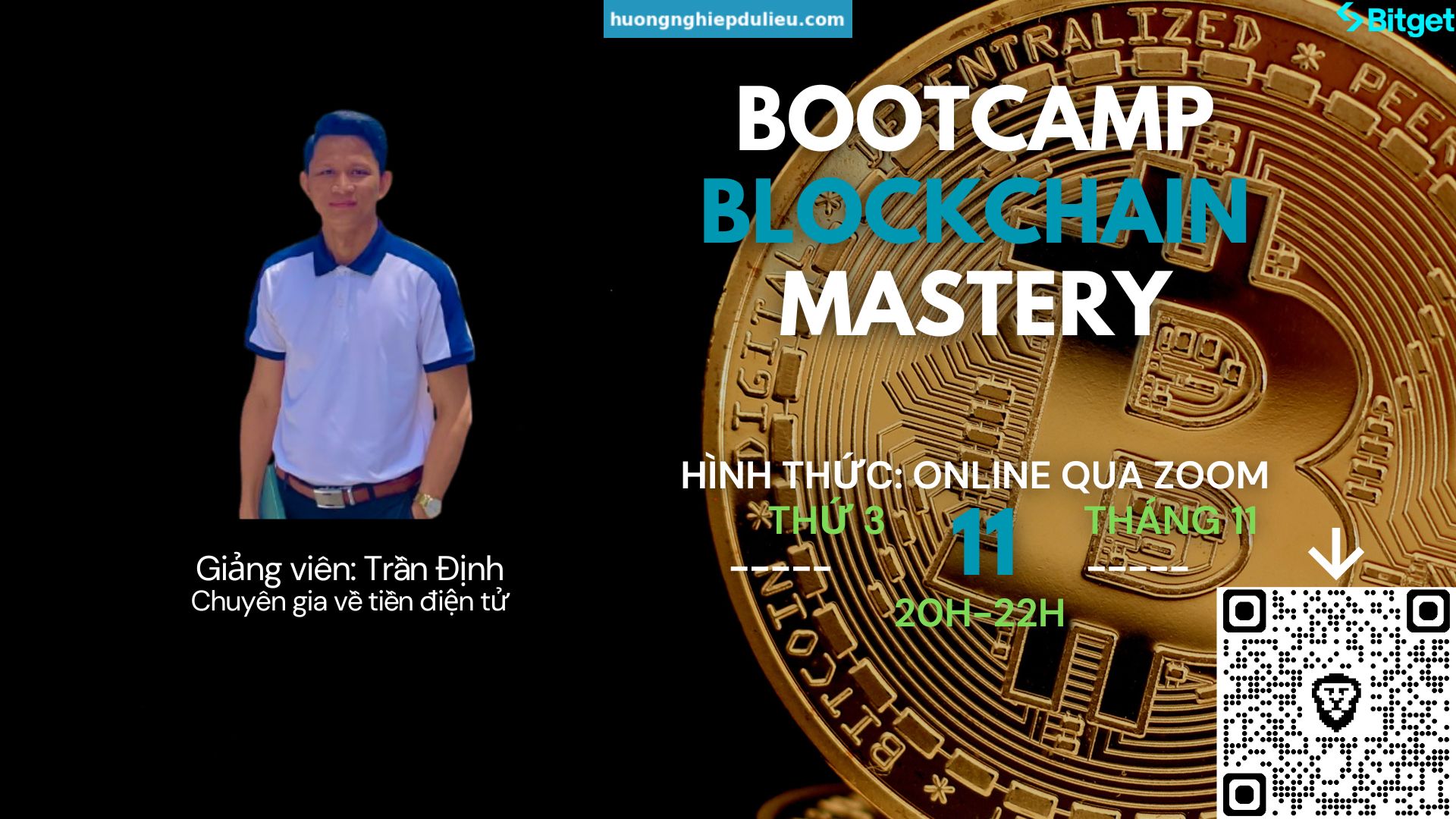
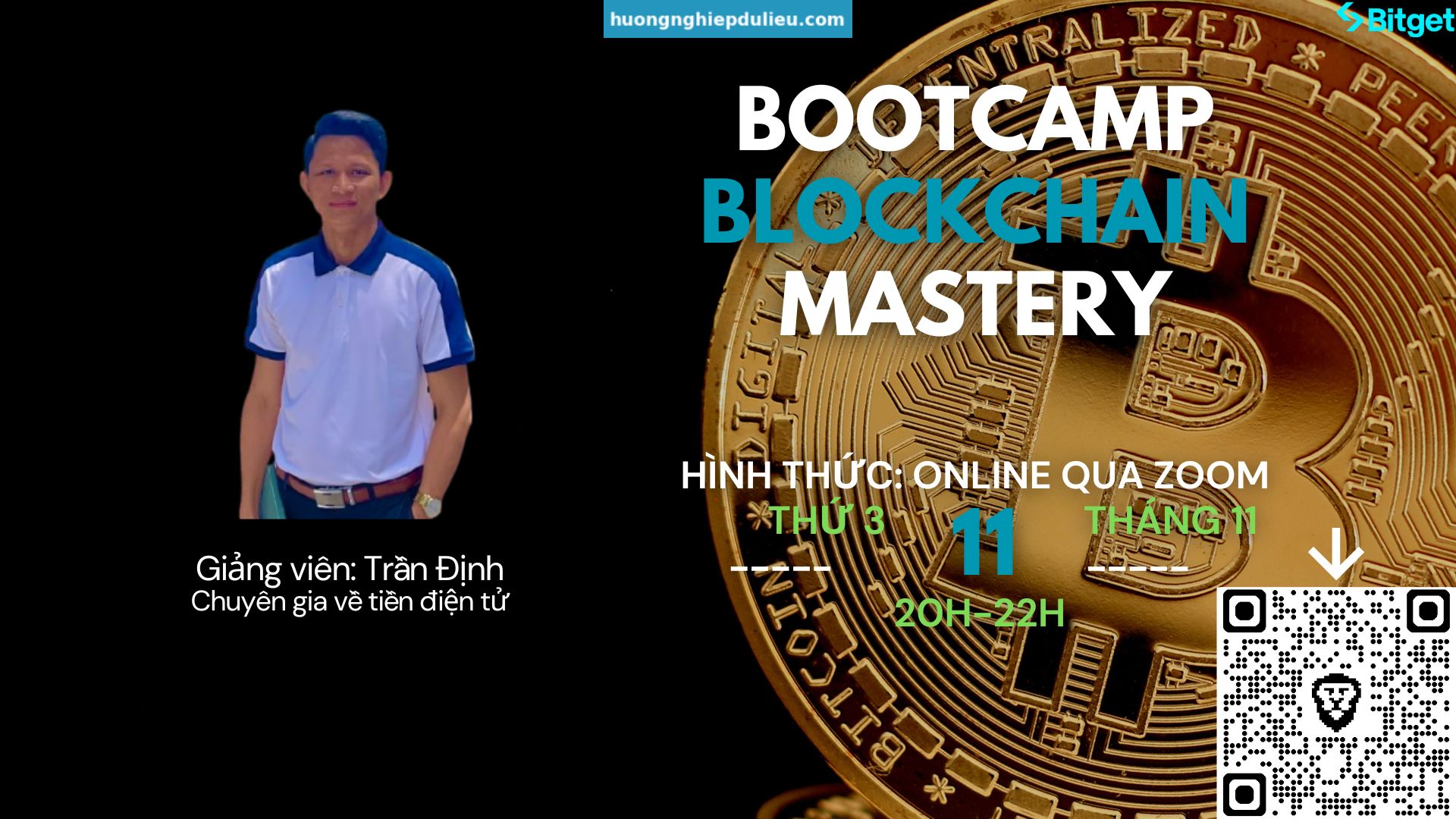
Phát triển Smart Contracts với Solidity
Solidity là ngôn ngữ lập trình chính để phát triển smart contracts trên Ethereum và các EVM-compatible blockchains. Bài viết này sẽ hướng dẫn bạn từ cơ bản đến nâng cao về Solidity.
Giới thiệu Solidity
Solidity là gì?
Solidity là một statically-typed, contract-oriented programming language được thiết kế để phát triển smart contracts trên EVM.
Tính năng
- Object-oriented: Hỗ trợ classes, inheritance
- Static typing: Type checking tại compile time
- Libraries: Reusable code
- Events: Logging và notifications
Version và Evolution
- Current: 0.8.x series
- Breaking changes: 0.5.0, 0.6.0, 0.8.0
- Recommend: Sử dụng ^0.8.0 hoặc mới hơn
Cú pháp cơ bản
Contract Structure
// SPDX-License-Identifier: MIT
pragma solidity ^0.8.0;

contract MyContract {
    // State variables
    uint256 public value;

    // Constructor
    constructor(uint256 _initialValue) {
        value = _initialValue;
    }

    // Functions
    function setValue(uint256 _newValue) public {
        value = _newValue;
    }
}
Data Types
Value Types
bool public isActive = true;
uint256 public count = 100;
int256 public temperature = -10;
address public owner = msg.sender;
bytes32 public hash;
Reference Types
// Arrays
uint256[] public numbers;
uint256[5] public fixedArray;

// Structs
struct User {
    string name;
    uint256 age;
    address wallet;
}

// Mappings
mapping(address => uint256) public balances;
Functions
// Public - có thể gọi từ bên ngoài
function publicFunction() public returns (uint256) {
    return 100;
}

// Private - chỉ trong contract
function privateFunction() private returns (uint256) {
    return 50;
}

// Internal - contract và children
function internalFunction() internal returns (uint256) {
    return 25;
}

// External - chỉ từ bên ngoài
function externalFunction() external returns (uint256) {
    return 10;
}

// View - không modify state
function viewFunction() public view returns (uint256) {
    return value;
}

// Pure - không đọc/modify state
function pureFunction(uint256 x) public pure returns (uint256) {
    return x * 2;
}

// Payable - nhận Ether
function payableFunction() public payable {
    // Can receive Ether
}
Advanced Concepts
Modifiers
modifier onlyOwner() {
    require(msg.sender == owner, "Not owner");
    _; // Execute function body
}

function changeOwner(address _newOwner) public onlyOwner {
    owner = _newOwner;
}
Events
event Transfer(address indexed from, address indexed to, uint256 value);

function transfer(address _to, uint256 _amount) public {
    // Transfer logic
    emit Transfer(msg.sender, _to, _amount);
}
Inheritance
contract Ownable {
    address public owner;

    modifier onlyOwner() {
        require(msg.sender == owner);
        _;
    }
}

contract MyContract is Ownable {
    constructor() {
        owner = msg.sender;
    }
}
Interfaces
interface IERC20 {
    function transfer(address to, uint256 amount) external returns (bool);
    function balanceOf(address account) external view returns (uint256);
}

contract MyContract {
    IERC20 public token;

    function useToken() public {
        token.transfer(msg.sender, 100);
    }
}
Security Patterns
Reentrancy Protection
// VULNERABLE ❌
function withdraw() public {
    (bool success, ) = msg.sender.call{value: balances[msg.sender]}("");
    balances[msg.sender] = 0;
}

// SAFE ✅
function withdraw() public {
    uint256 amount = balances[msg.sender];
    balances[msg.sender] = 0; // Checks-Effects-Interactions
    (bool success, ) = msg.sender.call{value: amount}("");
    require(success, "Transfer failed");
}
Access Control
import "@openzeppelin/contracts/access/Ownable.sol";

contract MyContract is Ownable {
    function adminFunction() public onlyOwner {
        // Only owner can call
    }
}
Integer Overflow Protection
// Solidity 0.8.0+ tự động kiểm tra overflow
uint256 public total;

function add(uint256 amount) public {
    total += amount; // Auto checked for overflow
}
Input Validation
function transfer(address _to, uint256 _amount) public {
    require(_to != address(0), "Invalid address");
    require(_amount > 0, "Amount must be positive");
    require(balances[msg.sender] >= _amount, "Insufficient balance");

    // Transfer logic
}
Common Patterns
Withdrawal Pattern
mapping(address => uint256) public pendingWithdrawals;

function withdraw() public {
    uint256 amount = pendingWithdrawals[msg.sender];
    require(amount > 0, "Nothing to withdraw");

    pendingWithdrawals[msg.sender] = 0;
    payable(msg.sender).transfer(amount);
}
Pull vs Push Payments
// Pull pattern (safer)
mapping(address => uint256) public credits;

function withdraw() public {
    uint256 amount = credits[msg.sender];
    credits[msg.sender] = 0;
    payable(msg.sender).transfer(amount);
}
Circuit Breaker
bool public stopped = false;

modifier stopInEmergency() {
    require(!stopped, "Contract is stopped");
    _;
}

function emergencyStop() public onlyOwner {
    stopped = true;
}
Testing Smart Contracts
Hardhat Testing
const { expect } = require("chai");
const { ethers } = require("hardhat");

describe("MyContract", function () {
    it("Should set and get value", async function () {
        const MyContract = await ethers.getContractFactory("MyContract");
        const contract = await MyContract.deploy();

        await contract.setValue(100);
        expect(await contract.getValue()).to.equal(100);
    });
});
Test Coverage
- Unit tests cho từng function
- Integration tests cho workflows
- Edge cases và error handling
- Gas optimization tests
Deployment
Hardhat Deploy Script
async function main() {
    const [deployer] = await ethers.getSigners();

    const MyContract = await ethers.getContractFactory("MyContract");
    const contract = await MyContract.deploy();

    await contract.deployed();
    console.log("Deployed to:", contract.address);
}
Verification
npx hardhat verify --network mainnet CONTRACT_ADDRESSGas Optimization
Tips để giảm gas
- Pack structs: Giảm storage slots
- Use uint256: Cheaper than smaller uints
- Cache storage reads: Read once, use multiple times
- Use events: Cheaper than storage for logs
- Batch operations: Process multiple items at once
Example
// Expensive ❌
for(uint i = 0; i < array.length; i++) {
    doSomething(array[i]);
}

// Cheaper ✅
uint length = array.length; // Cache
for(uint i = 0; i < length; i++) {
    doSomething(array[i]);
}
Best Practices
Code Organization
- Separate logic vào libraries
- Use interfaces cho contracts khác
- Modular design
- Clear naming conventions
Documentation
/// @title A simple storage contract
/// @author Your Name
/// @notice Stores a uint256 value
contract SimpleStorage {
    /// @notice The stored value
    /// @dev This is stored in slot 0
    uint256 public value;

    /// @notice Sets the value
    /// @param _value The new value to store
    function setValue(uint256 _value) public {
        value = _value;
    }
}
Error Handling
error InsufficientBalance(uint256 required, uint256 available);

function withdraw(uint256 amount) public {
    if (balances[msg.sender] < amount) {
        revert InsufficientBalance(amount, balances[msg.sender]);
    }
    // ...
}
Kết luận
Solidity là ngôn ngữ mạnh mẽ để phát triển smart contracts. Nắm vững các patterns, security best practices và optimization techniques sẽ giúp bạn xây dựng các smart contracts an toàn và hiệu quả.
Tiếp tục học về DApp Development trong Bootcamp Blockchain Mastery!
Bài viết gần đây
-
Mua Bot Trade Forex: 7 Điều Phải Kiểm Tra Trước Khi Mua | HNDL
Tháng 8 2, 2026 -
Báo cáo cuối khóa MT5 K6: Phạm Ngọc Tuân demo EA Hedging 02/08
Tháng 8 2, 2026 -
Bot Auto Trading là gì? Hướng dẫn xây dựng bot thực chiến 2026
Tháng 8 2, 2026
| Kiến trúc và Cấu trúc của Blockchain – Nền tảng công nghệ
Được viết bởi thanhdt vào ngày 13/11/2025 lúc 06:11 | 150 lượt xem
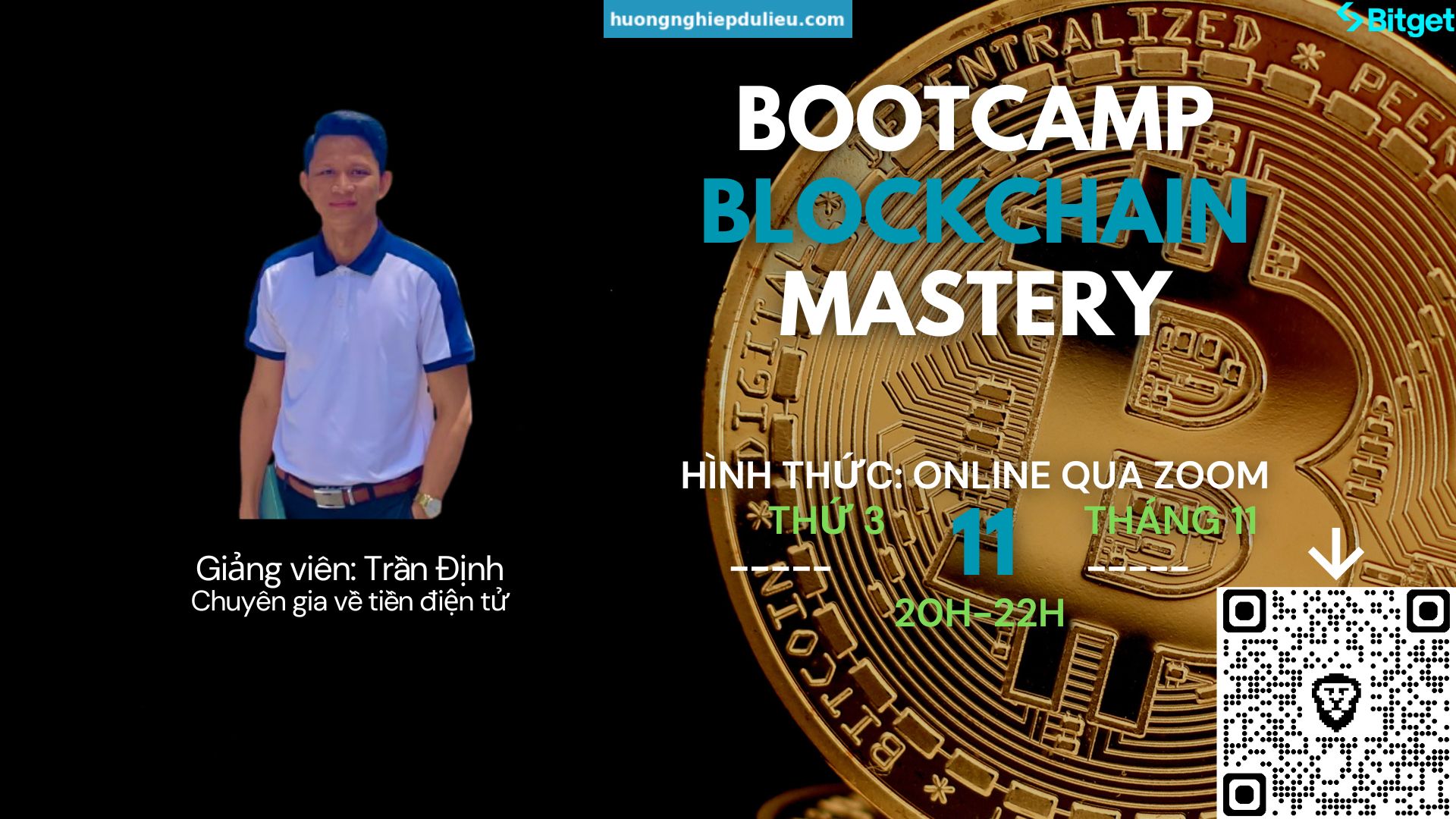
Kiến trúc và Cấu trúc của Blockchain
Hiểu rõ kiến trúc blockchain là bước đầu tiên quan trọng trong hành trình học blockchain. Bài viết này sẽ giúp bạn nắm vững các khái niệm cơ bản về cấu trúc và cách hoạt động của blockchain.
Blockchain là gì?
Blockchain là một distributed ledger (sổ cái phân tán) – một cơ sở dữ liệu được chia sẻ và đồng bộ trên nhiều máy tính (nodes) trong một mạng lưới. Mỗi bản ghi trong blockchain được gọi là một “block” và các block được liên kết với nhau tạo thành một “chain” (chuỗi).
So sánh với cơ sở dữ liệu truyền thống
| Đặc điểm | Database truyền thống | Blockchain |
|---|---|---|
| Quản lý | Tập trung | Phân tán |
| Kiểm soát | Một tổ chức | Toàn bộ mạng lưới |
| Bảo mật | Phụ thuộc quản trị viên | Cryptographic |
| Immutability | Có thể sửa/xóa | Không thể sửa/xóa |
| Transparency | Hạn chế | Hoàn toàn minh bạch |
Cấu trúc của Block
Một block trong blockchain thường chứa:
Block Header
- Previous Hash: Hash của block trước đó (tạo liên kết)
- Merkle Root: Hash của tất cả transactions trong block
- Timestamp: Thời gian block được tạo
- Nonce: Số ngẫu nhiên dùng trong mining
- Difficulty Target: Độ khó của mining
Block Body
- Transaction List: Danh sách các giao dịch được xác nhận
- Block Size: Kích thước của block
Hash Function và Cryptographic Hashing
Hash function là một hàm toán học chuyển đổi dữ liệu đầu vào thành một chuỗi ký tự có độ dài cố định.
Tính chất của Hash Function
- Deterministic: Cùng input → cùng output
- Fast Computation: Tính toán nhanh
- One-way: Không thể reverse từ hash về input
- Avalanche Effect: Thay đổi nhỏ trong input → hash hoàn toàn khác
- Collision Resistant: Rất khó tìm hai input có cùng hash
Ví dụ về SHA-256
Input: "Hello Blockchain"
SHA-256: a8b3c4d5e6f7... (64 ký tự hex)
Merkle Tree và Merkle Root
Merkle Tree là cấu trúc cây nhị phân được sử dụng để tổng hợp tất cả transactions trong một block.
Lợi ích của Merkle Tree
- Verification nhanh: Kiểm tra transaction không cần download toàn bộ block
- Efficient Storage: Lưu trữ hiệu quả
- Proof of Inclusion: Chứng minh transaction có trong block
Cách hoạt động
        Merkle Root (Hash)
              /
             /
            /
      Hash1-2    Hash3-4
        /          /
       /          /
    Hash1 Hash2 Hash3 Hash4
     /     /     /    /
   Txn1  Txn2  Txn3  Txn4
Blockchain Network và Nodes
Types of Nodes
- Full Node: Lưu trữ toàn bộ blockchain
- Light Node: Chỉ lưu trữ headers
- Mining Node: Tham gia quá trình mining
- Archive Node: Lưu trữ toàn bộ lịch sử + state changes
Network Topology
- P2P (Peer-to-Peer): Các nodes kết nối trực tiếp với nhau
- No Central Authority: Không có server trung tâm
- Consensus: Tất cả nodes phải đồng thuận về state
Consensus Mechanisms
Consensus mechanism đảm bảo tất cả nodes trong mạng đồng ý về trạng thái của blockchain.
Proof of Work (PoW)
- Cách hoạt động: Nodes cạnh tranh giải bài toán cryptographic
- Ưu điểm: Bảo mật cao, đã được chứng minh (Bitcoin)
- Nhược điểm: Tốn năng lượng, chậm
Proof of Stake (PoS)
- Cách hoạt động: Validators được chọn dựa trên số coin stake
- Ưu điểm: Tiết kiệm năng lượng, nhanh hơn PoW
- Nhược điểm: Cần vốn lớn để stake
Delegated Proof of Stake (DPoS)
- Cách hoạt động: Người dùng bầu chọn delegates để validate
- Ưu điểm: Nhanh và hiệu quả
- Nhược điểm: Có thể tập trung hóa
Immutability – Tính bất biến
Tại sao Blockchain không thể sửa đổi?
- Hash Chain: Mỗi block chứa hash của block trước
- Distributed: Dữ liệu được lưu trên nhiều nodes
- Cryptographic Security: Hash function không thể reverse
Ví dụ tấn công
Nếu muốn sửa block số 5:
- Block 5 hash thay đổi
- Block 6’s Previous Hash không khớp
- Phải sửa tất cả block sau
- Cần 51% hash power → Gần như không thể
Lịch sử từ Bitcoin đến Ethereum
Bitcoin (2009)
- Blockchain đầu tiên
- Proof of Work
- Focus: Digital currency
Ethereum (2015)
- Smart contracts
- Turing-complete programming
- Focus: Decentralized applications
Modern Blockchains
- Layer 2 solutions
- Cross-chain bridges
- Scalability improvements
Ứng dụng thực tế
Blockchain được ứng dụng trong:
- Finance: Cryptocurrency, DeFi
- Supply Chain: Tracking và verification
- Healthcare: Medical records
- Voting: Secure voting systems
- Identity: Digital identity management
Kết luận
Hiểu rõ kiến trúc blockchain là nền tảng để phát triển các ứng dụng blockchain. Các khái niệm về hash, Merkle tree, consensus là cốt lõi của mọi blockchain hiện đại.
Tiếp tục học trong Bootcamp Blockchain Mastery để nắm vững các chủ đề nâng cao hơn!
Bài viết gần đây
-
Mua Bot Trade Forex: 7 Điều Phải Kiểm Tra Trước Khi Mua | HNDL
Tháng 8 2, 2026 -
Báo cáo cuối khóa MT5 K6: Phạm Ngọc Tuân demo EA Hedging 02/08
Tháng 8 2, 2026 -
Bot Auto Trading là gì? Hướng dẫn xây dựng bot thực chiến 2026
Tháng 8 2, 2026
| Bitcoin và Tiền mã hóa – Đồng tiền điện tử đầu tiên
Được viết bởi thanhdt vào ngày 13/11/2025 lúc 06:11 | 138 lượt xem
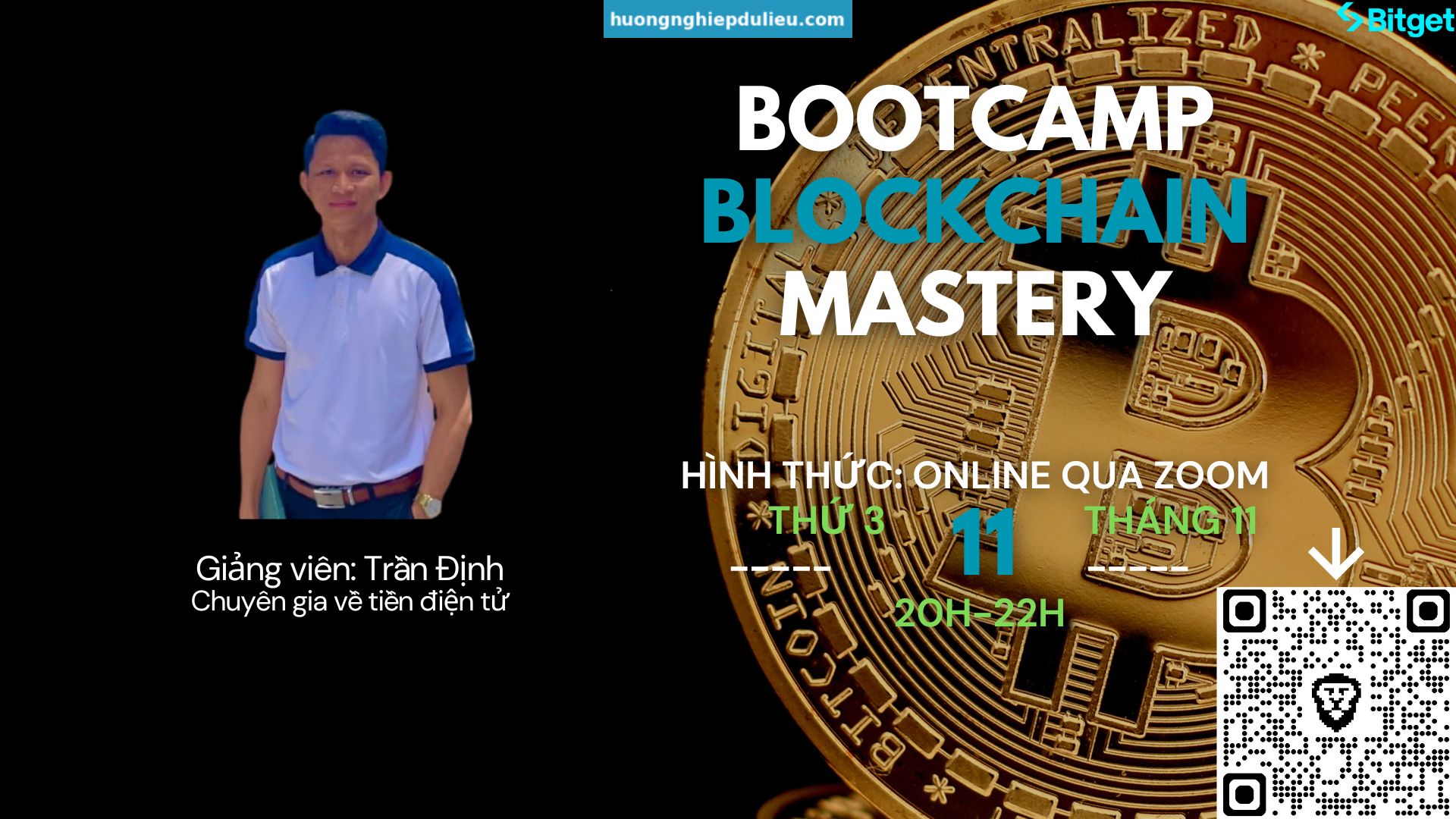
Bitcoin và Tiền mã hóa
Bitcoin là đồng tiền mã hóa đầu tiên và lớn nhất thế giới, đánh dấu sự ra đời của công nghệ blockchain. Bài viết này sẽ giúp bạn hiểu sâu về Bitcoin và thị trường tiền mã hóa.
Lịch sử Bitcoin
Satoshi Nakamoto
- 2008: White paper “Bitcoin: A Peer-to-Peer Electronic Cash System” được publish
- 2009: Bitcoin network được launch
- 2010: Giao dịch đầu tiên – 10,000 BTC đổi lấy 2 pizza
- 2011: Đạt giá trị $1 USD/BTC
Milestones quan trọng
- 2013: Vượt $1,000/BTC lần đầu
- 2017: Đạt đỉnh $20,000/BTC
- 2020: Vượt $20,000/BTC lần hai
- 2021: Đạt đỉnh cao nhất ~$69,000/BTC
Bitcoin Protocol và Network
Bitcoin Network Architecture
- P2P Network: Các nodes kết nối trực tiếp
- Mining Nodes: Xác nhận và tạo block mới
- Full Nodes: Lưu trữ và validate toàn bộ blockchain
- SPV Nodes: Chỉ lưu trữ block headers
Bitcoin Blockchain
- Block Time: ~10 phút
- Block Size: 1MB (Bitcoin Core), có thể lớn hơn với SegWit
- Supply Limit: 21 triệu BTC
- Current Supply: ~19.7 triệu BTC (2024)
UTXO Model
Unspent Transaction Output (UTXO)
UTXO model là cách Bitcoin quản lý balance:
- Không có account balance: Chỉ có UTXOs
- Mỗi UTXO: Một số lượng Bitcoin cụ thể, khóa bởi một address
- Giao dịch: Tiêu thụ UTXOs cũ, tạo UTXOs mới
Ví dụ UTXO
Alice có:
- UTXO1: 0.5 BTC (địa chỉ A)
- UTXO2: 0.3 BTC (địa chỉ A)

Muốn gửi 0.6 BTC cho Bob:
- Tiêu thụ: UTXO1 (0.5) + UTXO2 (0.3) = 0.8 BTC
- Tạo mới:
  - UTXO cho Bob: 0.6 BTC
  - UTXO change: 0.2 BTC (về Alice)
So sánh với Account Model (Ethereum)
| Đặc điểm | UTXO Model | Account Model |
|---|---|---|
| Balance | Tính từ UTXOs | Lưu trực tiếp |
| Privacy | Tốt hơn | Kém hơn |
| Parallelization | Dễ hơn | Khó hơn |
| Smart Contracts | Khó triển khai | Dễ triển khai |
Bitcoin Mining
Mining là gì?
Mining là quá trình:
- Thu thập transactions chưa được xác nhận
- Tạo block mới
- Giải bài toán cryptographic (tìm nonce)
- Broadcast block ra network
- Nhận phần thưởng (block reward + fees)
Mining Process
1. Collect transactions → Mempool
2. Create block header
3. Calculate hash (SHA-256)
4. Check if hash < target difficulty
5. If not → change nonce, repeat step 3
6. If yes → broadcast block
7. Other nodes validate → add to chain
Mining Rewards
- Block Reward: Giảm dần qua các halving events
- Current: 3.125 BTC/block (sau halving 2024)
- Transaction Fees: Phí từ các giao dịch trong block
Bitcoin Halving
Bitcoin halving xảy ra mỗi 210,000 blocks (~4 năm):
- 2009: 50 BTC/block
- 2012: 25 BTC/block
- 2016: 12.5 BTC/block
- 2020: 6.25 BTC/block
- 2024: 3.125 BTC/block
Mining Pools
Tại sao cần Mining Pool?
- Difficulty cao: Khó khăn cho miner cá nhân
- Variability: Phần thưởng không đều
- Solution: Kết hợp hash power để tăng cơ hội
How Mining Pools Work
- Miners kết nối với pool
- Pool phân phối work
- Miners submit valid shares
- Khi tìm được block → chia reward theo contribution
Bitcoin Economics
Supply và Demand
- Fixed Supply: Tối đa 21 triệu BTC
- Deflationary: Block reward giảm dần
- Store of Value: So sánh với vàng
Bitcoin as Digital Gold
- Scarcity: Nguồn cung hạn chế
- Durability: Không thể phá hủy
- Portability: Dễ di chuyển
- Divisibility: Có thể chia nhỏ (Satoshi)
- Recognizability: Được công nhận rộng rãi
Altcoins và Tokenomics
Types of Cryptocurrencies
- Bitcoin-like: Litecoin, Bitcoin Cash
- Platform Coins: Ethereum, Cardano, Solana
- Privacy Coins: Monero, Zcash
- Stablecoins: USDT, USDC, DAI
Stablecoins
Fiat-backed (USDT, USDC)
- Được backup bởi fiat currency
- 1:1 ratio với USD
- Centralized, audit định kỳ
Crypto-backed (DAI)
- Collateralized bằng crypto assets
- Over-collateralized để đảm bảo
- Decentralized
Algorithmic
- Algorithm điều chỉnh supply
- Không cần collateral
- Rủi ro cao hơn
Tokenomics
Tokenomics bao gồm:
- Supply: Total supply, circulating supply
- Distribution: ICO, mining, staking rewards
- Utility: Use cases của token
- Governance: Voting rights
Bitcoin Wallets
Types of Wallets
- Hardware Wallets: Ledger, Trezor (most secure)
- Software Wallets: Desktop, mobile apps
- Exchange Wallets: Binance, Coinbase
- Paper Wallets: Physical backup
Wallet Security Best Practices
- ✅ Sử dụng hardware wallet cho lượng lớn
- ✅ Backup seed phrase an toàn
- ✅ Không share private key
- ✅ Verify addresses trước khi gửi
- ✅ Sử dụng 2FA cho exchange accounts
Trading và Investment
Các cách mua Bitcoin
- Cryptocurrency Exchanges: Binance, Coinbase
- Bitcoin ATMs: Mua trực tiếp bằng tiền mặt
- P2P Trading: Mua từ người khác
- Bitcoin ETFs: Đầu tư qua quỹ ETF
Investment Strategies
- HODLing: Mua và giữ lâu dài
- DCA (Dollar Cost Averaging): Mua định kỳ
- Trading: Giao dịch ngắn hạn
- Mining: Đào Bitcoin
Rủi ro và Lưu ý
Rủi ro khi đầu tư Bitcoin
- Volatility: Giá biến động mạnh
- Regulatory Risk: Quy định pháp lý
- Technical Risk: Bugs, hacks
- Market Risk: Supply/demand changes
Lưu ý
- ⚠️ Chỉ đầu tư số tiền có thể mất
- ⚠️ Research kỹ trước khi đầu tư
- ⚠️ Đa dạng hóa portfolio
- ⚠️ Tránh FOMO và FUD
Kết luận
Bitcoin là nền tảng của toàn bộ thị trường cryptocurrency. Hiểu về Bitcoin giúp bạn có foundation vững chắc để khám phá các blockchain khác và thị trường DeFi.
Tiếp tục học về Ethereum và Smart Contracts trong Bootcamp Blockchain Mastery!
Bài viết gần đây
-
Mua Bot Trade Forex: 7 Điều Phải Kiểm Tra Trước Khi Mua | HNDL
Tháng 8 2, 2026 -
Báo cáo cuối khóa MT5 K6: Phạm Ngọc Tuân demo EA Hedging 02/08
Tháng 8 2, 2026 -
Bot Auto Trading là gì? Hướng dẫn xây dựng bot thực chiến 2026
Tháng 8 2, 2026
| Giới thiệu Bootcamp Blockchain Mastery – Khóa học toàn diện về Blockchain
Được viết bởi thanhdt vào ngày 13/11/2025 lúc 06:11 | 147 lượt xem
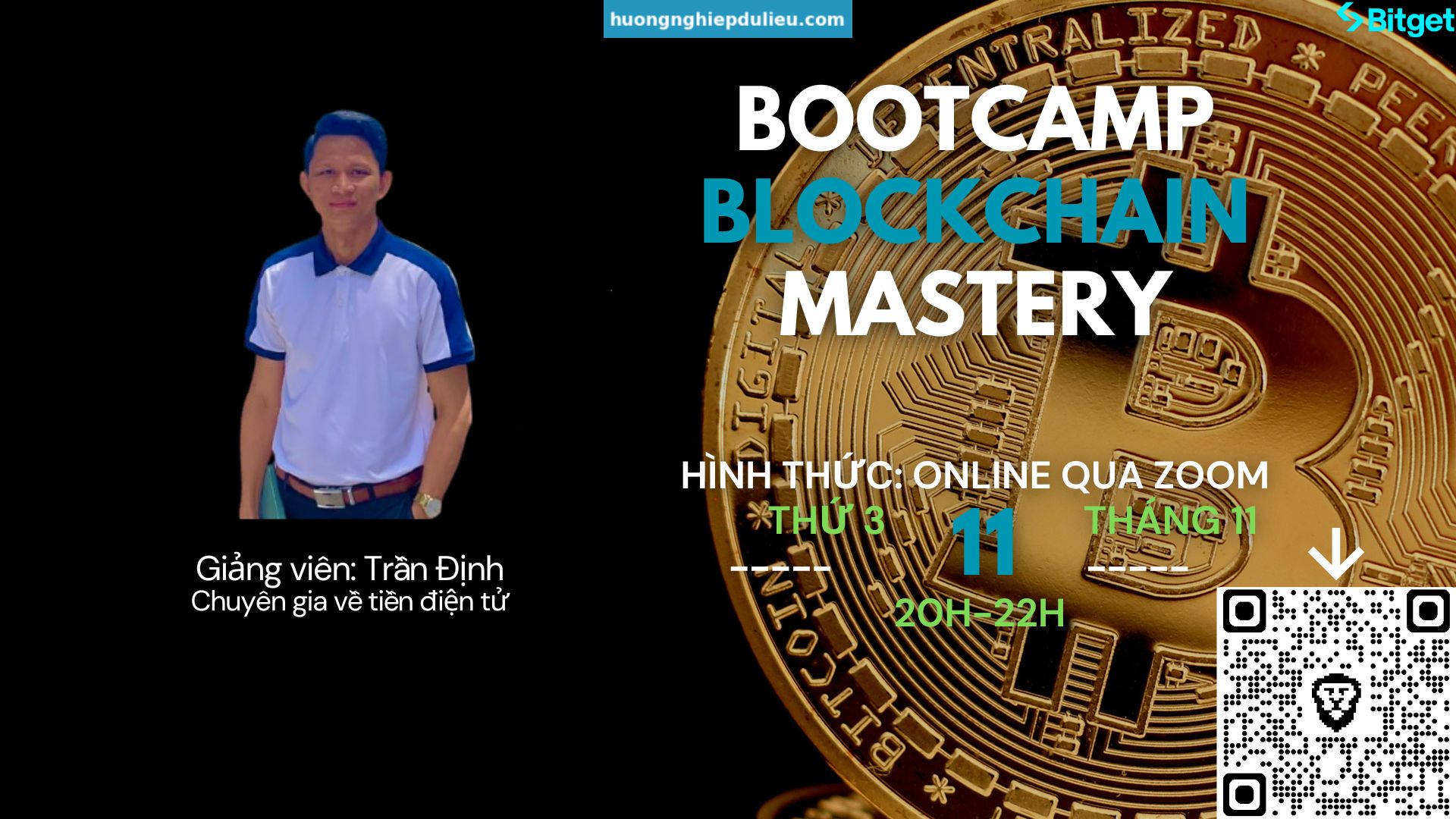
Giới thiệu Bootcamp Blockchain Mastery
Bootcamp Blockchain Mastery là chương trình đào tạo toàn diện về công nghệ blockchain, được thiết kế để trang bị cho học viên kiến thức từ cơ bản đến nâng cao trong lĩnh vực blockchain, tiền mã hóa và Web3.
Blockchain là gì và tại sao nên học?
Blockchain là công nghệ lưu trữ và truyền tải thông tin bằng các khối được liên kết với nhau, quản lý bởi nhiều máy tính độc lập. Đây là nền tảng của DeFi, NFT, và tiền mã hóa.
Tại sao Blockchain đang “hot”?
- Công nghệ của tương lai: Cách mạng hóa nhiều ngành công nghiệp
- Nhu cầu nhân lực cao: Hơn 40,000 vị trí blockchain developer toàn cầu
- Mức lương hấp dẫn: $100,000 – $200,000/năm cho senior developer
- Cơ hội khởi nghiệp: Nhiều startup thành công với vốn đầu tư lớn
Đối tượng phù hợp với khóa học
Bootcamp Blockchain Mastery dành cho:
- Người mới bắt đầu: Muốn tìm hiểu về blockchain từ con số không
- Lập trình viên: Muốn mở rộng kỹ năng sang lĩnh vực Web3
- Nhà quản lý dự án: Cần hiểu về blockchain để quản lý các dự án Web3
- Nhà đầu tư: Muốn hiểu sâu về công nghệ để đưa ra quyết định đầu tư đúng đắn
Phương pháp giảng dạy
Khóa học áp dụng phương pháp học tập thực hành:
- Lý thuyết + Thực hành: Kết hợp giảng dạy lý thuyết với bài tập thực tế
- Dự án thực tế: Xây dựng các dự án blockchain thực tế trong suốt khóa học
- Mentor hỗ trợ: Đội ngũ mentor sẵn sàng hỗ trợ 24/7
- Cộng đồng học tập: Tham gia cộng đồng học viên để trao đổi và học hỏi
Nội dung chính của khóa học
Khóa học bao gồm các chủ đề:
- Giới thiệu về blockchain và cách hoạt động
- Các thuật toán đồng thuận phổ biến
- Hợp đồng thông minh và ứng dụng
- Phát triển ứng dụng phi tập trung (DApp)
- DeFi (Decentralized Finance)
- NFT và Digital Assets
- Bảo mật blockchain
- Advanced topics (Layer 2, Cross-chain)
Lợi ích khi tham gia khóa học
Học viên sẽ:
- ✅ Hiểu rõ về công nghệ blockchain và tiềm năng của nó
- ✅ Có khả năng phát triển và triển khai DApp
- ✅ Nắm bắt xu hướng và cơ hội nghề nghiệp trong lĩnh vực blockchain
- ✅ Xây dựng portfolio dự án thực tế
- ✅ Kết nối với cộng đồng blockchain developer
Thời gian và hình thức học
- Hình thức: Trực tuyến (online)
- Thời gian: Linh hoạt, phù hợp với lịch trình của học viên
- Thời lượng: 20 tuần
- Cấu trúc: Video bài giảng + Bài tập + Dự án thực tế
Chứng chỉ hoàn thành khóa học
Sau khi hoàn thành khóa học, học viên sẽ nhận được:
- Chứng chỉ hoàn thành khóa học Blockchain Mastery
- Portfolio các dự án đã xây dựng
- Sự hỗ trợ trong quá trình tìm việc
Cơ hội nghề nghiệp sau khóa học
Học viên có thể ứng tuyển vào các vị trí như:
- Blockchain Developer: $80,000 – $150,000/năm
- Smart Contract Auditor: $100,000 – $200,000/năm
- DeFi Protocol Developer: $120,000 – $180,000/năm
- Blockchain Architect: $150,000 – $250,000/năm
Kết luận
Bootcamp Blockchain Mastery là lựa chọn tuyệt vời cho những ai muốn bắt đầu hành trình trong lĩnh vực blockchain và Web3. Với chương trình học toàn diện và thực tế, bạn sẽ sẵn sàng cho sự nghiệp trong ngành công nghệ blockchain.
Tham gia ngay Bootcamp Blockchain Mastery để bắt đầu hành trình của bạn!
Bài viết gần đây
-
Mua Bot Trade Forex: 7 Điều Phải Kiểm Tra Trước Khi Mua | HNDL
Tháng 8 2, 2026 -
Báo cáo cuối khóa MT5 K6: Phạm Ngọc Tuân demo EA Hedging 02/08
Tháng 8 2, 2026 -
Bot Auto Trading là gì? Hướng dẫn xây dựng bot thực chiến 2026
Tháng 8 2, 2026
| Sở hữu bộ công cụ 12 tiêu chí sắc bén để nhận diện tài sản tốt
Được viết bởi thanhdt vào ngày 13/11/2025 lúc 06:11 | 144 lượt xem
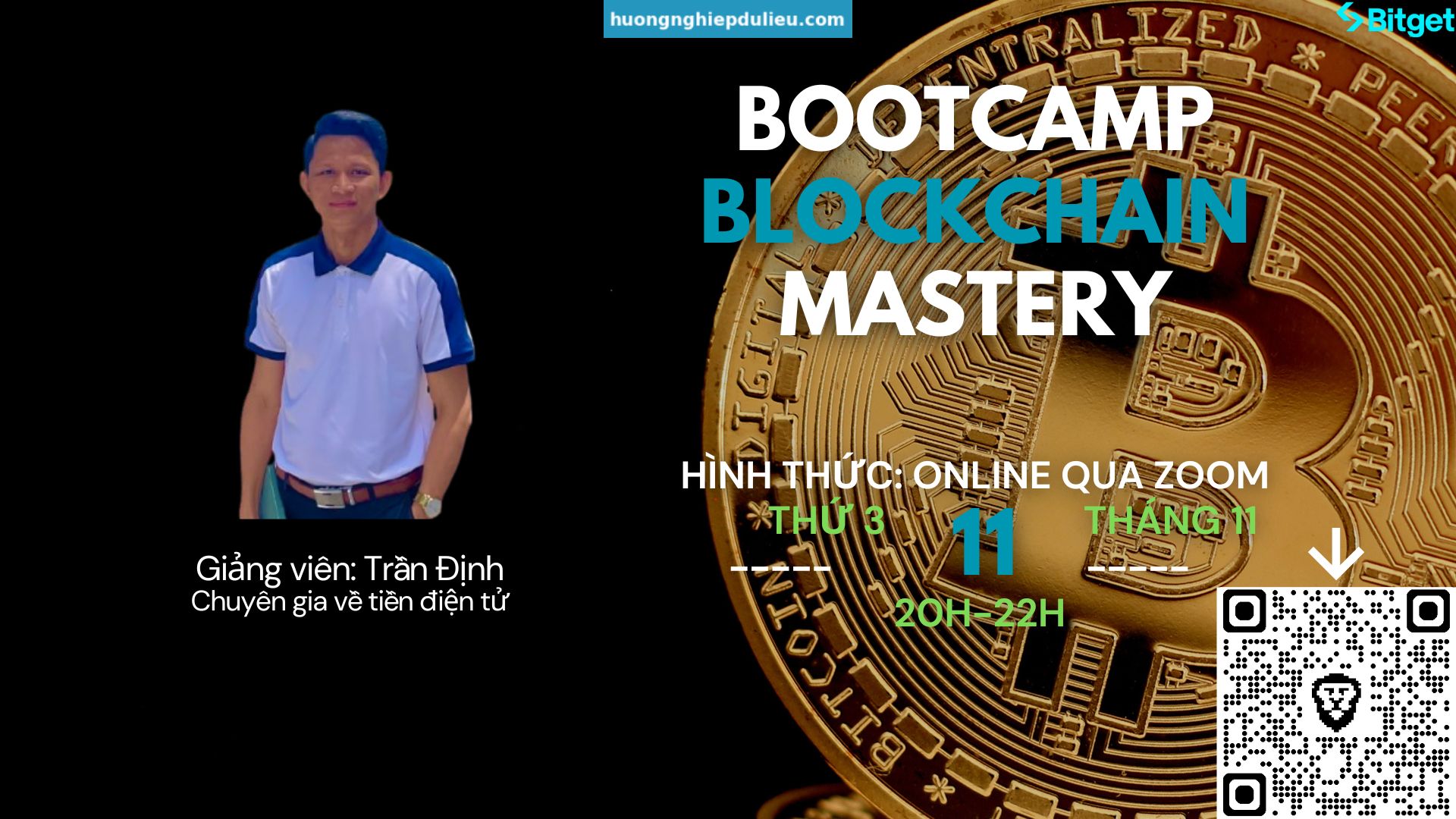
Sở hữu bộ công cụ 12 tiêu chí sắc bén để nhận diện tài sản tốt
Để thành công trong thị trường blockchain, bạn cần một hệ thống đánh giá khách quan và toàn diện. Bài viết này trình bày 12 tiêu chí quan trọng để nhận diện các tài sản blockchain tiềm năng.
Tại sao cần bộ tiêu chí đánh giá?
Thách thức
- Hàng nghìn dự án: Khó phân biệt tốt/xấu
- Hype và FOMO: Dễ bị lừa bởi marketing
- Thiếu kinh nghiệm: Người mới không biết đánh giá như thế nào
Lợi ích
- Khách quan: Đánh giá dựa trên facts
- Toàn diện: Cover nhiều aspects
- Giảm rủi ro: Tránh các dự án xấu
12 Tiêu chí đánh giá
Tiêu chí 1: Technology & Innovation
Đánh giá:
- ✅ Công nghệ có đột phá?
- ✅ Giải quyết vấn đề thực tế?
- ✅ Có lợi thế cạnh tranh về tech?
- ✅ Code quality và security?
Các câu hỏi:
- Team có publish technical papers?
- Code được audit chưa?
- Có open source không?
- So sánh với competitors?
Red flags:
- ❌ Copy code từ dự án khác
- ❌ Không có technical documentation
- ❌ Code chưa được audit
Tiêu chí 2: Team & Leadership
Đánh giá:
- ✅ Experience của team trong blockchain
- ✅ Track record của founders
- ✅ Team structure và size
- ✅ Transparency về team
Các câu hỏi:
- Founders có background gì?
- Team đã làm dự án nào trước đó?
- Có advisors uy tín không?
- LinkedIn và social presence?
Red flags:
- ❌ Team ẩn danh hoàn toàn
- ❌ Không có experience trong blockchain
- ❌ Team quá nhỏ (dưới 5 người)
Tiêu chí 3: Business Model & Use Case
Đánh giá:
- ✅ Có use case rõ ràng?
- ✅ Market size đủ lớn?
- ✅ Revenue model hợp lý?
- ✅ Competitive advantage?
Các câu hỏi:
- Giải quyết vấn đề gì?
- Ai là target users?
- Làm sao kiếm tiền?
- Khác gì với competitors?
Red flags:
- ❌ Không có use case rõ ràng
- ❌ Market quá nhỏ
- ❌ Revenue model không sustainable
Tiêu chí 4: Tokenomics
Đánh giá:
- ✅ Supply và distribution hợp lý
- ✅ Inflation rate acceptable
- ✅ Token utility rõ ràng
- ✅ Vesting schedule cho team
Các câu hỏi:
- Total supply là bao nhiêu?
- Circulating supply?
- Team và investors có lock period?
- Token dùng để làm gì?
Red flags:
- ❌ Team nắm hơn 40% supply
- ❌ Unlock quá sớm
- ❌ Token không có utility
- ❌ High inflation rate
Tiêu chí 5: Adoption & Metrics
Đánh giá:
- ✅ User growth rate
- ✅ Transaction volume
- ✅ TVL (for DeFi)
- ✅ Active addresses
Nơi kiểm tra:
- Block explorers: Etherscan, BSCScan
- Analytics: Dune Analytics, Nansen
- DefiLlama: For DeFi projects
- CoinGecko/CoinMarketCap: Market data
Các metrics quan trọng:
- Daily Active Users (DAU)
- Transaction count
- Total Value Locked (TVL)
- Token holders count
Red flags:
- ❌ Metrics giảm liên tục
- ❌ Không có real usage
- ❌ Wash trading
Tiêu chí 6: Partnerships & Integrations
Đánh giá:
- ✅ Partnerships với brands lớn
- ✅ Integrations với protocols khác
- ✅ Support từ institutions
- ✅ Exchange listings
Các câu hỏi:
- Có partnerships gì?
- Listed trên exchanges nào?
- Được support bởi VC nào?
- Có institutional backing?
Red flags:
- ❌ Không có partnerships thực sự
- ❌ Chỉ listed trên DEX nhỏ
- ❌ Không có institutional support
Tiêu chí 7: Community & Social Presence
Đánh giá:
- ✅ Community size và engagement
- ✅ Social media activity
- ✅ Developer community
- ✅ Communication transparency
Kiểm tra:
- Twitter/X: Followers, engagement
- Discord/Telegram: Members, activity
- GitHub: Contributors, stars
- Reddit: Community discussions
Metrics:
- Twitter followers
- Discord members
- GitHub stars
- Community engagement rate
Red flags:
- ❌ Community chủ yếu là bots
- ❌ Low engagement rate
- ❌ Team không responsive
Tiêu chí 8: Roadmap & Execution
Đánh giá:
- ✅ Roadmap rõ ràng và realistic
- ✅ Track record trong execution
- ✅ Milestones đạt được
- ✅ Timeline hợp lý
Các câu hỏi:
- Roadmap có realistic không?
- Đã deliver những gì trước đó?
- Có delay milestones không?
- Technical progress như thế nào?
Red flags:
- ❌ Roadmap quá ambitious
- ❌ Liên tục delay milestones
- ❌ Không deliver promises
Tiêu chí 9: Security & Audits
Đánh giá:
- ✅ Code được audit
- ✅ Bug bounty program
- ✅ Security best practices
- ✅ Insurance coverage
Kiểm tra:
- Audit reports (CertiK, OpenZeppelin, etc.)
- Bug bounty programs
- Past security incidents
- Insurance (Nexus Mutual, etc.)
Red flags:
- ❌ Chưa có audit
- ❌ Đã bị hack trước đó
- ❌ Không có bug bounty
Tiêu chí 10: Regulatory Compliance
Đánh giá:
- ✅ Legal structure
- ✅ Compliance với regulations
- ✅ Geographic restrictions
- ✅ License nếu cần
Các câu hỏi:
- Hoạt động hợp pháp ở đâu?
- Có legal opinion không?
- Có risk về regulation?
- Geo-restrictions?
Red flags:
- ❌ Không rõ về legal status
- ❌ Risk bị ban ở nhiều quốc gia
- ❌ Không tuân thủ regulations
Tiêu chí 11: Market Position & Competition
Đánh giá:
- ✅ Market share
- ✅ Competitive advantage
- ✅ Barriers to entry
- ✅ Network effects
Phân tích:
- Market cap vs competitors
- Unique features
- Switching costs
- Network effects strength
Red flags:
- ❌ Không có competitive advantage
- ❌ Bị competitors vượt qua
- ❌ Market share giảm
Tiêu chí 12: Financial Health & Sustainability
Đánh giá:
- ✅ Treasury reserves
- ✅ Revenue và expenses
- ✅ Runway (thời gian có thể hoạt động)
- ✅ Funding status
Kiểm tra:
- Treasury holdings
- Revenue from fees
- Burn rate
- Funding rounds
Red flags:
- ❌ Treasury cạn kiệt
- ❌ Không có revenue
- ❌ High burn rate
- ❌ Không có funding
Scoring System
Đánh giá từng tiêu chí
Thang điểm: 0-10
- 9-10: Excellent
- 7-8: Good
- 5-6: Average
- 3-4: Below Average
- 0-2: Poor
Tổng điểm
- 100-120: Excellent investment
- 80-99: Good investment
- 60-79: Consider carefully
- Below 60: Avoid or high risk
Template đánh giá
Checklist nhanh
□ Technology: ___/10
□ Team: ___/10
□ Use Case: ___/10
□ Tokenomics: ___/10
□ Adoption: ___/10
□ Partnerships: ___/10
□ Community: ___/10
□ Roadmap: ___/10
□ Security: ___/10
□ Compliance: ___/10
□ Competition: ___/10
□ Financials: ___/10

Total: ___/120
Lưu ý quan trọng
1. Không chỉ dựa vào một tiêu chí
- Cần đánh giá toàn diện
- Một điểm yếu có thể bù bằng điểm mạnh khác
- Context matters
2. So sánh với peers
- Đánh giá tương đối, không tuyệt đối
- So sánh với competitors
- Market conditions
3. Đánh giá định kỳ
- Thị trường thay đổi
- Dự án phát triển
- Review lại scoring
4. Cảnh giác với bias
- Confirmation bias
- FOMO
- Hype
Kết luận
Bộ 12 tiêu chí này cung cấp framework toàn diện để đánh giá các tài sản blockchain:
- ✅ Technology – Đánh giá tech stack
- ✅ Team – Xem xét đội ngũ
- ✅ Use Case – Kiểm tra giá trị thực tế
- ✅ Tokenomics – Phân tích token design
- ✅ Adoption – Đo lường sự chấp nhận
- ✅ Partnerships – Đánh giá quan hệ đối tác
- ✅ Community – Xem xét cộng đồng
- ✅ Roadmap – Kiểm tra kế hoạch
- ✅ Security – Đánh giá bảo mật
- ✅ Compliance – Tuân thủ pháp lý
- ✅ Competition – Phân tích cạnh tranh
- ✅ Financials – Sức khỏe tài chính
Sử dụng bộ công cụ này một cách nhất quán sẽ giúp bạn đưa ra quyết định đầu tư sáng suốt hơn và giảm thiểu rủi ro.
Bắt đầu áp dụng 12 tiêu chí này vào research của bạn ngay hôm nay!
Bài viết gần đây
-
Mua Bot Trade Forex: 7 Điều Phải Kiểm Tra Trước Khi Mua | HNDL
Tháng 8 2, 2026 -
Báo cáo cuối khóa MT5 K6: Phạm Ngọc Tuân demo EA Hedging 02/08
Tháng 8 2, 2026 -
Bot Auto Trading là gì? Hướng dẫn xây dựng bot thực chiến 2026
Tháng 8 2, 2026
| Tóm gọn thị trường hàng triệu sản phẩm bằng một bảng phân loại đơn giản
Được viết bởi thanhdt vào ngày 13/11/2025 lúc 06:11 | 153 lượt xem
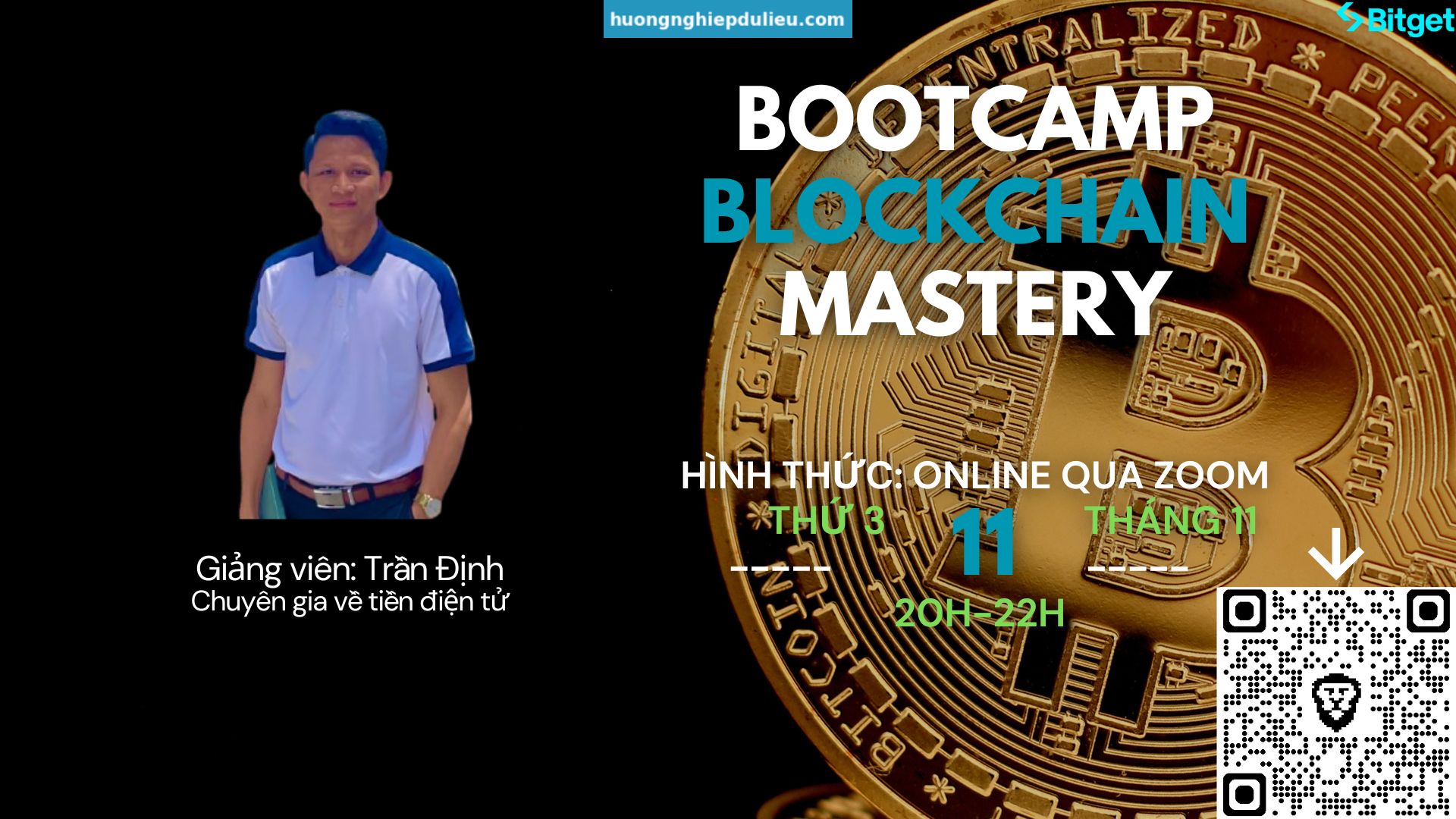
Tóm gọn thị trường hàng triệu sản phẩm bằng một bảng phân loại đơn giản
Thị trường blockchain có hàng chục nghìn dự án khác nhau, khiến nhiều người cảm thấy choáng ngợp. Bài viết này cung cấp một bảng phân loại đơn giản và dễ hiểu để bạn có thể nắm bắt toàn bộ thị trường một cách có hệ thống.
Tại sao cần bảng phân loại?
Thách thức của thị trường
- Hàng chục nghìn dự án: Khó theo dõi tất cả
- Nhiều category khác nhau: Mỗi loại có đặc điểm riêng
- Technology phức tạp: Khó hiểu với người mới
Lợi ích của phân loại
- Dễ hiểu: Nắm bắt nhanh chóng
- So sánh: So sánh các dự án cùng loại
- Chiến lược: Xây dựng portfolio đa dạng
Bảng phân loại chính
1. Layer Classification (Theo tầng)
Layer 0: Base Protocols
- Định nghĩa: Protocols cho phép các blockchain giao tiếp
- Ví dụ: Cosmos, Polkadot
- Chức năng: Interoperability, infrastructure
Layer 1: Base Blockchains
- Định nghĩa: Blockchain chính xử lý transactions
- Ví dụ: Bitcoin, Ethereum, Solana, Cardano
- Chức năng: Consensus, security, finality
Layer 2: Scaling Solutions
- Định nghĩa: Xây dựng trên L1 để tăng throughput
- Ví dụ: Polygon, Arbitrum, Optimism, zkSync
- Chức năng: Lower fees, faster transactions
Layer 3: Application Layer
- Định nghĩa: DApps và protocols
- Ví dụ: Uniswap, Aave, OpenSea
- Chức năng: Specific use cases
2. Use Case Classification
Payment & Currency
- Mục đích: Thanh toán, store of value
- Ví dụ: Bitcoin, Litecoin, Bitcoin Cash
- Đặc điểm: Focus vào payments
Smart Contracts Platform
- Mục đích: Chạy smart contracts và dApps
- Ví dụ: Ethereum, Solana, Avalanche
- Đặc điểm: Turing-complete, dApp ecosystem
DeFi (Decentralized Finance)
- Mục đích: Tài chính phi tập trung
- Sub-categories:
- DEX: Uniswap, SushiSwap, Curve
- Lending: Aave, Compound, Maker
- Derivatives: Synthetix, dYdX
- Yield: Yearn, Convex
NFTs & Digital Assets
- Mục đích: Non-fungible tokens
- Sub-categories:
- Art: Foundation, SuperRare
- Gaming: Axie Infinity, The Sandbox
- Collectibles: NBA Top Shot
- Marketplaces: OpenSea, LooksRare
Gaming & Metaverse
- Mục đích: Blockchain games và virtual worlds
- Ví dụ: Axie Infinity, The Sandbox, Decentraland
- Đặc điểm: Play-to-earn, virtual assets
Infrastructure
- Mục đích: Cung cấp tools và services
- Sub-categories:
- Oracles: Chainlink, Band Protocol
- Storage: Filecoin, Arweave
- Indexing: The Graph
- Security: CertiK, Quantstamp
3. Technology Classification
Consensus Mechanism
Proof of Work (PoW)
- Bitcoin, Litecoin
- Secure nhưng tốn năng lượng
Proof of Stake (PoS)
- Ethereum 2.0, Cardano, Tezos
- Energy efficient, faster
Delegated Proof of Stake (DPoS)
- EOS, Tron
- Fast nhưng có thể centralized
Other Mechanisms
- Avalanche (Avalanche consensus)
- Solana (Proof of History)
Scalability Approach
Monolithic
- Tất cả functions trên một chain
- Ví dụ: Ethereum, Solana
Modular
- Tách execution, consensus, data availability
- Ví dụ: Celestia, Polygon Avail
Privacy Level
Public
- Tất cả transactions công khai
- Bitcoin, Ethereum
Private
- Transactions ẩn danh
- Monero, Zcash
Hybrid
- Cả public và private options
- Some DeFi protocols
4. Market Cap Classification
Mega Cap (trên $100B)
- Bitcoin, Ethereum
- Low risk, stable
Large Cap ($10B-$100B)
- BNB, SOL, XRP, ADA
- Established, lower risk
Mid Cap ($1B-$10B)
- MATIC, AVAX, DOT
- Growth potential, moderate risk
Small Cap ($100M-$1B)
- Emerging projects
- Higher risk, higher potential
Micro Cap (dưới $100M)
- Early stage projects
- Very high risk
5. Investment Stage Classification
Established
- Đã có ecosystem lớn
- Example: Bitcoin, Ethereum, Uniswap
- Lower risk, proven track record
Growing
- Đang phát triển mạnh
- Example: Arbitrum, Optimism
- Moderate risk, growing adoption
Emerging
- Giai đoạn đầu phát triển
- Example: New L1s, DeFi protocols
- Higher risk, early opportunity
6. Geographic & Regulatory
US-Friendly
- Tuân thủ US regulations
- Ví dụ: Coinbase, Circle (USDC)
Global
- Không có restrictions đặc biệt
- Hầu hết cryptocurrencies
Restricted
- Bị hạn chế ở một số quốc gia
- Cần research kỹ
Bảng phân loại tổng hợp
| Category | Layer | Use Case | Risk Level | Examples |
|---|---|---|---|---|
| Store of Value | L1 | Payment | Low | BTC |
| Smart Contracts | L1 | Platform | Medium | ETH, SOL |
| Scaling | L2 | Infrastructure | Medium | MATIC, ARB |
| DeFi – DEX | L3 | Trading | Medium | UNI, SUSHI |
| DeFi – Lending | L3 | Finance | Medium | AAVE, COMP |
| NFT | L3 | Digital Assets | High | AXS, SAND |
| Gaming | L3 | Entertainment | High | AXS, GALA |
| Infrastructure | L0/L1 | Tools | Medium | LINK, GRT |
Ứng dụng bảng phân loại
1. Xây dựng Portfolio
Balanced Approach:
- 1-2 L1 assets (BTC, ETH)
- 1-2 L2 assets (MATIC, ARB)
- 2-3 DeFi tokens (UNI, AAVE)
- 1-2 Gaming/NFT tokens
- 1 Infrastructure token (LINK)
2. Research Strategy
Theo từng category:
- Hiểu category trước
- So sánh các dự án trong cùng category
- Chọn leader hoặc potential winner
3. Risk Management
Diversification theo category:
- Không put all eggs trong một category
- Balance giữa risk và reward
- Có cả established và emerging
4. Market Analysis
Trends theo category:
- DeFi summer (2020)
- NFT boom (2021)
- L2 adoption (2022-2023)
- RWA (2024+)
Các category đang hot
Current Trends (2024-2025)
-
Layer 2 Solutions
- Arbitrum, Optimism growth
- zkSync, StarkNet development
-
Real World Assets (RWA)
- Tokenization of real assets
- Growing institutional interest
-
AI + Blockchain
- AI agents on-chain
- Decentralized compute
-
Account Abstraction
- Better UX
- Smart contract wallets
Kết luận
Bảng phân loại đơn giản này giúp bạn:
- ✅ Nắm bắt toàn bộ thị trường một cách có hệ thống
- ✅ So sánh các dự án trong cùng category
- ✅ Xây dựng portfolio đa dạng
- ✅ Theo dõi trends theo từng category
Sử dụng bảng phân loại này như một bản đồ để navigate trong thị trường blockchain phức tạp, và bạn sẽ tự tin hơn trong các quyết định đầu tư của mình.
Bắt đầu phân loại và xây dựng danh mục đầu tư của bạn ngay hôm nay!
Bài viết gần đây
-
Mua Bot Trade Forex: 7 Điều Phải Kiểm Tra Trước Khi Mua | HNDL
Tháng 8 2, 2026 -
Báo cáo cuối khóa MT5 K6: Phạm Ngọc Tuân demo EA Hedging 02/08
Tháng 8 2, 2026 -
Bot Auto Trading là gì? Hướng dẫn xây dựng bot thực chiến 2026
Tháng 8 2, 2026
| Bitget Wallet Stablecoin Earn Plus – Kiếm 10% APY An Toàn Với Rút Tiền Linh Hoạt
Được viết bởi thanhdt vào ngày 13/11/2025 lúc 06:11 | 302 lượt xem
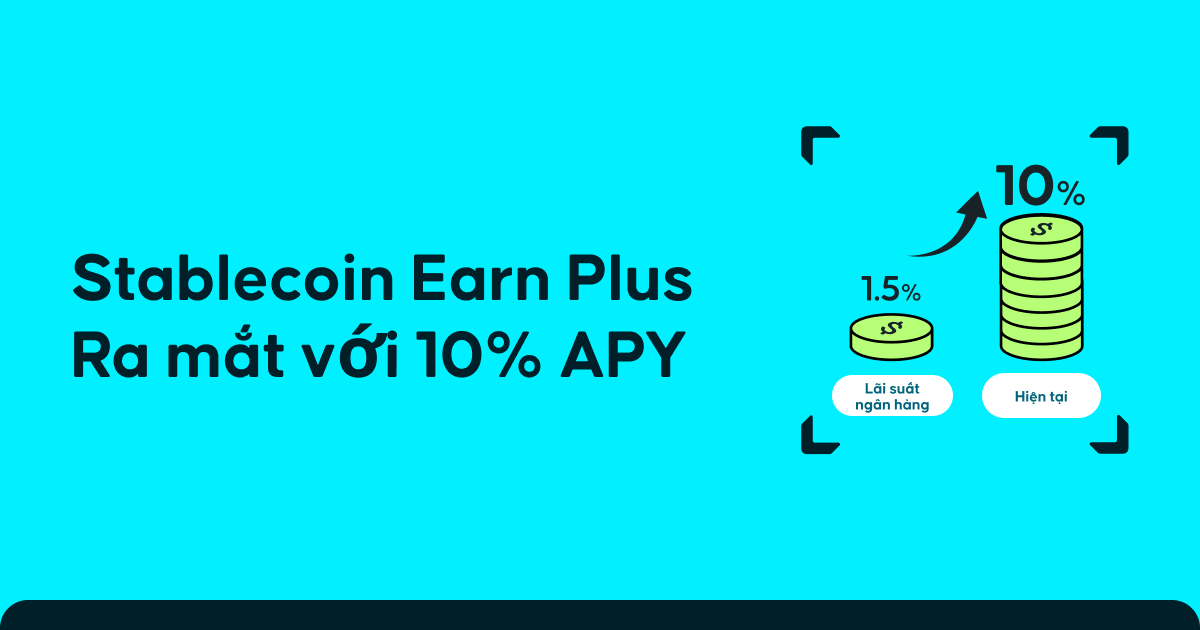
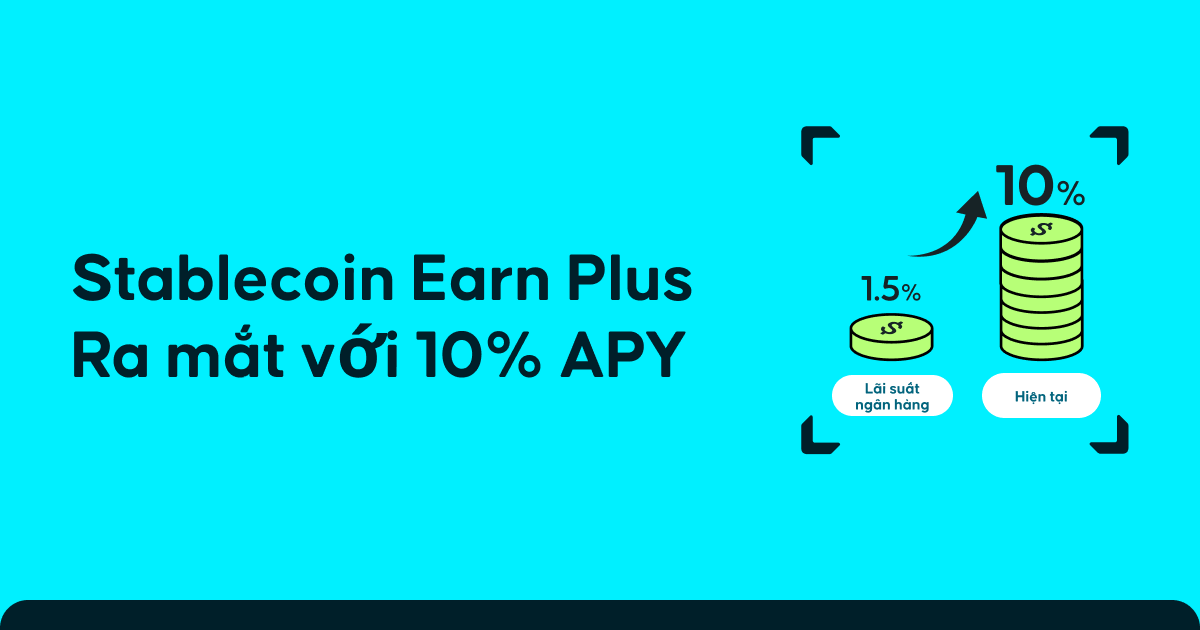
Bitget Wallet vừa ra mắt Stablecoin Earn Plus – sản phẩm staking stablecoin mang tính cách mạng với APY lên đến 10%, rút tiền tức thì 24/7 và hoàn toàn phi lưu ký. Đây là bước tiến lớn trong việc democratize DeFi earning, giúp bất kỳ ai cũng có thể kiếm passive income từ crypto một cách đơn giản như gửi tiết kiệm ngân hàng, nhưng với lợi nhuận cao gấp 10 lần.
Stablecoin – Cầu nối giữa Crypto và TradFi
Xu hướng Institutional Adoption
Khảo sát gần đây cho thấy:
📊 83% nhà đầu tư tổ chức có kế hoạch tăng phân bổ vào crypto, trong đó:
Top priorities:
- Stablecoin products – Ưu tiên #1
- DeFi yield products – Ưu tiên #2
- Bitcoin ETFs
- Tokenized assets (RWA)
Tại sao Stablecoins?
✅ Price stability:
- Không biến động như BTC/ETH
- 1 USDC = $1 luôn
- Hedge against crypto volatility
✅ High liquidity:
- Dễ mua/bán
- Widely accepted
- Fast settlement
✅ Regulatory clarity:
- USDC: Circle được regulated
- Audited reserves
- Institutional-grade
✅ Yield opportunities:
- DeFi lending: 5-15% APY
- Staking: 8-12% APY
- Much higher than TradFi
Market size:
Total Stablecoin Market Cap: $170B+
- USDT (Tether): $90B
- USDC (Circle): $35B
- DAI, USDD, FDUSD, etc.: $45B

Growing 20%+ annually
Stablecoin Staking – Thế hệ sản phẩm tài chính mới
Evolution:
Traditional Banking → Crypto Exchanges → DeFi → Stablecoin Earn

Savings Account    CeFi Staking     Lending    User-friendly DeFi
0.95% APY          4-6% APY         8-15% APY  10%+ APY
Stablecoin staking = Best of both worlds:
- Safety của stablecoins (no volatility)
- Returns của DeFi (high APY)
- Simplicity của banking (easy UX)
- Flexibility của crypto (24/7, instant)
Giới thiệu Stablecoin Earn Plus
Stablecoin Earn Plus là gì?
Stablecoin Earn Plus là tính năng staking mới nhất của Bitget Wallet, được thiết kế cho bất kỳ ai muốn tài sản của mình tăng trưởng ổn định và an toàn.
Core concept:
“Make on-chain asset management as simple as holding a stablecoin”
Đối tượng:
- ✅ Web2 beginners (mới vào crypto)
- ✅ Web3 natives (crypto OGs)
- ✅ Everyone in between
- ✅ Gia đình & bạn bè (dễ giới thiệu)
Mission alignment:
Stablecoin Earn Plus thể hiện tầm nhìn “Crypto for Everyone” của Bitget Wallet:
- Đơn giản hóa DeFi
- Dân chủ hóa high yields
- Không cần technical knowledge
- Safe & accessible for all
3 Trụ cột chính
1. 💰 High & Stable Returns
10% APY guaranteed
(for deposits up to $10,000)

vs Traditional Finance:
- Savings account: 0.95% APY
- Money Market Fund: 4-5% APY
- US Treasury: 3-5% APY

→ Stablecoin Earn Plus: 10X+ better returns!
2. 🔓 Maximum Flexibility
Minimum deposit: Just $1 USDC
No lock-up period
Withdraw anytime: 24/7
Settlement: T+0 (instant!)

vs Traditional:
- Banks: Business hours only, T+1 settlement
- Bonds: Lock-up months/years
- MMF: Sometimes T+1 or T+2
3. 🛡️ Safety & Transparency
Non-custodial: You control keys
On-chain: Fully transparent
Verifiable yields: Real protocols (Aave)
$300M Protection Fund: Extra insurance layer

vs DeFi risks:
- Mitigated by insurance
- Reputable protocols only
- Audited smart contracts
Điểm nổi bật của Stablecoin Earn Plus
1. 🎯 Đơn giản & Linh hoạt
Easy as 1-2-3:
1. Deposit USDC (min $1)
2. Start earning (automatic)
3. Withdraw anytime (instant)

No complicated DeFi steps!
UX như ngân hàng:
- One-tap deposit
- Real-time balance tracking
- Interest accrues every second
- No manual claiming needed
Flexibility:
- Deposit: Any amount, anytime
- Withdraw: Full or partial, 24/7
- No penalties
- No questions asked
Example workflow:
User Story: Maria, freelancer

Monday: Client pays $5,000
→ Deposit to Earn Plus (1 minute)

Tuesday-Saturday: Earning ~$1.37/day
→ Watch balance grow real-time

Sunday: Need $2,000 for rent
→ Withdraw instantly
→ Remaining $3,000 keeps earning
2. 💎 Lợi suất cao ổn định
Guaranteed 10% APY (up to $10,000 deposit)
Breakdown:
Deposit: $10,000 USDC

Daily earnings: $10,000 × 10% / 365 = $2.74/day
Monthly: $83.33
Yearly: $1,000

After 1 year: $11,000 USDC
(vs bank savings: $10,095)
For deposits hơn $10,000:
First $10,000: 10% APY
Amount over $10k: 4-5% APY (Aave standard rate)

Example: $20,000 deposit
- $10,000 @ 10% = $1,000/year
- $10,000 @ 5% = $500/year
Total: $1,500/year
Blended APY: 7.5%
Why 10% is sustainable:
- DeFi lending rates: 4-8% base
- Platform subsidies: Bitget Wallet adds boost
- Aave rewards: Protocol incentives
- Combination ensures high APY long-term
Stability:
- No price volatility (USDC = $1)
- Predictable returns
- No liquidation risk
- Sleep well at night
3. 🔐 An toàn & Minh bạch
Non-custodial model:
Your keys → Your crypto
Bitget Wallet doesn't hold your funds
You maintain full control
On-chain transparency:
Every transaction verifiable:
- Deposit tx: On Base blockchain
- Aave allocation: Public smart contract
- Interest accrual: Real-time on-chain
- Withdrawal: Instant on-chain
Verify yourself:
basescan.org
→ Enter your wallet address
→ See all transactions
→ Track Aave positions
→ 100% transparent
Integrated protocols:
Phase 1: Aave
-
1 DeFi lending protocol
- $10B+ TVL
- Battle-tested since 2020
- Audited by top firms
Coming soon:
- Compound Finance
- Morpho
- Spark Protocol
- More top DeFi protocols
$300M Protection Fund:
Bitget Wallet’s insurance fund covers:
- Smart contract exploits
- Platform failures
- Extreme market events
- Additional peace of mind
4. 📊 Tính năng sản phẩm chi tiết
Thông số kỹ thuật:
| Feature | Details |
|---|---|
| Asset | USDC (USD Coin by Circle) |
| Blockchain | Base (Coinbase L2) |
| Min Deposit | 1 USDC ($1) |
| Max for 10% APY | 10,000 USDC |
| Redemption | 24/7, instant (T+0) |
| APY | ≥10% guaranteed (up to $10k), 4-5% for amounts hơn $10k |
| Fees | No deposit/withdrawal fees, Small gas (currently waived by Bitget) |
| Custody | Non-custodial (you own keys) |
| Protocol | Aave V3 (Phase 1) |
| Interest | Accrues per second, auto-compound |
Why USDC?
✅ Fully backed: 1:1 USD reserves
✅ Audited monthly: Transparent reserves
✅ Regulated: Circle is US-regulated
✅ Widely accepted: Most liquid stablecoin after USDT
✅ Institutional grade: Used by major institutions
Why Base chain?
✅ Low gas fees: ~$0.01 per transaction
✅ Fast: 2-second block time
✅ Ethereum security: L2 inherits ETH security
✅ Growing ecosystem: Coinbase backing
✅ High liquidity: Easy to swap/bridge
So sánh với Sản phẩm Truyền thống
Comparison Table
| Sản phẩm | APY | Flexibility | Risk & Transparency | Best For |
|---|---|---|---|---|
| Tiết kiệm ngân hàng | ~0.95% | Cao, nhưng lợi nhuận thấp | An toàn, minh bạch, nhưng không chống lạm phát | Người cực kỳ thận trọng |
| Trái phiếu Chính phủ | 3-5% | Trung bình (T+N settlement) | Rủi ro thấp, minh bạch, ổn định | Nhà đầu tư thận trọng |
| Money Market Fund | 4-5% | Cao | Rủi ro thấp, thanh khoản cao | Cân bằng an toàn & thanh khoản |
| Stablecoin Earn Plus | ≥10% | Rất cao (instant 24/7) | Vốn bảo đảm, phi lưu ký, có quỹ bảo vệ | Mọi nhà đầu tư tìm kiếm tăng trưởng ổn định |
Chi tiết so sánh
1. Savings Account (0.95% APY)
Pros:
- FDIC insured (US) / government guaranteed
- Zero risk (in theory)
- Easy access
Cons:
- Lợi nhuận cực thấp
- Không theo kịp lạm phát (3-4%/year)
- Actually losing money in real terms
Example:
Deposit: $10,000
After 1 year: $10,095
Inflation adjusted: $9,695 purchasing power
→ Lost $305 in real value!
2. US Treasury / Government Bonds (3-5% APY)
Pros:
- Government backed (safest asset)
- Predictable returns
- Better than savings
Cons:
- Still below/at inflation
- Lock-up periods (years)
- Early withdrawal penalties
- Lower liquidity
Example:
Deposit: $10,000
Lock: 5 years
After 5 years @ 4%: $12,166
But can't touch for 5 years!
3. Money Market Funds (4-5% APY)
Pros:
- Higher than bonds
- More liquid
- Professional management
Cons:
- Still limited returns
- Sometimes T+1 settlement
- Management fees
- Minimum balances often high
Example:
Deposit: $10,000
Fee: 0.5%/year
Net APY: 4.5%
After 1 year: $10,450
Better, but still limited
4. Stablecoin Earn Plus (10% APY) 🏆
Pros:
- 10X higher than savings
- 2X higher than bonds/MMF
- Instant withdrawal 24/7
- No lock-up
- Start from $1
- Transparent on-chain
Cons:
- Crypto learning curve (minimal)
- Smart contract risk (mitigated)
- No government insurance (but $300M fund)
Example:
Deposit: $10,000
After 1 year: $11,000
After 5 years: $16,105 (compound)
vs Bank: $10,486
→ Extra $5,619 gained!
Real-World Scenarios
Scenario 1: Emergency Fund
Sarah keeps $20,000 emergency fund

Option A: Bank savings @ 0.95%
→ Earns $190/year
→ Can access anytime

Option B: Stablecoin Earn Plus
→ First $10k @ 10% = $1,000
→ Next $10k @ 5% = $500
→ Total: $1,500/year
→ Can access anytime (same as bank!)

Winner: Earn Plus (+$1,310/year extra)
Scenario 2: Short-term Investment
John has $5,000 to invest for 6 months

Option A: 6-month CD @ 4%
→ Earns $100 (locked 6 months)
→ Penalty if withdraw early

Option B: Stablecoin Earn Plus @ 10%
→ Earns $250
→ Can withdraw anytime, no penalty

Winner: Earn Plus (+$150 more + flexibility)
Scenario 3: Passive Income
Maria wants passive income stream

Option A: Dividend stocks
→ ~3% dividend yield
→ Price volatility risk
→ $10,000 → $300/year dividends
→ But stock price may drop 20% = -$2,000

Option B: Stablecoin Earn Plus
→ 10% yield
→ No price volatility
→ $10,000 → $1,000/year income
→ Principal stays at $10,000

Winner: Earn Plus (higher income, no volatility)
Hướng dẫn bắt đầu từng bước
Bước 1: Tải Bitget Wallet
Download:
📱 Mobile:
- iOS: App Store → Search “Bitget Wallet”
- Android: Google Play → Search “Bitget Wallet”
💻 Desktop:
- Chrome Extension
- Browser version: web3.bitget.com
Create wallet:
1. Open app
2. Create New Wallet
3. Write down seed phrase (12/24 words)
4. Store safely (offline!)
5. Confirm seed phrase
6. Set PIN/biometrics
⚠️ Security tips:
- Never share seed phrase
- Write on paper, not digital
- Store in safe location
- Consider metal backup
- Test recovery before depositing
Bước 2: Nạp USDC
Option A: Buy directly in-app
1. Tap "Buy Crypto"
2. Select USDC (Base)
3. Choose payment method:
   - Credit/Debit card
   - Bank transfer
   - Apple Pay / Google Pay
4. Enter amount (min $10)
5. Complete payment
6. USDC arrives in wallet (5-10 mins)
Option B: Transfer from exchange
1. On Bitget Exchange (or other CEX):
   - Go to Withdraw
   - Select USDC
   - Network: Base

2. Copy your Bitget Wallet address:
   - Wallet → USDC → Receive
   - Copy address

3. Paste address in exchange
4. Enter amount
5. Confirm withdrawal
6. Wait 2-5 mins for arrival
Option C: Swap from other crypto
Already have ETH, BTC, etc?

1. In Bitget Wallet → Swap
2. From: Your token (e.g., ETH)
3. To: USDC (Base)
4. Enter amount
5. Review rate
6. Confirm swap
7. USDC ready to stake!
Option D: Bridge from other chains
Have USDC on Ethereum or other L1/L2?

1. Wallet → Bridge
2. From: Ethereum (or other)
3. To: Base
4. Asset: USDC
5. Amount: How much to bridge
6. Confirm
7. Wait 1-2 mins (L2) or 10-20 mins (L1)
Bước 3: Vào trang Earn
Navigate:
1. Open Bitget Wallet app
2. Home screen → Tap "Earn" tab
3. Or: Swipe left từ home → Find "Stablecoin Earn Plus"
4. Tap to enter product page
Product page shows:
- Current APY: 10%
- Your current balance (if any)
- Total earned so far
- Available USDC to deposit
- Terms & conditions
Bước 4: Nạp stablecoin
Deposit flow:
1. Tap "Đăng ký ngay" (Subscribe Now)

2. Enter amount:
   - Min: 1 USDC
   - Max: Unlimited (but 10% APY only first $10k)
   - Or tap "Max" to deposit all

3. Review details:
   - Amount: 1,000 USDC
   - APY: 10%
   - Daily earning: ~$0.27
   - Gas fee: ~$0.01 (waived during promo)

4. Confirm transaction:
   - Sign with PIN/biometrics
   - Transaction submitted

5. Success!
   - Instantly start earning
   - See real-time balance update
After deposit:
- Interest accrues every second
- View earnings in real-time
- No need to claim manually
- Auto-compounds
Dashboard shows:
Total Deposited: 1,000 USDC
Current Value: 1,000.274 USDC
Total Earned: 0.274 USDC
APY: 10.00%
Daily Rate: 0.0274%
Next projected: +$0.27 tomorrow
Bước 5: Theo dõi & Quản lý
Tracking:
📊 Real-time updates:
- Balance updates every second
- See interest accumulating live
- Total earned counter
- APY display
📈 Historical data:
- Earnings chart (daily/weekly/monthly)
- Deposit/withdrawal history
- Interest paid over time
Management options:
Add more:
Anytime:
→ Tap "Deposit More"
→ Enter additional amount
→ Compounds with existing
Withdraw:
Need cash:
→ Tap "Withdraw"
→ Enter amount (or "Max")
→ Instant to wallet
→ Remaining keeps earning
Auto-compound:
Interest earned automatically added to principal
→ Compound effect over time
→ No action needed
Câu hỏi thường gặp (FAQ)
1. Stablecoin là gì?
Definition:
Stablecoin = Cryptocurrency pegged 1:1 với fiat currency (thường là USD)
USDC specifically:
- Phát hành bởi Circle (US company)
- Backed 1:1 bởi USD reserves
- Audited monthly bởi top accounting firms
- Regulated & compliant
- Market cap: $35B+
- Widely accepted
Why stable?
1 USDC = $1.00 always
No volatility like BTC/ETH

If market tries to push price:
- Above $1: Arbitrageurs sell USDC, buy USD
- Below $1: Arbitrageurs buy USDC, redeem for USD
→ Price returns to $1
Use cases:
- Store value without volatility
- Transfer money globally (fast & cheap)
- Earn yield (like Earn Plus!)
- Trade against other crypto
- Payment settlement
Trust factors:
- Circle is US-regulated
- Monthly attestations by Grant Thornton
- Reserves held at major US banks
- Backed by Coinbase & Blackrock
- Billions in daily volume = highly liquid
2. Lợi nhuận đến từ đâu?
Yield sources:
A. DeFi Lending (Base yield):
User deposits → Aave protocol → Lent to borrowers

Borrowers pay interest (6-8% typically)
→ Lenders receive majority of interest
→ Protocol takes small fee
Why do people borrow USDC?
- Leverage trading (e.g., borrow USDC, buy ETH)
- Liquidity without selling holdings
- Arbitrage opportunities
- Business working capital
B. Platform Subsidies:
Bitget Wallet adds additional rewards
→ Boost APY from ~5% to 10%

Why?
- Attract users to platform
- Grow TVL (Total Value Locked)
- Competitive positioning
- Marketing investment
C. Protocol Incentives:
Aave distributes AAVE tokens as rewards
→ Extra yield on top of lending interest
→ Bitget Wallet passes to users
Combined formula:
Total APY = Lending interest + Platform subsidy + Protocol rewards

Example breakdown:
- Aave base rate: 5%
- Bitget subsidy: 4%
- Aave rewards: 1%
Total: 10% APY
Sustainability:
Is 10% sustainable long-term?
- Base lending rates: Yes (4-8% is normal DeFi)
- Platform subsidy: Promotional (may adjust over time)
- Protocol rewards: Variable
Realistic long-term:
- Expect 6-10% APY range
- Still 10X better than banks
- Market-driven, transparent
3. Có phí gì không?
Fee structure:
Deposit fees: ❌ None
Withdrawal fees: ❌ None
Management fees: ❌ None
Only cost: Gas fees
Gas on Base chain:
- Deposit tx: ~$0.01
- Withdrawal tx: ~$0.01

Current promotion:
→ Bitget Wallet waives gas fees on first deposit!
Comparison:
| Platform | Deposit Fee | Withdrawal Fee | Management Fee | Gas Fee |
|---|---|---|---|---|
| Earn Plus | ❌ $0 | ❌ $0 | ❌ 0% | ✅ ~$0.01 (waived) |
| Banks | ❌ $0 | ❌ $0 | ❌ 0% | N/A |
| Aave directly | ❌ $0 | ❌ $0 | ❌ 0% | ✅ $5-50 (Ethereum mainnet) |
| Some DeFi platforms | 🟨 0-0.5% | 🟨 0-0.5% | 🟨 0-2% | ✅ Varies |
Why no fees?
Bitget Wallet’s model:
- Revenue from other products (swap fees, etc.)
- Earn Plus is user acquisition tool
- High TVL benefits ecosystem
- Win-win alignment
4. Khi nào lợi nhuận được phân phối?
Accrual mechanism:
Interest accrues: Per second (not daily/monthly)
Distribution: Automatic, continuous
Display: Real-time updates
Example timeline:
Day 1, 00:00:00 - Deposit 1,000 USDC
Day 1, 00:00:01 - Earned +$0.0000032
Day 1, 00:01:00 - Earned +$0.00019
Day 1, 01:00:00 - Earned +$0.0114
Day 1, 12:00:00 - Earned +$0.137
Day 2, 00:00:00 - Earned +$0.274 (first full day)
No manual claiming:
Traditional DeFi:
1. Deposit
2. Wait
3. Manually claim rewards
4. Pay gas to claim
5. Manually re-stake (compound)
Earn Plus:
1. Deposit
2. Done! Auto-earns & compounds forever
Compound effect:
Because interest is auto-added:
Month 1: 1,000 USDC → 1,008.33 USDC
Month 2: 1,008.33 → 1,016.74 (earning on $1,008.33 now)
Month 3: 1,016.74 → 1,025.22 (compound acceleration)
...
Year 1: 1,000 → 1,104.71 (10.47% effective with daily compound)
5. APY được tính như thế nào?
Formula:
Daily earnings = Balance × (APY / 365)Detailed calculation:
Balance: 1,000 USDC
APY: 10%

Per day:
1,000 × (10% / 365) = 1,000 × 0.000274 = $0.274/day

Per month:
$0.274 × 30 = $8.22/month

Per year:
$0.274 × 365 = $100/year
With compounding:
APY: 10%
Compound frequency: Continuous (per second)

Effective APY = e^(0.10) - 1 = 10.52%

So actual earnings:
1,000 × 10.52% = $105.20/year
For amounts hơn $10,000:
Deposit: $20,000

Tier 1 (0-10k): $10,000 @ 10% = $1,000/year
Tier 2 (10k+): $10,000 @ 5% = $500/year

Total: $1,500/year
Blended APY: $1,500 / $20,000 = 7.5%
Variable rates:
Note: APY may fluctuate slightly based on:
- Aave utilization rates
- Platform subsidy adjustments
- Protocol reward changes
But guaranteed minimum displayed at time of deposit.
6. Có thể rút bất kỳ lúc nào không?
Yes! Complete flexibility:
✅ Anytime:
- 24/7/365
- No business hours
- Weekends & holidays included
✅ Any amount:
- Partial withdrawal: OK
- Full withdrawal: OK
- Min: No minimum (even $0.01)
✅ Instant:
- T+0 settlement
- Funds in wallet immediately
- No waiting period
- No “processing” delays
✅ No penalties:
- No early withdrawal fees
- No lock-up violations
- No questions asked
- Keep all earned interest
Withdrawal process:
1. Open Earn Plus page
2. Tap "Withdraw"
3. Enter amount ($10-$10,000-all)
4. Confirm
5. Sign transaction
6. ✅ USDC in wallet (instant!)
What happens to interest?
Scenario: Withdraw after 15 days

Deposited: 1,000 USDC
Earned so far: 4.11 USDC
Total balance: 1,004.11 USDC

Withdraw: 500 USDC
→ Leaves: 504.11 USDC still earning
→ You get: 500 USDC in wallet
→ Keep all interest earned
Comparison:
| Product | Withdrawal | Settlement | Penalties |
|---|---|---|---|
| Earn Plus | ✅ 24/7 | ✅ T+0 Instant | ❌ None |
| Bank Savings | 🟨 Business hours | 🟨 T+1 | ❌ None |
| CDs (Time Deposits) | ❌ At maturity | 🟨 T+1 | 🔴 Yes (interest forfeit) |
| Money Market | ✅ Flexible | 🟨 T+1 or T+2 | ❌ Usually none |
| Aave directly | ✅ 24/7 | ✅ Instant | ❌ None |
Emergency access:
Perfect for emergency funds because:
- Instant access when needed
- No need to “break” anything
- Keep earning until you need it
- Better than cash sitting idle
7. Rủi ro là gì?
Risk factors:
A. Smart Contract Risk
Risk: Code vulnerabilities could be exploited
Mitigation:
- Aave is battle-tested (5+ years, $10B+ TVL)
- Audited by top firms (Trail of Bits, OpenZeppelin, etc.)
- Bug bounty program ($1M+ rewards)
- Bitget Wallet only integrates proven protocols
B. Protocol Risk
Risk: Aave protocol failure or governance attack
Mitigation:
- Decentralized governance (no single point of control)
- Time-locked upgrades (community review period)
- Large community oversight
- Historical reliability (no major incidents)
C. Stablecoin Depeg Risk
Risk: USDC loses $1 peg
Likelihood: Very low (Circle is regulated, audited, backed 1:1)
Historical: Minor depeg to $0.97 during SVB crisis (March 2023)
          → Recovered to $1 within days
Mitigation:
- Circle's strong backing
- USDC used by institutions
- Largest regulated stablecoin
D. Platform Risk
Risk: Bitget Wallet interface issues
Mitigation:
- Non-custodial (you own keys, can access funds directly)
- Open-source tools available
- $300M Protection Fund covers platform failures
E. Regulatory Risk
Risk: Government regulations change
Mitigation:
- Circle is US-regulated (ahead of regulations)
- Bitget Wallet complies with local laws
- DeFi protocols are decentralized (harder to regulate)
Overall risk assessment:
Risk level: Low to Medium

Compared to:
- Bank deposit: Lower risk (FDIC insured)
- Stock market: Higher risk (volatility)
- Altcoin staking: Much higher risk (price + smart contract)
- Leveraged trading: Much higher risk (liquidation)

Earn Plus position:
→ Conservative DeFi product
→ Suitable for risk-averse users
→ Much safer than most crypto products
Risk mitigation best practices:
- Start small: Deposit $100-1000 first, test it
- Diversify: Don’t put 100% in one product
- Use official channels: Only Bitget Wallet app (avoid scams)
- Verify contracts: Check smart contract addresses
- Stay informed: Follow Bitget announcements
- Keep emergency fund: Have some cash in bank too
8. So sánh với gửi trực tiếp vào Aave?
Direct Aave vs Earn Plus:
| Feature | Direct Aave | Earn Plus |
|---|---|---|
| APY | 4-5% | 10% (up to $10k) |
| Setup | Complex (connect wallet, approve, deposit) | Simple (one tap) |
| Gas fees | $5-50 on Ethereum, $0.50-2 on Base | ~$0.01 (waived) |
| UX | DeFi native (technical) | User-friendly |
| Custody | Non-custodial | Non-custodial |
| Insurance | Protocol insurance | + $300M Protection Fund |
| Multi-protocol | Aave only | Aave + more coming |
Who should use Direct Aave:
✅ DeFi power users
✅ Depositing hơn $50k (to justify gas)
✅ Want full control of position
✅ Already familiar with MetaMask, etc.
Who should use Earn Plus:
✅ Beginners to DeFi
✅ Want highest APY with simplicity
✅ Deposits dưới $50k
✅ Value convenience
✅ Everyone else!
Example cost comparison:
Scenario: Deposit $5,000 USDC for 1 year

Direct Aave (Ethereum):
- Gas to deposit: $50
- APY: 5%
- Earnings: $250
- Net: $200 (after gas)
- Gas to withdraw: $50
- Final net: $150

Earn Plus:
- Gas: $0 (waived)
- APY: 10%
- Earnings: $500
- Net: $500

Winner: Earn Plus (+$350 more!)
Chiến lược sử dụng Earn Plus
1. Emergency Fund
Strategy:
Keep 3-6 months expenses in Earn Plus

Example: $15,000 needed
→ Deposit to Earn Plus
→ Earn $1,125/year (7.5% blended)
→ Access instantly if emergency
→ vs Bank savings: +$980/year extra
Benefits:
- Still liquid (instant access)
- Earning 10X more than bank
- No risk to principal (stablecoin)
- Peace of mind
2. Crypto Rotation
Strategy:
Bull market profit-taking:
1. Sell BTC/ETH at highs
2. Convert to USDC
3. Park in Earn Plus
4. Wait for dip
5. Buy back crypto
6. Earn 10% while waiting!
Example:
January: BTC at $100k (sell)
→ Convert to 1 BTC = $100k USDC
→ Deposit to Earn Plus

January-March: Earning 10% APY
→ 3 months = ~$2,500 earned

April: BTC dips to $80k (buy)
→ Buy back: $102,500 / $80k = 1.28 BTC
→ Gained: 0.28 BTC + earned during wait!
3. DCA Staging
Strategy:
Dollar-Cost Averaging into crypto
but keep funds ready:

1. Monthly salary: $5,000
2. DCA budget: $1,000/month into BTC
3. Deposit full $1,000 to Earn Plus at month start
4. Earn 10% while deciding when to buy
5. Buy BTC when ready
6. Repeat monthly
Benefit:
- Capital earning while waiting
- Flexibility to time entries
- Extra yield on top of DCA gains
4. Stablecoin Yield Farming Simplified
Strategy:
Instead of complex yield farming:
1. Just use Earn Plus
2. No IL (impermanent loss)
3. No managing multiple positions
4. No claim & restake
5. Auto-compounds
Comparison:
Complex DeFi yield farming:
- LP staking: 15% APY
- But: IL risk, multiple txs, gas fees, complexity

Earn Plus:
- 10% APY
- But: No IL, one tx, minimal gas, simple
→ Better risk-adjusted returns for most users
5. Business Treasury Management
Strategy:
For crypto businesses:
1. Operational reserves in USDC
2. Deposit to Earn Plus
3. Withdraw as needed for expenses
4. Earn 10% on idle treasury
Example:
Business: Holds $100k operational reserve

Traditional:
- Bank checking: 0%
- Earnings: $0/year

With Earn Plus:
- $100k in Earn Plus
- First $10k @ 10% = $1,000
- Remaining $90k @ 5% = $4,500
- Total: $5,500/year passive
- Still instant access for expenses!
6. Salary Parking
Strategy:
Get paid in crypto:
1. Receive salary in USDC
2. Immediately deposit to Earn Plus
3. Withdraw for living expenses as needed
4. Earn on everything in between
Example:
Monthly salary: $5,000 USDC
Monthly expenses: $4,000

Flow:
- Day 1: Receive $5,000 → Deposit
- Day 5: Withdraw $1,000 (rent)
- Day 10: Withdraw $800 (groceries)
- Day 15: Withdraw $600 (bills)
- Day 20: Withdraw $1,600 (misc)
- Day 30: Left with $0 (all spent)

But earned interest on:
- $5,000 for 5 days
- $4,000 for 5 more days
- $3,200 for 5 more days
- $2,600 for 10 more days

Total interest: ~$8/month = $96/year
(On money that would be idle anyway!)
Kết luận
Stablecoin Earn Plus đánh dấu bước tiến lớn trong việc dân chủ hóa DeFi yields, mang lại cơ hội kiếm lợi nhuận cao, ổn định cho mọi người, chứ không chỉ riêng institutions và DeFi power users.
🎯 Lợi ích chính
✅ 10% APY – Cao gấp 10 lần savings accounts
✅ Rút tức thì 24/7 – Linh hoạt hoàn toàn như bank
✅ Từ $1 – Không cần vốn lớn
✅ An toàn – Non-custodial + $300M Protection Fund
✅ Đơn giản – One-tap deposit, tự động earning
✅ Minh bạch – On-chain, verifiable yields
🚀 Ai nên dùng?
- ✅ Beginners: Cách dễ nhất vào DeFi
- ✅ Experienced traders: Park profits between trades
- ✅ Long-term holders: Emergency fund earning
- ✅ Businesses: Treasury management
- ✅ Everyone: Better than leaving cash idle!
💡 Key Takeaway
“Trong thời gian dài, lợi nhuận ổn định từ stablecoin chỉ dành cho các institutions. Giờ đây, chỉ với một tap, bất kỳ ai cũng có thể truy cập mức APY 10% an toàn, minh bạch. Bitget Wallet đang biến DeFi earning từ complicated thành accessible.”
Stablecoin Earn Plus = DeFi made simple:
- No complex protocols
- No technical jargon
- No steep learning curve
- Just deposit & earn!
Get started today:
- Download Bitget Wallet
- Deposit USDC (from $1)
- Start earning 10% APY
- Watch your wealth grow!
Đây là tương lai của savings – higher returns, full control, zero complexity.
Bắt đầu kiếm 10% APY với Bitget Wallet
Download Bitget Wallet ngay để trải nghiệm Stablecoin Earn Plus!
Bitget Wallet – #1 Web3 wallet với 80M+ users
📱 Download Now
- iOS: App Store → “Bitget Wallet”
- Android: Google Play → “Bitget Wallet”
- Chrome: Extension → “Bitget Wallet”
- Web: web3.bitget.com
🎁 New User Benefits
✅ Free gas fees on first deposit
✅ 10% APY on USDC (up to $10k)
✅ Instant access 24/7
✅ $300M Protection Fund
🌟 Bitget Wallet Features
✅ Multi-chain: 130+ blockchains
✅ Swap: Best rates across DEXs
✅ DApp Browser: Access Web3
✅ Earn: Multiple staking options
✅ NFTs: Manage collections
✅ Non-custodial: You own keys
🎯 Perfect For
- Crypto beginners (simple UI)
- DeFi users (advanced features)
- Traders (fast swaps)
- HODLers (secure storage)
- Everyone (Crypto for Everyone!)
Tham gia Bitget Ecosystem
Ngoài Bitget Wallet, explore toàn bộ Bitget ecosystem:
💱 Bitget Exchange
Top 3 crypto exchange globally với:
- 500+ trading pairs
- Copy Trading #1
- Leverage 125x
- Stock Futures
- Try Bitget Exchange
📚 Learn More
Muốn hiểu sâu hơn về DeFi, stablecoins và yield farming? Tham gia Bootcamp Blockchain Mastery!
🎯 Module về DeFi & Stablecoins:
1. Stablecoin Fundamentals
- USDC, USDT, DAI comparison
- Collateralization mechanisms
- Regulatory landscape
- Risk assessment
2. DeFi Lending & Borrowing
- Aave deep-dive
- Compound Finance
- Interest rate models
- Liquidation mechanics
3. Yield Strategies
- Stablecoin yield farming
- LP strategies
- Risk/reward optimization
- Tax implications
4. Smart Contract Interaction
- Using Web3 wallets
- Gas optimization
- Security best practices
- Reading smart contracts
5. Portfolio Management
- DeFi portfolio allocation
- Rebalancing strategies
- Risk management
- Performance tracking
📞 Đăng ký ngay:
👉 Tìm hiểu thêm về Bootcamp Blockchain Mastery
Bài viết này được biên soạn bởi đội ngũ Hướng Nghiệp Công Nghệ. Để cập nhật thêm về Bitget Wallet, DeFi earning và stablecoin strategies, hãy theo dõi blog của chúng tôi.
Tags: #BitgetWallet #StablecoinEarn #DeFi #PassiveIncome #USDC #Aave #YieldFarming
Bài viết gần đây
-
Mua Bot Trade Forex: 7 Điều Phải Kiểm Tra Trước Khi Mua | HNDL
Tháng 8 2, 2026 -
Báo cáo cuối khóa MT5 K6: Phạm Ngọc Tuân demo EA Hedging 02/08
Tháng 8 2, 2026 -
Bot Auto Trading là gì? Hướng dẫn xây dựng bot thực chiến 2026
Tháng 8 2, 2026
| Hộp Đen – Bí Mật Của Quỹ Đầu Cơ Thành Công Nhất Lịch Sử
Được viết bởi thanhdt vào ngày 13/11/2025 lúc 06:11 | 259 lượt xem

“Hộp đen” (black box) trong tài chính dùng để chỉ tính bí mật cực đoan trong các chiến lược giao dịch của các quỹ đầu cơ, đặc biệt là quỹ Medallion của Renaissance Technologies. Sự bí ẩn này, kết hợp với hiệu suất vượt trội chưa từng có, đã dẫn đến sự hoài nghi ban đầu từ Phố Wall và cộng đồng tài chính truyền thống. Nhưng sau hàng thập kỷ, “hộp đen” này đã chứng minh mình là cỗ máy in tiền hiệu quả nhất trong lịch sử.
🔲 “Hộp Đen” Trong Tài Chính Là Gì?
Định Nghĩa
Thuật ngữ “hộp đen” (black box) mô tả một hệ thống mà người ta có thể:
✅ Quan sát đầu vào (inputs)
   → Dữ liệu thị trường, giá cả, khối lượng, tin tức...

✅ Quan sát đầu ra (outputs)
   → Các giao dịch, lợi nhuận, performance metrics...

❌ KHÔNG hiểu được cơ chế bên trong
   → Thuật toán cụ thể là gì?
   → Làm thế nào để ra quyết định?
   → Tại sao lại mua/bán tại thời điểm đó?
Analogy đơn giản:
Giống như bạn biết:
- Đưa thịt và rau vào → Burger ra
- Nhưng KHÔNG biết công thức, gia vị, quy trình chế biến
Trong tài chính:
Black Box Trading System:

Input:
├── Real-time market data
├── Historical price data
├── Order book information
├── News & sentiment data
├── Macroeconomic indicators
└── Alternative data sources

         ┌─────────────────┐
         │                 │
Input ──▶│   BLACK BOX     │──▶ Output
         │   (Unknown)     │
         │                 │
         └─────────────────┘

Output:
├── Buy/Sell signals
├── Position sizing
├── Entry/exit timing
├── Risk management
└── Portfolio allocation
Đặc điểm:
- Hoàn toàn tự động (algorithmic)
- Không có human judgment
- Bí mật tuyệt đối về chiến lược
- Dựa trên toán học & dữ liệu
🏛️ Renaissance Technologies – Hộp Đen Huyền Thoại
Giới Thiệu
Renaissance Technologies (RenTech)
- Founded: 1982
- Founder: Jim Simons (mathematician, codebreaker)
- Location: East Setauket, New York
- Type: Quantitative hedge fund
- AUM: $130+ billion (2023)
- Flagship: Medallion Fund
Medallion Fund – Kỷ Lục Chưa Từng Có
Performance:
| Metric | Value | Note |
|---|---|---|
| Average Annual Return | 66% | Before fees, 1988-2018 |
| After Fees | 39% | Still astronomical! |
| Worst Year | -6% | 2020 (COVID) – still better than most |
| Sharpe Ratio | 2.5+ | Market average: 0.4 |
| Assets | $10 billion | Employee-only fund |
Comparison:
$1 invested in 1988:

Medallion Fund:     $40,000+  (66% CAGR)
S&P 500:            $20       (10% CAGR)
Warren Buffett:     $150      (20% CAGR)
Average Hedge Fund: $15       (8% CAGR)

Medallion beat everyone by 3X-2000X!
Why so successful?
- Algorithmic trading (before it was mainstream)
- Massive data (40+ years of collection)
- Genius team (PhDs in math/physics/CS)
- Absolute secrecy (the “black box”)
- High-frequency (thousands of trades/day)
Chiến Lược Dựa Trên Thuật Toán
Khác biệt cơ bản:
Traditional Investing (Warren Buffett, Peter Lynch):
Philosophy:
"Understand the business fundamentally"

Process:
1. Read financial statements
2. Analyze competitive advantage
3. Meet management team
4. Understand industry trends
5. Calculate intrinsic value
6. Buy when undervalued

Hold period: Years to decades
Decision making: Human judgment + analysis
Renaissance Technologies:
Philosophy:
"Let data reveal the truth"

Process:
1. Collect massive datasets
2. Find statistical patterns
3. Build mathematical models
4. Backtest rigorously
5. Automate execution
6. Monitor & adapt

Hold period: Milliseconds to days
Decision making: Pure algorithm (no human)
What they DON’T do:
❌ Read annual reports
❌ Meet CEOs
❌ Analyze competitive moats
❌ Make macro predictions
❌ Follow news narratives
❌ Trust gut feelings
What they DO:
✅ Process billions of data points
✅ Find correlations humans can’t see
✅ Execute at machine speed
✅ Trade thousands of times daily
✅ Exploit tiny inefficiencies
✅ Compound microscopic edges
Example (simplified):
# Renaissance might find patterns like:

Pattern 1:
"When stock X rises >2% in first 30 minutes
 AND volume is 3X average
 AND broader market is flat
 → 58% chance stock reverses within 2 hours
 → Short it with tight stop-loss"

Pattern 2:
"When S&P futures drop >0.5%
 AND VIX spikes >10%
 AND Treasury yields fall
 → Small-cap stocks overreact by 0.3%
 → Buy mean-reversion trade"

They have THOUSANDS of such patterns
Most lasting only milliseconds to hours
Constantly adapting as markets change
🔐 Tuyệt Mật – Bí Mật Thương Mại Được Bảo Vệ Nhất
Mức Độ Bảo Mật
Renaissance Technologies có mức độ bảo mật tương đương NSA (Jim Simons từng làm codebreaker cho NSA):
1. NDA Cực Kỳ Chặt Chẽ
Employee contracts include:

✓ Non-disclosure agreements (NDA)
✓ Non-compete clauses
✓ Confidentiality for LIFE (even after leaving)
✓ Penalties: Millions in damages
✓ Legal action if breach

Some terms:
- Cannot discuss strategies with ANYONE
- Cannot work for competitors for X years
- Cannot start similar funds
- Cannot publish research using RenTech methods
Example:
Pavel Volfbeyn (former RenTech employee) tried to join competitor Millennium Management.
RenTech sued him for $10 million for breach of NDA.
He lost.
2. Compartmentalization
Most employees only know PART of the system:

Team A: Data collection & cleaning
Team B: Feature engineering
Team C: Model development (only their models)
Team D: Execution systems
Team E: Risk management

No single person (except core leadership)
knows the ENTIRE system

Like Manhattan Project or CIA operations
3. Physical Security
RenTech office (Long Island, NY):

- Remote location (away from Wall Street)
- Restricted access (badge + biometrics)
- No visitors allowed in trading floor
- Faraday cage (blocks signal eavesdropping)
- Encrypted communications
- No laptops/phones in secure areas
4. No Publications
Unlike academic researchers:

❌ No papers published about strategies
❌ No conference presentations
❌ No media interviews about methods
❌ No books written by employees

Exception: Jim Simons gave some general talks
But NEVER revealed actual algorithms
Tại Sao Bảo Mật Tuyệt Đối?
1. Competitive Advantage
If competitors knew their strategies:
→ Copy them
→ Crowd the same trades
→ Edge disappears
→ Profits evaporate

Secrecy = Moat
2. Market Impact
If market knows RenTech is buying:
→ Prices move before they finish
→ Front-running by others
→ Slippage increases
→ Returns decrease

Stealth = Better execution
3. Intellectual Property
Decades of R&D investment:
- $1+ billion spent on research
- 40+ years of data collection
- Hundreds of PhDs employed

This is worth BILLIONS
Must protect at all costs
4. Regulatory Scrutiny
High-frequency trading attracts:
- SEC investigations
- Congressional hearings
- Public backlash

Less visibility = Less pressure
What We DO Know (Limited)
Despite secrecy, some details leaked over time:
Trading style:
- High-frequency (hold positions minutes to days)
- Market-neutral (long/short, hedged)
- Statistical arbitrage
- Mean reversion + momentum combined
- Diversified across all asset classes
Technology:
- Custom supercomputers
- Co-located servers (next to exchanges)
- Low-latency execution (< 1ms)
- Proprietary programming languages
- Machine learning (before it was trendy)
Data:
- Tick-by-tick price data (since 1980s)
- Alternative data (weather, satellite, news)
- Social sentiment
- Order flow analysis
- Proprietary datasets
Team:
- 300+ employees (90% PhDs)
- Mathematicians, physicists, computer scientists
- Cryptographers, linguists, astronomers
- Average IQ: Probably 140+
But the actual algorithms?
“The secret sauce is secret.”
— Jim Simons
👥 Nhân Sự Khác Biệt
Không Tuyển “Trader Truyền Thống”
What Wall Street expects:
Typical Hedge Fund Hiring:

Requirements:
✓ MBA from Harvard/Wharton
✓ Experience at Goldman Sachs / Morgan Stanley
✓ Track record of profitable trades
✓ Knowledge of markets & economics
✓ Networking & sales skills

Salary: $200k-$500k base
Renaissance Technologies approach:
RenTech Hiring:

Requirements:
✓ PhD in Math, Physics, Computer Science
✓ Research publications in top journals
✓ Problem-solving ability (puzzles, competitions)
✓ Coding skills (C++, Python, ML)
✓ NO finance experience needed (preferred!)

Salary: $500k-$2M+ (with profit share)
Why avoid finance people?
Jim Simons’ reasoning:
“I don’t want people who have preconceived notions about markets.
I want people who can look at data objectively and find patterns.
Finance people have too many biases.”
Examples:
Finance person thinks:
"Tech stocks are overvalued because P/E ratios are high"
→ Biased by fundamental analysis

RenTech scientist thinks:
"Data shows when tech P/E > 50 AND momentum positive,
 stocks continue up 65% of the time for 2 weeks"
→ Objective, data-driven
Profiles Hired
1. Mathematicians
Specialties:
- Differential geometry
- Topology
- Number theory
- Probability & statistics

Why?
→ Find patterns in noisy data
→ Build predictive models
→ Optimize portfolios
Notable hire:
- Peter Brown (Computer Science PhD, IBM)
- Robert Mercer (Computer Science PhD, IBM, speech recognition)
2. Physicists
Specialties:
- Quantum mechanics
- Statistical mechanics
- Particle physics

Why?
→ Markets behave like complex physical systems
→ Pattern recognition in chaos
→ Modeling uncertainty
3. Codebreakers / Cryptographers
Background:
- NSA (National Security Agency)
- Government intelligence

Why?
→ Find hidden signals in noise
→ Reverse-engineer patterns
→ Secrecy & compartmentalization
Jim Simons himself:
- Worked for NSA (1964-1968)
- Broke Soviet codes during Cold War
4. Computer Scientists
Specialties:
- Machine learning
- Natural language processing
- High-performance computing
- Algorithm optimization

Why?
→ Build trading infrastructure
→ Process massive datasets
→ Low-latency execution
5. Even Astronomers & Linguists!
Astronomers:
- Analyze massive datasets
- Find rare signals in noise
- Statistical techniques

Linguists:
- Natural language processing
- Sentiment analysis from news
- Pattern recognition in text
Văn Hóa “Academic”
Office environment:
More like MIT than Wall Street:

✓ Whiteboards everywhere
✓ Papers & equations scattered
✓ Lunch discussions about math
✓ Collaboration encouraged
✓ Publish-or-perish → Profit-or-perish

NOT:
✗ Fancy suits (casual dress)
✗ Ego & hierarchy (flat structure)
✗ Trading floor chaos (quiet & focused)
Incentives:
20% management fee
44% performance fee

(Most hedge funds: 2% / 20%)

Why so high?
→ Returns justify it (39% after fees!)
→ Employees become rich
→ Attract best talent
Example:
Employee earning share of Medallion Fund:

Year 1: $500k base + $1M bonus = $1.5M
Year 5: $10M cumulative
Year 10: $50M+
Year 20: $200M+ (many employees)

Jim Simons net worth: $31 billion (2023)
Robert Mercer: $1+ billion
Peter Brown: $1+ billion

Money attracts talent
Talent generates money
Virtuous cycle
🤔 Sự Hoài Nghi Ban Đầu
Hiệu Suất Phi Thực Tế
Wall Street’s reaction (1990s-2000s):
"66% annual returns? Impossible!"

Common doubts:

1. "It's too good to be true"
   → Must be fabricated numbers
   → Or accounting tricks

2. "It's just luck"
   → Right place, right time
   → Won't last

3. "It's a Ponzi scheme"
   → Like Bernie Madoff
   → Fake returns to attract investors

4. "They're using insider trading"
   → Illegal information
   → That's the only explanation
Why skepticism?
Historical context:
Greatest investors in history:

Warren Buffett:  20% CAGR (50+ years)
Peter Lynch:     29% CAGR (13 years)
George Soros:    30% CAGR (30+ years)

These are LEGENDS

Renaissance: 66% CAGR (30+ years)
→ 2X-3X better than legends
→ Unprecedented in history
Statistical improbability:
# Simplified analysis

# Assume market returns ~10% with 15% volatility
# Medallion: 66% with <20% volatility

from scipy import stats

market_sharpe = 0.1 / 0.15 = 0.67
medallion_sharpe = 0.66 / 0.20 = 3.3

# Probability of achieving 3.3 Sharpe by luck?
p_value = stats.norm.sf(3.3)
# ≈ 0.0005 (0.05%)

# Over 30 years? Essentially zero
“The probability of Medallion’s performance being luck is statistically impossible.”
— Financial researchers
But it was REAL.
Thiếu Minh Bạch
Contrast with Warren Buffett:
Warren Buffett’s Berkshire Hathaway:
✅ Publishes annual shareholder letters
✅ Explains every major investment
✅ Transparent about philosophy
✅ Answers questions in annual meetings
✅ Holdings publicly disclosed (13F filings)

Anyone can understand Buffett's approach:
"Buy wonderful companies at fair prices"
Renaissance Technologies:
❌ No investor letters (Medallion closed)
❌ Never explains strategies
❌ No philosophy shared publicly
❌ No Q&A, no interviews
❌ Holdings obscured (complex derivatives)

Black box = Zero transparency
Investor concerns:
"How do I know my money is safe
 if I don't understand what you're doing?"

"What if there's a massive hidden risk?"

"This violates every principle of due diligence."
Result:
Many institutional investors REFUSED to invest in Medallion despite incredible returns, because they couldn’t understand or audit the strategy.
Đồn Đoán & Nghi Ngờ
Conspiracy theories circulated:
1. “It’s a Ponzi scheme”
Theory:
- Fake returns to attract investors
- Use new money to pay old investors
- Like Bernie Madoff

Reality:
❌ Medallion CLOSED to new investors in 1993
❌ Returned outside capital (2005)
❌ Now employee-only (no reason to fake)
❌ Audited by independent firms
2. “Insider trading”
Theory:
- Using illegal information
- Trading ahead of major announcements
- Bribing CEOs for early data

Reality:
❌ Heavily monitored by SEC
❌ No insider trading charges (ever)
❌ Strategies work on ALL markets (not specific companies)
❌ High-frequency = Micro patterns (not macro news)
3. “Front-running”
Theory:
- Seeing client orders and trading ahead
- Manipulating markets

Reality:
❌ RenTech doesn't have brokerage clients
❌ Trades own money only
❌ SEC investigated, found nothing
4. “Wash trading / Manipulation”
Theory:
- Creating fake volume
- Pump and dump schemes

Reality:
❌ Would be caught by exchange surveillance
❌ Medallion trades diversified portfolio
❌ Not concentrated positions
Thất Bại Ban Đầu
Early struggles:
1988-1990: Rocky start
Year    Return
1988    +8.8%   (underwhelming)
1989    -4.0%   (LOSS!)
1990    +55.9%  (redemptions happened before this)

Some early investors:
→ Lost faith after 1989 loss
→ Redeemed their capital
→ Missed out on TRILLIONS in gains
Example:
Investor A: Invested $1M in 1988
1989: Down to $960k
→ "This doesn't work, I'm pulling out"
→ Withdrew in 1990

If stayed until 2020:
$1M → $40+ BILLION

Oops.
Lessons:
1. Even best strategies have drawdowns
2. Need patience & conviction
3. Short-term losses != long-term failure
4. Discipline to hold through volatility
Why early struggles?
1988-1990:
- Models still being refined
- Less data than today
- Technology limitations
- Learning curve

Post-1990:
- Models matured
- More data accumulated
- Better technology
- Team expanded

Then: Unstoppable
🚫 Chống Lại Quan Điểm Thị Trường Hiệu Quả
Efficient Market Hypothesis (EMH)
Theory:
Developed by Eugene Fama (Nobel Prize 1970s):
“Markets are efficient.
Prices reflect all available information.
You cannot consistently beat the market.”
Three forms:
1. Weak form:
"Past prices don't predict future"
→ Technical analysis doesn't work
→ Cannot profit from charts

RenTech response:
✓ Uses price patterns extensively
✓ Has beaten market for 30+ years
✓ EMH weak form = WRONG (at least for them)
2. Semi-strong form:
"Public information already priced in"
→ Fundamental analysis doesn't work
→ Cannot profit from news/reports

RenTech response:
✓ Doesn't use fundamental analysis anyway
✓ Finds inefficiencies faster than humans
✓ EMH semi-strong = Partially wrong
3. Strong form:
"Even insider info doesn't help"
→ Nobody can beat market
→ All info instantly priced

RenTech response:
✓ Beats market WITHOUT insider info
✓ Uses math, not information advantage
✓ EMH strong form = Irrelevant to their approach
Jim Simons’ Counter-Argument
Belief:
“Markets are NOT perfectly efficient.
There are anomalies—tiny, short-lived, exploitable.
Most humans can’t find them.
But algorithms can.”
Examples of inefficiencies:
1. Human psychology:
Humans:
- Panic in crashes (oversell)
- FOMO in rallies (overbuy)
- Herd mentality
- Recency bias

→ Predictable patterns
→ Mean reversion opportunities
2. Market microstructure:
Order book imbalances:
- Large buy orders stack up
- Creates temporary price pressure
- Predictable short-term move

→ High-frequency arbitrage
3. Institutional constraints:
Mutual funds:
- Must redeem at end of quarter
- Forced selling regardless of price
- Creates predictable price drops

→ Buy the dip, sell the bounce
4. Fragmented markets:
Same stock trades on:
- NYSE, NASDAQ, BATS, IEX, etc.
- Prices slightly different (microseconds)

→ Arbitrage opportunities
5. Slow information diffusion:
News hits:
- Smart algos react in milliseconds
- Retail reacts in minutes/hours
- Gap = Opportunity

→ Trade the initial move
Proof: 30+ Years of Dominance
The ultimate rebuttal to EMH:
If markets were truly efficient:
→ Nobody could beat them consistently
→ Certainly not by 66% annually
→ Certainly not for 30+ years

Medallion Fund performance:
→ 66% CAGR for 30+ years
→ Statistically impossible by luck
→ Proves markets have exploitable inefficiencies

EMH proponents' response:
"RenTech is an outlier, an exception"

Counter-response:
"One exception is enough to disprove the theory"
Academic debate:
Pro-EMH:
"Markets are MOSTLY efficient
 Medallion is extreme exception
 Average investor still can't beat market"

Pro-RenTech:
"If ONE fund can beat market systematically,
 EMH is incomplete at best, wrong at worst
 The existence of quant trading proves it"
Reality:
Markets are:
✓ Reasonably efficient (hard to beat)
✓ But NOT perfectly efficient
✓ Temporary inefficiencies exist
✓ Speed & scale matter
✓ Requires:
  - Advanced math
  - Massive data
  - Cutting-edge technology
  - Genius team

For 99.99% of investors:
→ EMH practically true (can't beat market)

For Renaissance:
→ EMH false (they beat market consistently)
✅ Chứng Minh Hiệu Quả Qua Thời Gian
30+ Năm Thống Trị
Consistent dominance:
Medallion Fund Performance (selected years):

Year    Return
1990    +55.9%
1995    +38.4%
2000    +98.5% (dot-com bubble)
2005    +29.8%
2008    +98.2% (financial crisis!)
2010    +44.9%
2015    +36.2%
2018    +45.6%
2020    -6.0%  (only down year in decade)
2021    +76.0% (bounce back)

Average: 66%
Worst: -6%
Best: 98.5%

NO OTHER FUND COMES CLOSE
What makes it more impressive:
1. Survives all crises:
1997: Asian Financial Crisis → +24.7%
2000: Dot-com Bubble Burst → +98.5%
2001: 9/11 Attacks → +32.9%
2008: Global Financial Crisis → +98.2%
2020: COVID-19 Pandemic → -6.0%

While others collapsed, Medallion thrived
Why crisis-proof?
Market-neutral strategies:
- Long + Short positions
- Hedged against direction
- Profit from volatility
- Mean reversion = Crises = Opportunity

Diversification:
- Trade 1000s of instruments
- Multiple uncorrelated strategies
- Not dependent on bull markets
2. Scales without degradation:
Most trading strategies:
→ Work with $10M
→ Fail with $1B (too big, move markets)

Medallion:
→ Worked with $100M (1990s)
→ Still works with $10B (today)
→ Closed at $10B to maintain performance

Secret:
- Trade ultra-short-term (avoid market impact)
- Diversify across many markets
- Algorithmic execution (minimize slippage)
3. Adapts to market changes:
1990s: Different market structure
- Manual trading still dominant
- Slower information
- Less competition

2020s: Changed landscape
- 80% algorithmic trading
- Lightning-fast info diffusion
- Intense competition

Medallion still dominates

How?
→ Constantly evolving models
→ R&D never stops
→ Best talent continuously hired
→ Reinvesting in technology
Independent Validation
Auditing & Verification:
1. Third-party audits:
- Ernst & Young (Big 4 accounting)
- PricewaterhouseCoopers
- Independent verification of returns
- No fraud found (ever)
2. SEC oversight:
- Registered investment adviser
- Regular SEC inspections
- Compliance reviews
- No violations of securities laws
3. Investor confirmations:
Early investors (before 1993 closing):
- Received account statements
- Verified returns independently
- Many became billionaires

Employees (current investors):
- See their own account growth
- 300+ people can't all be fooled
- Their wealth is public (Forbes lists)
4. Tax records:
Jim Simons:
- Net worth: $31 billion (2023)
- Pays $1+ billion in taxes annually
- IRS has full visibility

Can't fake wealth of this magnitude
Competitors Can’t Replicate
Many tried, few succeeded:
Attempts to copy RenTech:
1. D.E. Shaw (founded 1988)
   → Quantitative hedge fund
   → Returns: 20-25% (good, not RenTech level)

2. Two Sigma (founded 2001)
   → Machine learning focused
   → Returns: 15-20%

3. Citadel (founded 1990)
   → Multi-strategy, quant heavy
   → Returns: 15-20%

4. Millennium Management
   → Pod system, many quant teams
   → Returns: 12-18%

All successful funds
But NONE match Medallion's 66%
Why can’t others replicate?
1. Data moat:
RenTech:
- Collecting data since 1980s
- 40+ years of proprietary datasets
- Cleaned, normalized, structured

Competitors:
- Started later (10-20 year gap)
- Data quality matters
- Can't catch up easily
2. Talent moat:
RenTech:
- First mover in hiring PhDs
- Built reputation over decades
- Employees become wealthy (retention)
- Best want to work there

Competitors:
- Second choice for top talent
- Higher turnover
- Harder to maintain continuity
3. Technology moat:
RenTech:
- 40+ years of infrastructure development
- Custom systems nobody else has
- Continuous refinement

Competitors:
- Start from scratch
- Off-the-shelf tools
- Always playing catch-up
4. Secrecy:
Nobody knows exact strategies
→ Can't copy what you don't see
→ Best defense = Don't reveal
🎯 Kết Luận
“Hộp Đen” Là Cần Thiết
Lessons from Renaissance:
1. Secrecy as competitive advantage:
If everyone knew your edge → No more edge
Transparency = Death of alpha
Black box = Survival strategy
2. Data + Math > Human intuition:
Algorithms don't panic
Don't get greedy
Don't have biases
Just execute what math says

Results speak for themselves
3. Elite talent matters:
Smartest minds in the world
Applied to markets
+ Right culture
= Unprecedented success
4. Long-term thinking:
Took years to build
Decades to perfect
Compounding of:
- Data
- Knowledge
- Technology
- Wealth

Patience pays
Tương Lai Của “Hộp Đen”
Trend: More black boxes:
1990s: Renaissance was unique
2000s: A few quant funds emerged
2010s: Quant trading mainstream
2020s: AI & ML everywhere

Future:
→ More black boxes
→ Smarter algorithms
→ Retail access to similar tools
→ Competition intensifies
Opportunities for individuals:
You can build your own “mini black box”:
1. Tools available:
# Python libraries:
pip install pandas numpy scikit-learn
pip install ccxt  # Crypto exchanges
pip install ta-lib  # Technical analysis
pip install backtrader  # Backtesting

# Platforms:
- QuantConnect (cloud quant platform)
- Alpaca (commission-free API trading)
- Interactive Brokers (robust API)
2. Data accessible:
Free data:
- Yahoo Finance (stocks)
- CoinGecko (crypto)
- Alpha Vantage (markets)

Paid data:
- Quandl (alternative data)
- Polygon.io (real-time)
- Glassnode (on-chain)
3. Learning resources:
Books:
- "Quantitative Trading" (Ernest Chan)
- "Machine Learning for Algorithmic Trading" (Jansen)

Courses:
- Coursera: Machine Learning
- Udacity: AI for Trading
- QuantInsti: Quant trading courses

Communities:
- r/algotrading (Reddit)
- QuantConnect forums
- GitHub (open-source strategies)
4. Start small:
Month 1: Learn Python
Month 2: Build simple strategy
Month 3: Backtest & paper trade
Month 6: Trade small real money
Year 1: Iterate & improve

You won't match Medallion
But 15-20% annual? Possible
Better than 99% of investors
Bài Học Cuối Cùng
From Jim Simons:
“I don’t know why markets do what they do.
I don’t need to know.
I just need to find patterns that repeat.
And when I find them, exploit them systematically.”
The black box philosophy:
Not about:
❌ Understanding "why"
❌ Predicting the future
❌ Being smarter than everyone

About:
✅ Finding edges (however small)
✅ Executing with discipline
✅ Compounding consistently
✅ Protecting your secrets
Renaissance Technologies proved:
Mathematics > Emotion
Data > Intuition
Algorithms > Humans
Discipline > Gut feeling
Secrecy > Transparency (for alpha generation)

And most importantly:
Patience + Compounding = Extraordinary wealth
Final thought:
The “black box” may be mysterious, but the results are crystal clear:
$1 → $40,000 in 30 years

That's all you need to know.
📚 Đọc Thêm
Về Renaissance Technologies
“The Man Who Solved the Market” – Gregory Zuckerman
- Tiểu sử Jim Simons
- Lịch sử Renaissance Technologies
- Insight vào quỹ Medallion
- Xem bài viết chi tiết
Về Quant Trading
“Quantitative Trading” – Ernest P. Chan
- Chiến lược định lượng cơ bản
- Backtesting & validation
- Risk management
“Machine Learning for Algorithmic Trading” – Stefan Jansen
- ML techniques for finance
- Feature engineering
- Model deployment
“Flash Boys” – Michael Lewis
- High-frequency trading
- Market microstructure
- Speed advantage
Tham Gia Bootcamp
Học quant trading từ zero:
👉 Bootcamp Blockchain Mastery – Module Quant Trading
Nội dung:
- Mathematical foundations
- Python for quant finance
- Strategy development
- Backtesting frameworks
- Machine learning for trading
- Live bot deployment
Start Trading
Bitget – Sàn crypto với API mạnh cho quant trading:
- REST & WebSocket API
- Low latency execution
- Trading bots built-in
- Advanced charting
- Copy trading từ top traders
Bài viết được biên soạn bởi Hướng Nghiệp Công Nghệ. Nguồn tham khảo: “The Man Who Solved the Market” – Gregory Zuckerman, Renaissance Technologies public information. Tìm hiểu thêm về algorithmic trading và quant strategies.
Tags: #BlackBox #Renaissance #JimSimons #QuantTrading #HedgeFund #AlgorithmicTrading
Bài viết gần đây
-
Mua Bot Trade Forex: 7 Điều Phải Kiểm Tra Trước Khi Mua | HNDL
Tháng 8 2, 2026 -
Báo cáo cuối khóa MT5 K6: Phạm Ngọc Tuân demo EA Hedging 02/08
Tháng 8 2, 2026 -
Bot Auto Trading là gì? Hướng dẫn xây dựng bot thực chiến 2026
Tháng 8 2, 2026
| Bitget Wallet Trên FXStreet – Khi Sự Ổn Định Trở Thành Nền Tảng Cho Tương Lai Crypto
Được viết bởi thanhdt vào ngày 13/11/2025 lúc 06:11 | 183 lượt xem
Bitcoin và tương lai ổn định – Tầm nhìn từ Bitget Wallet
Trong cuộc phỏng vấn độc quyền với FXStreet, Jamie Elkaleh – CMO của Bitget Wallet đã chia sẻ những quan điểm sâu sắc về tương lai của Bitcoin và vai trò của Bitget Wallet trong việc kết nối tài chính truyền thống với thế giới Web3.
Theo Jamie, Bitcoin đang bước vào một giai đoạn mới: “Sự tăng trưởng ổn định” – một dấu hiệu quan trọng cho thấy thị trường crypto đang trưởng thành và tạo nền tảng cho sự chấp nhận toàn cầu.
Bitcoin – Từ “biến động” đến “ổn định”
Giai đoạn mới của Bitcoin
Trong cuộc phỏng vấn, Jamie Elkaleh nhấn mạnh:
“Bitcoin unlikely to see a dramatic shift” – Bitcoin không còn trải qua những cú sốc mạnh như trước, mà đang chuyển sang giai đoạn tăng trưởng ổn định và bền vững.
Điều này có nghĩa gì?
1. Biến động giảm dần
- 2017-2021: Bitcoin có thể tăng/giảm 20-30% trong 1 ngày
- 2024-2025: Biến động giảm xuống 5-10% trong điều kiện bình thường
- Tương lai: Xu hướng ổn định hơn khi tổ chức tham gia nhiều
2. Chấp nhận tổ chức tăng mạnh
- ETF Bitcoin: $153 tỷ tài sản tại Mỹ (2025)
- BlackRock, Fidelity: Quản lý hàng tỷ USD Bitcoin
- MicroStrategy, Tesla: Giữ Bitcoin trong kho bạc doanh nghiệp
3. Hạ tầng trưởng thành
- Lightning Network: Thanh toán Bitcoin nhanh, rẻ
- Taproot Upgrade: Smart contracts trên Bitcoin
- Institutional custody: Fireblocks, Copper, OSL
Tại sao sự ổn định quan trọng?
Đối với nhà đầu tư cá nhân
- ✅ Dễ dàng planning tài chính dài hạn
- ✅ Giảm rủi ro mất vốn đột ngột
- ✅ Tăng niềm tin vào Bitcoin như một tài sản lưu trữ giá trị
Đối với nhà đầu tư tổ chức
- ✅ Dễ dàng compliance và risk management
- ✅ Có thể sử dụng Bitcoin trong treasury strategy
- ✅ Tích hợp vào portfolio truyền thống
Đối với adoption toàn cầu
- ✅ Doanh nghiệp dễ dàng chấp nhận Bitcoin
- ✅ Chính phủ có thể xem xét Bitcoin reserve
- ✅ Thanh toán quốc tế ổn định hơn
Bitget Wallet – Cầu nối giữa TradFi và Web3
Là một phần của UEX (Universal Exchange), Bitget Wallet không chỉ là một ví crypto đơn thuần, mà là cầu nối giữa tài chính truyền thống (TradFi) và Web3.
Bitget Wallet trong hệ sinh thái UEX
1. Kết nối CeFi và DeFi
CeFi (Centralized Finance) – Bitget Exchange:
- Giao dịch spot, futures, options
- Thanh khoản sâu ($23.1B volume)
- Copy Trading, GetAgent AI
DeFi (Decentralized Finance) – Bitget Wallet:
- Lưu ký phi tập trung (self-custody)
- Kết nối với 130+ blockchain
- Truy cập 20,000+ DApps
Kết quả: Người dùng có thể:
- ✅ Giao dịch trên CEX với thanh khoản tốt
- ✅ Lưu trữ tài sản an toàn trên ví phi tập trung
- ✅ Tham gia DeFi, NFT, GameFi với một ví duy nhất
2. Tích hợp RWA (Real-World Assets)
Bitget Wallet hỗ trợ token hóa tài sản thực:
- 🏠 Bất động sản: Token hóa BĐS, cho thuê, mua bán
- 📈 Cổ phiếu: Giao dịch cổ phiếu token hóa 24/7
- 💰 Trái phiếu: Bond token với lãi suất ổn định
- 🪙 Vàng: Digital gold với backing vật lý
3. Hỗ trợ 130+ Blockchain
Bitget Wallet là một trong số ít ví hỗ trợ đa chuỗi toàn diện:
Layer 1:
- Ethereum, Bitcoin, Solana, BNB Chain
- Avalanche, Polygon, Fantom, Cosmos
Layer 2:
- Arbitrum, Optimism, Base, zkSync
- Polygon zkEVM, Linea, Scroll
Emerging Chains:
- Aptos, Sui, SEI, Injective
- TON, NEAR, Flow, Hedera
Bảo mật đạt chuẩn tổ chức – Nền tảng tin cậy
Jamie Elkaleh nhấn mạnh: “Security is not a feature, it’s a foundation” – Bảo mật không phải là tính năng, mà là nền tảng.
1. Lưu ký phi tập trung (Self-Custody)
“Not your keys, not your crypto” – Đây là nguyên tắc cốt lõi của Bitget Wallet:
- ✅ Private keys: Lưu trên thiết bị người dùng, không trên server
- ✅ Seed phrase: 12-24 từ backup, chỉ người dùng biết
- ✅ Multi-signature: Yêu cầu nhiều chữ ký để thực hiện giao dịch lớn
2. Proof of Reserves (PoR) >200%
Bitget Wallet (và toàn bộ Bitget ecosystem) duy trì tỷ lệ bảo chứng hơn 200%:
- Ý nghĩa: Mỗi $1 tài sản người dùng được bảo chứng bởi $2+ tài sản của Bitget
- Minh bạch: On-chain verification, real-time monitoring
- An tâm: Người dùng có thể withdraw bất cứ lúc nào
3. Quỹ bảo vệ người dùng $700M
Bitget duy trì Quỹ bảo vệ người dùng trị giá 700 triệu USD:
Mục đích:
- Bảo vệ người dùng trong trường hợp hack, exploit
- Đền bù thiệt hại do lỗi hệ thống
- Tạo niềm tin cho nhà đầu tư tổ chức
So sánh:
| Sàn | Protection Fund |
|---|---|
| Bitget | $700M |
| Binance | $1B+ |
| OKX | $400M |
| Bybit | $300M |
4. Công nghệ bảo mật tiên tiến
Multi-Party Computation (MPC)
- Chia private key thành nhiều phần
- Không có bên nào có toàn bộ key
- Giảm rủi ro mất key hoặc bị hack
Biometric Authentication
- Vân tay, Face ID
- 2FA (Two-Factor Authentication)
- Anti-phishing code
Smart Contract Auditing
- Audit bởi CertiK, PeckShield, SlowMist
- Bug bounty program
- Real-time monitoring
Tính năng nổi bật của Bitget Wallet
1. Giao diện thân thiện
- 📱 Mobile-first design: Tối ưu cho smartphone
- 🎨 Intuitive UI: Dễ sử dụng cho người mới
- 🌐 Multi-language: Hỗ trợ 50+ ngôn ngữ
2. Swap đa chuỗi
- Cross-chain swap: Swap giữa các blockchain khác nhau
- Best price: Tự động tìm price tốt nhất từ nhiều DEX
- Low fee: Chi phí giao dịch tối ưu
3. Staking & Earning
- Staking: Stake ETH, SOL, ATOM, BNB… với APY hấp dẫn
- Liquidity Mining: Cung cấp thanh khoản cho DEX
- Yield Farming: Tham gia các DeFi protocols
4. NFT & GameFi
- NFT Marketplace: Mua, bán, transfer NFT
- GameFi: Kết nối với các game blockchain
- Metaverse: Truy cập vào các metaverse platforms
5. DApp Browser
- Truy cập 20,000+ DApps trong một ví
- WalletConnect: Kết nối với bất kỳ DApp nào
- Safe browsing: Cảnh báo phishing, scam
Tương lai của Bitget Wallet
Jamie Elkaleh chia sẻ tầm nhìn dài hạn:
1. Mass Adoption
- Mục tiêu: 100 triệu người dùng vào 2026
- Chiến lược: Đơn giản hóa UX, giáo dục, partnerships
2. RWA Integration
- Token hóa tài sản thực: BĐS, cổ phiếu, trái phiếu, vàng
- Compliance: Hợp tác với regulators toàn cầu
- Interoperability: Kết nối TradFi và DeFi
3. AI & Automation
- AI Portfolio Manager: Tự động quản lý danh mục
- Smart Alerts: Cảnh báo cơ hội đầu tư
- Risk Management: AI phân tích và giảm rủi ro
4. Social Features
- Social Trading: Theo dõi và copy top traders
- Community: Kết nối với cộng đồng crypto
- Education: Học blockchain, DeFi, NFT
Tại sao chọn Bitget Wallet?
So với các ví khác
| Tính năng | Bitget Wallet | MetaMask | Trust Wallet | Coinbase Wallet |
|---|---|---|---|---|
| Số blockchain | 130+ | 10+ | 70+ | 20+ |
| DApps | 20,000+ | 5,000+ | 10,000+ | 3,000+ |
| Self-Custody | ✅ | ✅ | ✅ | ✅ |
| Protection Fund | $700M | ❌ | ❌ | ❌ |
| PoR | 200%+ | N/A | N/A | N/A |
| UEX Integration | ✅ | ❌ | ❌ | ❌ |
| RWA Support | ✅ | ❌ | ❌ | ❌ |
Ưu điểm vượt trội
- ✅ Bảo mật hàng đầu: PoR 200%+, Protection Fund $700M
- ✅ Đa chuỗi nhất: 130+ blockchain
- ✅ UEX Ecosystem: Kết nối CeFi, DeFi, RWA
- ✅ Miễn phí: Không phí download, không phí monthly
- ✅ Support 24/7: Hỗ trợ đa ngôn ngữ
Bài viết liên quan về Bitget và Web3
Để hiểu rõ hơn về Bitget Wallet và hệ sinh thái UEX, bạn có thể đọc thêm:
- Giới thiệu Bitget – Sàn giao dịch tiền điện tử hàng đầu thế giới
- Bitget Kỷ Niệm 7 Năm – Khởi Đầu Kỷ Nguyên UEX
- UEX Là Gì? Khái Niệm Mới Định Hình Tương Lai Của Sàn Giao Dịch
- Báo Cáo Nansen 2025 – Bitget Đạt 23,1 Tỷ USD Giao Dịch
- UEX – Chuẩn Bảo Mật Mới Kết Hợp Giữa On-Chain Và Off-Chain
Bootcamp Blockchain Mastery – Khóa học toàn diện về Blockchain
Như một phần của hệ sinh thái giáo dục blockchain, Bootcamp Blockchain Mastery là khóa học toàn diện được thiết kế để trang bị cho người học kiến thức sâu rộng về công nghệ Blockchain, tiền mã hóa và Web3.
Tại sao nên tham gia Bootcamp Blockchain Mastery?
Trong bối cảnh Bitcoin đang ổn định hóa và Bitget Wallet đang kết nối TradFi với Web3, việc nắm vững kiến thức về blockchain, ví crypto, và DeFi trở nên cực kỳ quan trọng. Bootcamp Blockchain Mastery sẽ giúp bạn:
✅ Hiểu rõ về Bitcoin và tại sao sự ổn định quan trọng
✅ Sử dụng Bitget Wallet một cách an toàn và hiệu quả
✅ Nắm vững Web3: DeFi, NFT, DApps, RWA
✅ Bảo mật ví crypto: Self-custody, seed phrase, multi-sig
✅ Tham gia DeFi: Staking, yield farming, liquidity mining
Nội dung khóa học
Module 1: Blockchain Fundamentals
- Blockchain là gì và cách hoạt động
- Bitcoin: Từ biến động đến ổn định
- Ethereum và Smart Contracts
- Layer 2 và scalability solutions
Module 2: Crypto Wallets & Security
- Loại ví crypto: Custodial vs Non-custodial
- Bitget Wallet: Setup, features, best practices
- Self-custody: Private keys, seed phrase, multi-sig
- Security: Phishing, scams, safe practices
- Proof of Reserves (PoR): Tại sao quan trọng?
Module 3: Web3 & DeFi
- DeFi Fundamentals: DEX, lending, borrowing
- Staking & Yield Farming: Cách kiếm passive income
- Liquidity Pools: Cung cấp thanh khoản
- Cross-chain: Bridge, swap, interoperability
Module 4: NFT & GameFi
- NFT: Standards, marketplaces, use cases
- GameFi: Play-to-earn, metaverse
- NFT trading strategies
- Digital ownership và IP rights
Module 5: RWA & TradFi Integration
- Real-World Assets (RWA): Token hóa tài sản thực
- TradFi meets DeFi: Cầu nối giữa hai thế giới
- Compliance & Regulation: Hiểu luật pháp crypto
- Institutional adoption: Xu hướng tổ chức hóa
Module 6: Trading & Investment
- Technical Analysis và Chart Patterns
- Risk Management và Portfolio Strategy
- Copy Trading trên Bitget
- AI-powered trading với GetAgent
Đối tượng phù hợp
- 🎓 Sinh viên muốn học về Web3 và crypto wallets
- 💼 Trader muốn sử dụng Bitget Wallet hiệu quả
- 📊 Nhà đầu tư muốn tham gia DeFi an toàn
- 🚀 Developers muốn build trên Web3
- 🔬 Enthusiasts muốn hiểu rõ về crypto ecosystem
Lợi ích khi tham gia
✅ Kiến thức toàn diện về Web3 và crypto wallets
✅ Thực hành thực tế với Bitget Wallet
✅ Chứng chỉ có giá trị từ Bootcamp Blockchain Mastery
✅ Cộng đồng học viên toàn cầu và hỗ trợ 24/7
✅ Job placement support tại các công ty Web3
✅ Cơ hội networking với Bitget team
✅ Lifetime access to course materials
✅ Free updates về UEX, RWA, và crypto trends
Kết nối với Bitget Ecosystem
Bootcamp Blockchain Mastery có mối liên kết chặt chẽ với Bitget:
- Bitget Wallet – Ví chính thức cho thực hành
- Bitget Exchange – Platform trading chính
- Bitget Academy – Tài liệu học tập
- Community Events – Networking và workshops
Tham gia Bootcamp Blockchain Mastery ngay hôm nay để trở thành expert về Web3, sử dụng Bitget Wallet thành thạo, và tận dụng cơ hội trong kỷ nguyên crypto ổn định!
Kết luận
Cuộc phỏng vấn của Jamie Elkaleh trên FXStreet đã mang đến một góc nhìn lạc quan và thực tế về tương lai của Bitcoin và crypto:
Thông điệp chính
- Bitcoin đang ổn định hóa – Không còn biến động mạnh như trước
- Sự ổn định là nền tảng – Cho adoption toàn cầu
- Bitget Wallet – Cầu nối giữa TradFi và Web3
- Bảo mật là ưu tiên – PoR 200%+, Protection Fund $700M
- UEX – Tương lai của crypto ecosystem
Tại sao Bitget Wallet quan trọng?
Trong một thế giới mà Bitcoin đang trở nên ổn định và mainstream, Bitget Wallet không chỉ là một ví crypto, mà là:
- ✅ Gateway to Web3 – Cổng vào thế giới phi tập trung
- ✅ Bridge TradFi-DeFi – Kết nối tài chính truyền thống và mới
- ✅ Security Standard – Chuẩn mực bảo mật mới
- ✅ UEX Component – Phần quan trọng của hệ sinh thái toàn diện
👉 Đọc toàn bộ phỏng vấn trên FXStreet: Bitcoin Unlikely to See a Dramatic Shift – Jamie Elkaleh, Bitget Wallet
👉 Tải Bitget Wallet ngay: https://www.bitget.com/wallet
👉 Đăng ký Bitget Exchange: https://www.bitget.com
Tags: Bitget, BitgetWallet, UEX, FXStreet, Bitcoin, Web3, Crypto, Blockchain, RWA, CeFi, DeFi, Self-Custody, Proof of Reserves, Jamie Elkaleh, Institutional Adoption
Bài viết gần đây
-
Mua Bot Trade Forex: 7 Điều Phải Kiểm Tra Trước Khi Mua | HNDL
Tháng 8 2, 2026 -
Báo cáo cuối khóa MT5 K6: Phạm Ngọc Tuân demo EA Hedging 02/08
Tháng 8 2, 2026 -
Bot Auto Trading là gì? Hướng dẫn xây dựng bot thực chiến 2026
Tháng 8 2, 2026
| Bitget Wallet Card Nâng Cấp 0 Phí Trọn Đời – Thẻ MOEW Giới Hạn Cho 10,000 Người Đầu Tiên
Được viết bởi thanhdt vào ngày 13/11/2025 lúc 06:11 | 171 lượt xem
Mỗi lần quẹt thẻ crypto, những khoản phí ẩn đang bào mòn tài sản của bạn – phí chuyển đổi ngoại tệ, phí conversion, trượt giá FX… Nhưng từ ngày 20/11/2025, điều đó sẽ kết thúc. Bitget Wallet Card nâng cấp lớn với tính năng 0 phí trọn đời, định nghĩa lại cách bạn chi tiêu crypto. Và trước đó, 10,000 người đầu tiên sẽ nhận ưu đãi đặc biệt: 600 USDT/tháng miễn phí (tăng 50%) + thẻ MOEW limited edition!
Vấn đề với Crypto Cards hiện nay
Hidden Fees đang ăn mòn crypto của bạn
Kịch bản quen thuộc:
Bạn có 1,000 USDT trên thẻ crypto
→ Mua cà phê $5 ở Starbucks
→ Quẹt thẻ…
Phí ẩn bạn không nhìn thấy:
Giá cà phê: $5.00
+ Phí FX conversion (3%): $0.15
+ Phí chuyển đổi crypto (1-2%): $0.10
+ Slippage tỷ giá: $0.05
─────────────────────────────
Thực tế trừ từ thẻ: $5.30
Phí ẩn: $0.30 (6% của giá gốc!)
Nhân lên trong 1 tháng:
Chi tiêu $500/tháng
→ Phí ẩn: $30/tháng = $360/năm
→ Tiền lãng phí cho NOTHING!
So sánh Crypto Cards phổ biến
| Card | Phí FX | Phí Conversion | Phí nạp | Monthly Fee | ATM Fee |
|---|---|---|---|---|---|
| Binance Card | 0.9% | 1% | 1% | ❌ $0 | $1-2 |
| Crypto.com | 0% (Premium), 2% (Standard) | 0.5-1% | 0.5% | ❌ $0 | $2 |
| Coinbase Card | 2.49% | 0% | 0% | ❌ $0 | $2.50 |
| Bitget Wallet Card (Old) | 1% | 1% | 0% | ❌ $0 | $1.50 |
| Bitget Wallet Card (NEW) | 0% | 0% | 0% | ❌ $0 | $0 |
Winner: Bitget Wallet Card sau nâng cấp – TRUE ZERO FEES!
Case Study: Chi phí 1 năm
User profile: Digital nomad, $1,500 chi tiêu/tháng
Binance Card:
Monthly spend: $1,500
FX fee (0.9%): $13.50
Conversion (1%): $15
Top-up (1%): $15
Total fees/month: $43.50
Annual: $522
Crypto.com (Standard):
Monthly spend: $1,500
FX fee (2%): $30
Conversion (0.75%): $11.25
Top-up (0.5%): $7.50
Total fees/month: $48.75
Annual: $585
Bitget Wallet Card (NEW):
Monthly spend: $1,500
Fees: $0
Annual: $0

Savings vs Binance: $522/year
Savings vs Crypto.com: $585/year
→ Dùng Bitget Wallet Card = Tiết kiệm $500-600/năm!
Bitget Wallet Card: Nâng Cấp 0 Phí
Ngày 20/11/2025: Game-Changing Update
🎉 Tính năng mới:
1. 0 Phí Chuyển đổi Ngoại tệ (FX)
Trước:
Mua sắm ở Nhật, trả JPY
→ USDT convert to USD → USD to JPY
→ Phí FX: 1-3%

Sau (20/11):
→ Hoàn tiền TỨC THÌ cho mọi phí FX
→ Effective rate: 0%!
2. 0 Phí Nạp & Chuyển đổi
Trước:
Nạp 1,000 USDT lên card
→ Chuyển USDT → USD
→ Phí conversion: $10-20

Sau (20/11):
→ Nạp bao nhiêu, dùng bấy nhiêu
→ Hoàn lại 100% phí conversion
3. 0 Trượt giá Ẩn
Trước:
Google rate: 1 USD = 23,000 VND
Card rate: 1 USD = 22,700 VND (markup 1.3%)
→ "Ăn chênh" $13 trên mỗi $1,000

Sau (20/11):
→ Tỷ giá khớp CHÍNH XÁC với Google
→ No markup, no hidden spread
Mức Độ Phủ Sóng
Standard Users (từ 20/11):
0 phí cho: 400 USDT/month
Vượt mức: 1% fee

Example:
Spend $450/month
→ First $400: $0 fees
→ Remaining $50: $0.50 fees
→ Total: $0.50 vs $13.50 trước đây
→ Save 96%!
Campaign VIP Users (10,000 first):
0 phí cho: 600 USDT/month (+ 50%!)
Vượt mức: 1% fee

Example:
Spend $700/month
→ First $600: $0 fees
→ Remaining $100: $1 fees
→ Total: $1 vs $21 trước
→ Save 95%!
Tại sao 0 phí sustainable?
-
Volume economics:
- Bitget Wallet có 80M users
- High volume → Better deals với Visa/Mastercard
- Negotiate bulk rates
-
Ecosystem benefits:
- More card usage → More USDT/USDC on Bitget Wallet
- Cross-sell opportunities (Swap, Earn, etc.)
- User retention & loyalty
-
Competitive positioning:
- Differentiation từ Binance, Crypto.com
- Market leadership
- First-mover advantage
Pre-Upgrade Campaign: 10,000 VIP Slots
Campaign Overview
📅 Timeline:
Start: 28/10/2025
End: 16/11/2025
(20 days to claim your spot!)

Go-live: 20/11/2025, 17:00 (Giờ VN)
🎁 Exclusive Benefits cho 10,000 người đầu:
1. 600 USDT/month Zero Fees (vs 400 standard)
Extra value: 200 USDT/month
Annual benefit: $24/year (if you use full 600)
2. MOEW Limited Edition Card Skin
Exclusive design chỉ có trong campaign
Collectible NFT-backed card skin
Show off your early adopter status
3. Free Card Issuance
Normal: $5-10 card fee
Campaign: $0
Savings: $5-10
Total value của VIP slot:
Extra 200 USDT/month @ 1% = $24/year saved
Free issuance: $10
MOEW skin: Priceless (collectible)
Total: $34+ first year, then $24/year forever
Cách tham gia Campaign
Step 1: Tìm mật khẩu ẩn
1. Follow @BitgetWallet trên Twitter/X
2. Vào profile page
3. Check cover photo (ảnh bìa)
4. Tìm mật khẩu ẩn trong image
   (Hint: Usually small text hoặc easter egg)
Step 2: Kích hoạt trên trang Campaign
1. Vào: bitgetwallet.com/card-upgrade-campaign
2. Connect Bitget Wallet
3. Nhập mật khẩu ẩn tìm được
4. Confirm activation
5. ✅ Bạn vào top 10,000!
⚠️ Lưu ý:
- Chỉ 10,000 slots – First come, first served!
- Một số users từ KOL partners tự động qualify (no password needed)
- Đã có custom card skin → Giữ nguyên + vẫn được 0 fee benefit
Step 3: Đợi phân phối
20/11/2025, 17:00:
→ 0 fee benefit activated tự động
→ Existing cardholders: Immediate effect
→ New applicants: Upon card approval

After campaign ends:
→ MOEW card skin airdrop to wallet
→ Apply skin anytime in Card settings
MOEW Card Skin – Limited Edition
What is MOEW?
MOEW = Mascot của Bitget Wallet
- Cute cat character
- Represents Web3 accessibility (“Crypto for Everyone”)
- Community favorite
Limited Edition Features:
🎨 Exclusive design:
   - MOEW artwork by official artist
   - Holographic effect (virtual)
   - Serial number (1/10,000 to 10,000/10,000)

🔒 Never available again:
   - One-time campaign exclusive
   - Collectible value
   - Future resale potential (if transferable)

📱 Show off:
   - Display on virtual card in app
   - Share on social media
   - Flex in Web3 communities
Comparison to Custom Skins:
| Feature | MOEW Limited | Custom Skins | Standard |
|---|---|---|---|
| Availability | 10,000 only | Purchase anytime | Free default |
| Price | Free (campaign) | $10-50 | $0 |
| Exclusivity | High (1-time) | Medium | Low |
| Collectible | Yes | Somewhat | No |
| Resale value | Potential | Maybe | No |
Bitget Wallet Card Features
Global Acceptance
🌍 Coverage:
Asia:
- 🇻🇳 Vietnam
- 🇹🇭 Thailand
- 🇸🇬 Singapore
- 🇲🇾 Malaysia
- 🇮🇩 Indonesia
- 🇵🇭 Philippines
- 🇰🇷 South Korea
- 🇯🇵 Japan
Europe:
- 🇪🇺 All EU countries
- 🇬🇧 UK
- 🇨🇭 Switzerland
- 🇳🇴 Norway
Latin America:
- 🇧🇷 Brazil
- 🇦🇷 Argentina
- 🇲🇽 Mexico
- 🇨🇴 Colombia
- 🇨🇱 Chile
Total: 100+ countries accepted
Supported Crypto
Funding options:
Stablecoins (Recommended):
- USDT (Tether)
- USDC (Circle)
→ No volatility, 1:1 with USD

Major Cryptocurrencies:
- BTC (Bitcoin)
- ETH (Ethereum)
- BNB, SOL, etc.
→ Auto-convert to USD at top-up
Best practice:
Hold stablecoins on card:
→ No price risk
→ Predictable spending
→ No surprise "insufficient funds"

Keep volatile crypto (BTC/ETH) in Wallet:
→ For holding/trading
→ Swap to USDT when need to spend
Payment Methods Integration
💳 Physical & Virtual:
Physical Card:
- Visa/Mastercard branded
- NFC contactless
- Chip + PIN
- Magnetic stripe (backup)

Virtual Card:
- Instant issuance
- Use before physical arrives
- Online shopping
- Subscription payments
📱 Mobile Wallet Support:
✅ Apple Pay:
   - Add to Wallet app
   - Pay with iPhone/Watch
   - Face ID/Touch ID auth

✅ Google Pay:
   - Add to Google Wallet
   - Pay with Android phone
   - Fingerprint auth

✅ WeChat Pay:
   - Link card to WeChat
   - Pay in China seamlessly
   - Popular in Asia

✅ Alipay:
   - Link card
   - Pay in China & globally
   - E-commerce integration
Use cases:
Retail: Tap at any Visa/MC terminal
Online: Enter card details (like normal card)
Subscriptions: Netflix, Spotify, etc.
Bills: Utilities, phone, internet
Travel: Hotels, flights (via Apple Pay)
ATM: Withdraw cash (though fees apply)
Security Features
🔒 Protection layers:
1. Non-custodial Wallet:
You control private keys
Bitget Wallet doesn't hold your crypto
Card is just spending interface
2. Card Controls:
App settings:
- Enable/Disable card instantly
- Set spending limits (daily/monthly)
- Block categories (gambling, alcohol, etc.)
- Geographic restrictions
- Online-only or POS-only
3. Real-time Notifications:
Every transaction:
→ Push notification
→ Amount, merchant, location
→ Instant alerts for suspicious activity
4. 2FA Required:
Card operations require:
- PIN code
- Biometric (Face ID/Fingerprint)
- SMS/Email verification for sensitive ops
5. Insurance:
Bitget Wallet $300M Protection Fund
→ Covers unauthorized transactions
→ Fraud protection
→ Lost/stolen card coverage
Fees (After Nov 20 Update)
Summary table:
| Fee Type | Old | NEW (Standard) | NEW (VIP 10K) |
|---|---|---|---|
| Monthly fee | ❌ $0 | ❌ $0 | ❌ $0 |
| Card issuance | $5-10 | $5-10 | FREE |
| Top-up fee | 1% | 0% (up to 400 USDT) | 0% (up to 600 USDT) |
| FX conversion | 1-2% | 0% | 0% |
| Spending (in limit) | 1% | 0% | 0% |
| Spending (over limit) | 1% | 1% | 1% |
| ATM withdrawal | $2 | $2 | $2 |
| Replacement card | $10 | $10 | $10 |
Limits:
Standard: 400 USDT/month @ 0%
VIP 10K: 600 USDT/month @ 0%

Daily spend limit: $2,000
Monthly spend limit: $10,000
ATM daily: $500
Use Cases & Benefits
1. 🌍 Travel
Scenario: Trip to Europe
Old way:
- Exchange VND → EUR at airport (bad rate)
- Pay 3% FX fee on credit card
- ATM fees for cash
- Total loss: 5-10% on every purchase

With Bitget Wallet Card:
- No FX fees (0% on first 400-600 USDT)
- Real Google exchange rate
- Use at any Visa/MC merchant
- Savings: 5-10% entire trip!
Real example:
2-week Europe trip: $2,000 spend

Traditional:
- FX fees: $60
- Credit card fees: $40
- ATM fees: $20
Total fees: $120

Bitget Wallet Card:
- 0 fees (under 600 USDT/month limit)
→ Save $120 per trip!
2. 🛒 Daily Shopping
Scenario: Monthly expenses
Groceries: $200
Restaurants: $150
Gas: $100
Shopping: $150
──────────
Total: $600

With VIP slot (600 USDT):
→ ALL $600 with 0 fees
→ Save $18/month = $216/year
3. 💻 Online Subscriptions
Scenario: Digital nomad subscriptions
Netflix: $15
Spotify: $10
ChatGPT Plus: $20
Notion: $8
Hosting: $10
──────────
Total: $63/month

Bitget Wallet Card:
→ No foreign transaction fees
→ Better rates than credit card
→ Easy to manage in one app
4. 💰 Crypto to Fiat Spending
Scenario: Crypto trader with profits
Made $5,000 profit trading
Want to spend in real life

Old way:
1. Withdraw to exchange
2. Sell for fiat
3. Withdraw to bank (1-3 days)
4. Transfer to debit card
5. Finally spend
→ Multiple fees, long wait

With Bitget Wallet Card:
1. Swap to USDT in Wallet
2. Top-up card (instant)
3. Spend anywhere
→ 2 minutes, 0 fees!
5. 🎁 Gifting
Scenario: Send money to family
Parent needs $500 for rent

Old way:
- Wire transfer: $25 fee, 2-3 days
- Western Union: $30 fee, instant

Bitget Wallet Card:
1. Give parent your card
2. Top-up from anywhere
3. They use like normal debit card
→ Instant, $0 fees!

Or:
1. Get them their own card
2. You top-up their card from your wallet
3. They spend independently
6. 📊 Expense Tracking
Built-in features:
Bitget Wallet App:
→ Real-time balance
→ Transaction history with merchant names
→ Category breakdown (food, travel, etc.)
→ Export to CSV for tax
→ Monthly spend reports

Better than bank apps!
So sánh với Phương thức Thanh toán Khác
Bitget Wallet Card vs Credit Cards
| Feature | Bitget Wallet Card | Credit Cards |
|---|---|---|
| Fees | 0% (400-600 USDT) | 2-3% foreign transaction |
| FX Rate | Google rate | Bank rate + 2-3% markup |
| Debt | No (prepaid) | Yes (pay later + interest) |
| Credit check | No | Yes (hard inquiry) |
| Rewards | No | 1-2% cashback |
| Global | 100+ countries | Varies |
| Crypto-friendly | Yes | Blocks crypto purchases |
Winner: Bitget Wallet Card for crypto users & travelers
Bitget Wallet Card vs Bank Debit
| Feature | Bitget Wallet Card | Bank Debit |
|---|---|---|
| Fees | 0% (400-600 USDT) | 1-3% foreign transaction |
| FX Rate | Google rate | Bank rate + 3-5% markup |
| Currency | Crypto-backed | Fiat only |
| Speed | Instant top-up | Bank business hours |
| Control | Full control in app | Limited bank app control |
| Global | Seamless | Often blocked abroad |
Winner: Bitget Wallet Card for flexibility & cost
Bitget Wallet Card vs Other Crypto Cards
| Feature | Bitget Wallet | Binance Card | Crypto.com | Coinbase |
|---|---|---|---|---|
| Zero fees | ✅ 400-600 USDT | ❌ Still 0.9% FX | 🟨 Premium only | ❌ 2.49% |
| Spend limit (0%) | 400-600/mo | N/A | N/A | N/A |
| Rewards | ❌ No | ✅ 0.1-8% cashback | ✅ 1-8% | ✅ 1-4% |
| Card fee | $0-10 | $15 | $0-50 | $0 |
| Countries | 100+ | 30+ | 40+ | 50+ |
| Staking required | ❌ No | ❌ No | ✅ For max rewards | ❌ No |
Best for:
- Zero fees: Bitget Wallet (winner!)
- Rewards: Crypto.com or Binance (but with fees)
- Simplicity: Bitget Wallet or Coinbase
Roadmap & Future Plans
Confirmed Upcoming Features
Q1 2026:
1. Rewards Program
Potential features:
- Cashback on spending (0.5-2%)
- BWB token rewards
- Referral bonuses
- Tiered benefits (based on usage)2. More Crypto Support
Direct spending from:
- BTC
- ETH
- BNB
- 50+ tokens
→ Auto-convert at time of purchase3. Regional Cards
Localized versions:
- Asia-specific card (better for VN, TH, etc.)
- Latin America card
- Middle East card
→ Better rates & features per regionQ2 2026:
4. Business Cards
Features for companies:
- Multi-user management
- Expense reports
- Employee cards
- Accounting integration5. Virtual Card Variants
- Disposable cards (one-time use)
- Subscription-only cards
- Budget cards (gift for kids)Q3 2026:
6. DeFi Integration
Spend directly from:
- Staking rewards
- Yield farming earnings
- LP tokens
→ No need to unstake/claim first7. NFT Card Skins
- More limited edition designs
- NFT-backed skins (tradeable)
- Community voted designs
- Collabs với artistsLong-term Vision:
“Make crypto spending as easy as using fiat cash, with no fees and global acceptance. Bitget Wallet Card will be the bridge between DeFi and real-world economy.”
FAQ
1. Tôi có cần KYC không?
Yes, required:
KYC Level required:
- Basic (Level 1): Not enough
- Intermediate (Level 2): YES, required
Documents needed:
- ID card / Passport
- Proof of address (utility bill, bank statement)
- Selfie verification
Time: 5-10 minutes
Approval: 1-24 hours usuallyWhy KYC?
- Visa/Mastercard regulations
- Anti-money laundering (AML)
- Card issuer requirements
- Legal compliance
2. Thẻ physical hay virtual?
Both available:
Virtual Card:
- Instant issuance (5 minutes)
- Use immediately for online
- No shipping wait
- Free
Physical Card:
- Ships in 7-14 days
- Use at POS terminals
- More "real" feeling
- $5-10 fee (waived in campaign)
Recommendation: Get both!
→ Virtual for immediate use
→ Physical when it arrives3. Nạp tiền như thế nào?
Top-up flow:
1. Open Bitget Wallet app
2. Go to Card section
3. Tap "Top Up"
4. Choose crypto:
- USDT (recommended)
- USDC
- BTC, ETH, etc.
5. Enter amount (min $10)
6. Confirm
7. ✅ Balance updated in 1-2 minutesAuto top-up:
Set rules:
"If card balance < $50, auto top-up $200 from wallet"
→ Never run out mid-transaction!4. Có thể rút tiền ATM không?
Yes, but with fees:
ATM withdrawal:
- Fee: $2 per withdrawal
- Daily limit: $500
- Not recommended (defeats 0 fee benefit)
Better: Just spend on card!5. Giới hạn 400-600 USDT có áp dụng cho gì?
Clarification:
0% fee limit (400 or 600 USDT):
✅ Applies to: ALL spending
- Retail purchases
- Online shopping
- Bills/subscriptions
- Restaurants
- Travel
❌ Does NOT apply to:
- ATM withdrawals (always $2 fee)
- Card replacement ($10)
Monthly reset:
→ Every 1st of month, limit resets to 0Example:
VIP user (600 USDT limit):
Nov 1-15: Spend $300 → $0 fees
Nov 16-30: Spend $300 → $0 fees
Total Nov: $600 spent, $0 fees
Dec 1: Limit resets
Dec 1-31: Another $600 @ 0 fees
And so on, FOREVER!6. Nếu vượt quá 400/600 USDT thì sao?
Overspend scenario:
VIP user (600 USDT/month):
Spend $700 in a month
Breakdown:
- First $600: 0% fee
- Remaining $100: 1% fee = $1
Total fees: $1
(vs $14-21 with other cards!)
Still way better than alternatives.7. MOEW card skin có trade được không?
Currently:
MOEW skin:
- Linked to your account
- Not transferable (yet)
- Purely cosmetic
Future potential:
- May become NFT (tradeable)
- Bitget Wallet exploring this
- Would need marketplace supportCollectible value:
Even if not tradeable:
- Flexing rights in community
- Rare (only 10,000 exist)
- Shows early adopter status
- May unlock future perks8. Card bị mất/đánh cắp thì sao?
Lost/Stolen protocol:
1. Immediately:
→ Open app → Card settings → "Freeze Card"
→ Instant freeze (no one can use)
2. Report:
→ In-app support → "Lost/Stolen"
→ Block card permanently
3. Request replacement:
→ New card issued
→ Fee: $10
→ New card number (old one invalid)
4. Temporary solution:
→ Use virtual card while waiting for physicalLiability:
Fraudulent transactions:
- Report within 24 hours: Full refund
- Report 24-48 hours: Liable for first $50
- After 48 hours: Liable for all
→ Report ASAP!9. Có hoạt động ở Vietnam không?
Yes! Fully supported:
✅ Available in Vietnam
✅ Use at all Visa/MC merchants
✅ Online shopping (local & international)
✅ ATM withdrawal (though $2 fee)
Popular use cases in VN:
- Shopping malls (Vincom, Aeon, etc.)
- Restaurants
- Grab/Be/Gojek
- Tiki, Shopee, Lazada
- International sites (Amazon, AliExpress)Best practices for VN users:
1. Top-up in USDT (most stable)
2. Use for foreign websites (save 3% bank fee)
3. Use for Grab/food delivery (convenient)
4. Avoid ATM (just spend on card)10. So với thẻ nội địa VN thì sao?
Comparison:
| Feature | Bitget Wallet Card | VN Bank Card (Domestic) |
|---|---|---|
| Domestic use | ✅ Same | ✅ Yes |
| International | ✅ 100+ countries | 🟨 Limited, high fees |
| Online global | ✅ Seamless | 🟨 Often blocked |
| Fees (local) | 0% | 0% |
| Fees (intl) | 0% (up to 600 USDT) | 3-5% |
| FX rate | Google rate | Bank rate + markup |
| Crypto-friendly | ✅ Yes | ❌ No |
Best strategy:
Keep both:
- Bitget Wallet Card: International, online, crypto
- VN bank card: Backup, ATM at Vietnamese banks (no fee)Kết luận
Bitget Wallet Card đang định nghĩa lại cách chúng ta chi tiêu crypto với update lịch sử ngày 20/11/2025:
🎯 Key Highlights
✅ 0% fees TRỌN ĐỜI – Lần đầu trong ngành!
✅ 400-600 USDT/month miễn phí hoàn toàn
✅ Google FX rates – Không markup ẩn
✅ 10,000 VIP slots – MOEW limited + 600 USDT
✅ 100+ countries – Dùng toàn cầu
✅ All payment methods – Visa, MC, Apple Pay, Google Pay
💰 Savings Potential
Typical user ($500/month spend):
Traditional crypto card: $150/year fees
Bitget Wallet Card: $0-12/year
Annual savings: $138-150
Heavy user ($1,000/month):
Traditional: $300/year
Bitget: $48/year
Savings: $252/year
→ Real money back in your pocket!🚀 Action Items
If you’re in first 10,000:
- ✅ Find password in Bitget Wallet X cover photo
- ✅ Register on campaign page (by Nov 16)
- ✅ Get 600 USDT/month + MOEW skin
- ✅ Enjoy lifetime benefits from Nov 20
If you miss top 10K:
- Still get 400 USDT/month @ 0 fees (great!)
- Future campaigns may offer more perks
- Still way better than any crypto card
Never tried crypto cards?
- Perfect time to start
- Zero risk with 0 fees
- Easy as using normal debit card
- Access to global crypto economy
Tham gia Bitget Wallet Card Revolution
Đừng bỏ lỡ cơ hội trở thành 1 trong 10,000 người đầu tiên với 0 phí trọn đời + MOEW limited edition!
📱 Download Bitget Wallet
- iOS: App Store → “Bitget Wallet”
- Android: Google Play → “Bitget Wallet”
- Chrome: Extension store
- Web: web3.bitget.com
🎯 Steps to Get VIP Slot
- Follow @BitgetWallet on X
- Find hidden password in cover photo
- Visit Campaign Page
- Register with password (only 10,000 slots!)
- Wait for Nov 20, 17:00 activation
🎁 Campaign Benefits
✅ 600 USDT/month @ 0% fees (vs 400 standard)
✅ MOEW card skin limited edition
✅ Free card issuance ($10 value)
✅ Lifetime benefits
Campaign ends: Nov 16, 2025
Don’t wait – slots filling fast!
Học cách tối ưu Crypto Payments
Muốn master crypto cards và payment strategies? Join Bootcamp Blockchain Mastery!
🎯 Module về Crypto Payments:
1. Crypto Cards Mastery
- So sánh tất cả crypto cards
- Fee optimization strategies
- Best practices by use case
- Tax implications
2. Payment Optimization
- When to use crypto vs fiat
- FX arbitrage opportunities
- Rewards stacking
- Cashback maximization
3. Travel Hacking với Crypto
- Zero-fee international spending
- Crypto + points/miles combos
- Digital nomad strategies
- Country-specific tips
4. Business Use Cases
- Expense management
- Multi-currency operations
- Team spending controls
- Accounting integration
5. Security & Privacy
- Card fraud prevention
- Transaction monitoring
- Privacy-preserving payments
- Cold storage best practices
📞 Đăng ký ngay:
👉 Tìm hiểu thêm về Bootcamp Blockchain Mastery
Bài viết này được biên soạn bởi đội ngũ Hướng Nghiệp Công Nghệ. Để cập nhật thêm về Bitget Wallet Card, crypto payments và fintech innovations, hãy theo dõi blog của chúng tôi.
Tags: #BitgetWalletCard #ZeroFees #CryptoCard #MOEW #VisaCard #CryptoPayments #DigitalNomad